


By Felicia Imohimi
The International Fund for Agricultural Development (IFAD) says 42 kilometres of farm access roads have been rehabilitated under the Additional Financing (AF) phase of the LIFE-ND project.
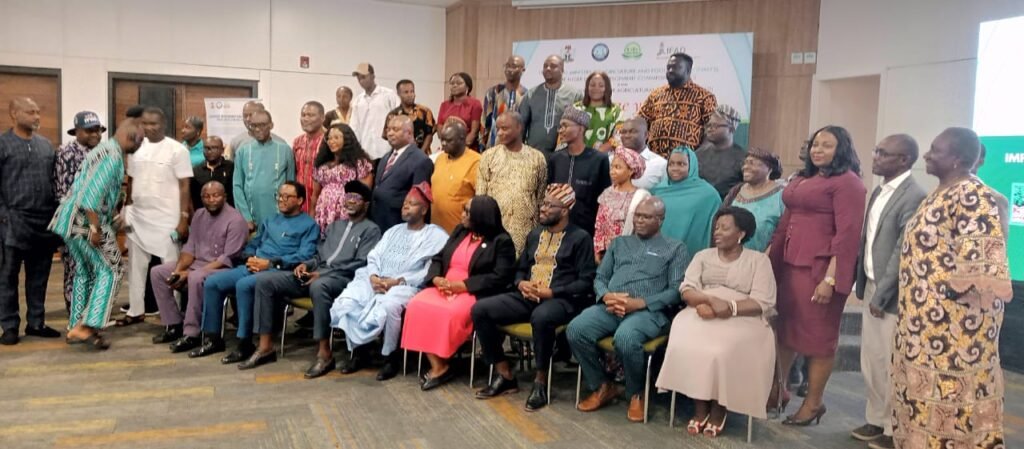
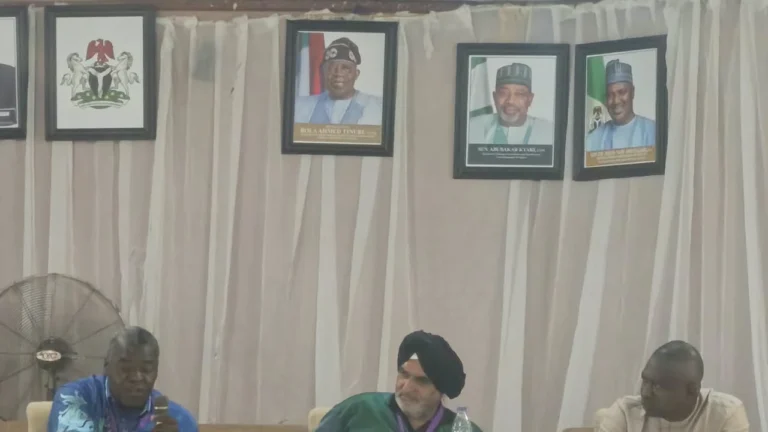
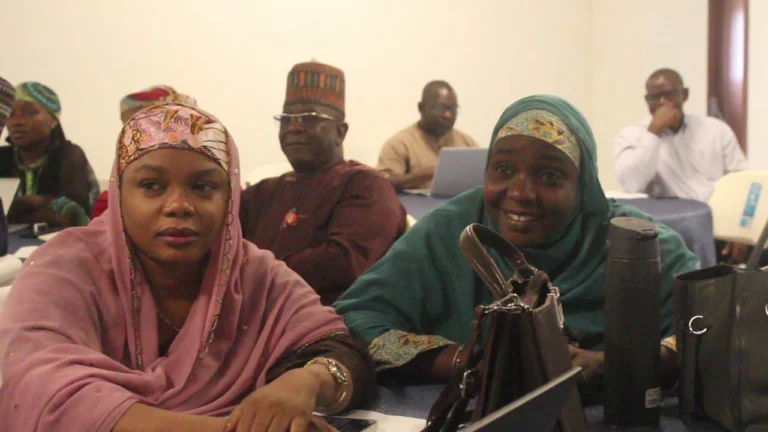
Mrs Dede Ekoue, IFAD Country Director, disclosed this at the inception workshop of the 6th Federal Government, Niger Delta Development Commission (NDDC) and IFAD Joint Supervision Mission of LIFE-ND on Wednesday in Abuja.

Ekoue said the project had also developed 254 hectares of land for agricultural production, rehabilitated 15 solar-powered water supply schemes and completed 20 market, production and processing facilities.
She said the project planted 3,508 agroforestry and economic trees during the reporting period and expanded digital services, with more than 9,600 users accessing AI-powered advisory through FarmerChat.
According to her, weekly climate and nutrition messages are also being delivered to beneficiaries through SMS as part of efforts to strengthen digital extension services.
Ekoue said the mission marked another milestone in the partnership between the Federal Government, NDDC and IFAD to improve rural livelihoods, especially among young people and women in the Niger Delta.
She said LIFE-ND was designed to increase income, food security and job creation through sustainable agribusiness development for rural youth and women.
“The project has demonstrated that rural young people, when provided with the right skills, productive assets, finance, markets, technology and partnerships, can build viable enterprises.
“They can also become important actors in Nigeria’s food system,” she said.
Ekoue said the 5th Supervision Mission had provided evidence of the project’s progress, adding that LIFE-ND reached 16,539 beneficiary households in 2025.
She said the figure represented more than 90 per cent of the annual target, with strong participation by women and young people.
“It has supported 966 incubators and created 23,751 new enterprises, demonstrating the potential of its incubation model for youth employment and rural enterprise development,” she said.
Ekoue said LIFE-ND remained relevant to rural enterprise development, youth employment and women’s economic empowerment in the Niger Delta.
According to her, the project has strengthened its incubator-incubatee model and partnerships with SMEs and rural institutions since inception.
She said the project had also expanded support across production, processing, marketing, financial inclusion, nutrition, climate resilience and digital advisory services.
“The AF is now at a critical acceleration point. The project must consolidate first-phase achievements, fast-track disbursement and beneficiary support.
“It must strengthen rural institutions and ensure that progress translates into sustainable agribusinesses and lasting livelihood gains,” she said.
Ekoue said six priorities had been identified for the coming implementation period, including accelerating AF targets for 13,050 new incubatees and 51,775 beneficiaries.
Others include improving the timely release of counterpart funds and operational financing and expanding access to affordable finance, insurance and markets.
She also called for stronger off-taker arrangements and the scaling of digital extension, climate information, nutrition-sensitive agriculture and market intelligence.
“With this, LIFE-ND can provide a stronger model for future replication and a possible second phase,” she said.
Ekoue said that as of August, the AF phase had reached 27,222 beneficiaries, comprising 10,094 regular incubatees and 17,128 business development services beneficiaries.
She said the first phase exceeded its target, with 26,470 incubatees against the 25,500 planned.
“In 2026 alone, 6,120 new incubatees were selected and onboarded across the six IFAD-financed states.
“This included strong participation by women, youth, female-headed households and persons with disabilities,” she said.
Ekoue said the 6th Supervision Mission came at a strategic moment for the project.
She said the mission would assess implementation progress and outputs, review recommendations from the previous mission and identify implementation bottlenecks.
“It will also examine the systems required to deliver the Additional Financing effectively and efficiently.
“Importantly, the mission will identify best practices, innovations and lessons with potential for scale-up, particularly as we look ahead to the possibility of a second phase of LIFE-ND,” she said.
Ekoue urged the mission team to engage directly with beneficiaries, saying their experiences remained an important measure of the project’s success.
“We need to understand whether the enterprises we have supported are becoming profitable and sustainable; whether young people are creating decent livelihoods.
“We also need to know whether women have greater control over productive resources and economic opportunities,” she said.
She said the mission should also assess whether technologies, infrastructure, financial services and institutions supported by LIFE-ND were producing lasting changes in beneficiaries’ lives.
Ekoue stressed the need to strengthen partnerships and sustainability, noting that government and development financing alone could not achieve the required scale.
“We must increasingly connect LIFE-ND agripreneurs to viable markets, financial institutions, insurance, digital service providers, private-sector actors and sustainable producer institutions,” she said.(NAN)(www.nannews.ng)
Edited by Tosin Kolade

Comments