








By Henry Oladele
The Director-General of the Administrative Staff College of Nigeria (ASCON), Dr Funke Adepoju-Olayomi, has called for transformative and sustainable solutions to poverty in the country.
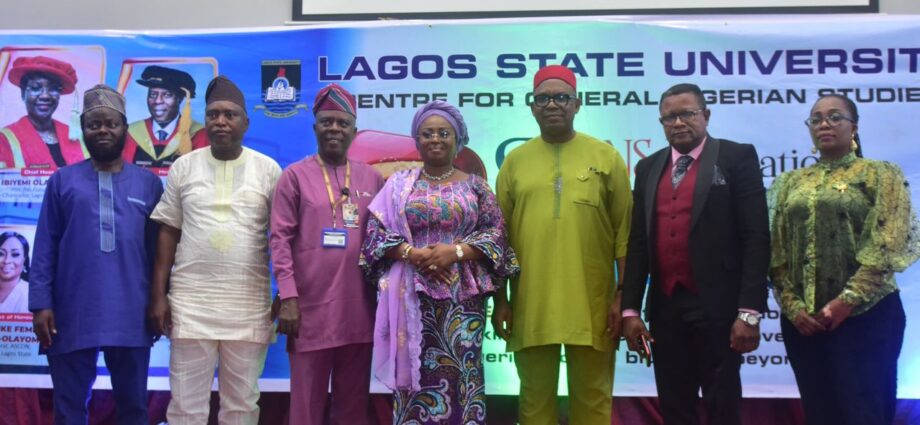
The director-general made the call at the Third Education Summit of the Centre For General Nigerian Studies (CGNS), Lagos State University (LASU), Ojo, on Tuesday.
She urged Nigerians to move beyond sympathy for those living in poverty and proffer transformative solutions.
The News Agency of Nigeria (NAN) reports that the summit had the theme: ‘From Dote to Antidote: Unpacking the Dimensions of Poverty in Nigeria and the Blue Print Beyond’.
The event brought together academics and other personalities to discuss issues promoting inequality and hindering national progress.
Adepoju-Olayomi highlighted the pivotal role education could play in breaking the cycle of poverty.
“Poverty is not merely a statistic, it is a lived reality that denies dignity, limits aspiration and weakens national competitiveness.
“Within our collective ingenuity lies the power to unlock pathways to inclusion, productivity and hope.
“Education remains the strongest antidote, the equaliser that equips citizens – you and I- with the skills and mindset to thrive.
“When we invest in human capital, strengthen governance structures, and create ecosystems for youths and women, we shift our nation’s trajectory toward shared prosperity,” she said.
She said there was the need for investment in human capital and governance structures to support youth and women.
“This year’s theme challenges us not only to diagonise poverty, but to move from sympathy to what we call systems thinking, from short-term relief to transformative sustainable solutions.
“I am confident that the robust conversations and outcomes from this summit will provide actionable blueprints that policymakers and institutions can translate into measurable impact,” she said.
Earlier, the summit committee Chairman, Prof. Raman Saka, said that the summit was aimed at finding sustainable solutions to poverty.
“The theme should challenges us to collectively design an antidote anchored on evidence, innovation and inclusive development.
“Poverty is not a single problem but a complex ecosystem, and only a holistic approach can dismantle it.
“We must strive to generate knowledge that does not end in conference halls but translate into policies, programmes and practices that empower communities and reshape the Nigerian developmental landscape,” he said.
He urged the participants to engage deeply, collaborate broadly and think broadly.
“Let this summit not only recognise Nigeria’s challenges, but also get concrete actionable strategies capable of moving us from doubts to antidotes, from limitations to possibilities, and from heteroids to return,” he said.
The keynote speaker and President of HERPNET University, Ibadan, Prof. Benedict Emunemu, said that poverty was widespread and multidimensional in Nigeria.
“Despite interventions, poverty remains pervasive. Millions still lack income, education, healthcare and basic services.”
He called on the nation’s leaders and other key players in the economy to transit from temporary fixes to structural, long-term strategies.
“Integrated, inclusive, and evidence-driven reforms can significantly reduce poverty.
“Sustainable development requires strong governance, empowerment and community participation,” he said.
The Director of the CGNS, Prof. Mudashiru Mohammed, hoped that the summit would provide strategies to eradicate poverty in Nigeria. (NAN) (www.nannews.ng)
Edited by Ijeoma Popoola