








By Mark Longyen, News Agency of Nigeria (NAN)
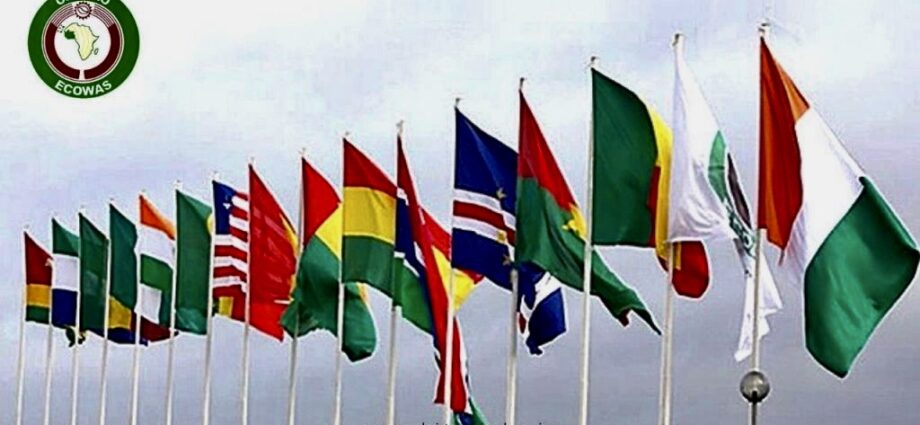
The Economic Community of West African States (ECOWAS) stands at a defining economic crossroads.
With a combined market potential estimated at 3.4 trillion dollars, the region has long aspired to transform itself from a loose trading bloc into a fully integrated economic powerhouse.
Now, the operationalisation of the African Continental Free Trade Area (AfCFTA) has placed that ambition within reach; offering what many describe as the most consequential opportunity for economic transformation since independence.
For ECOWAS, founded 50 years ago to promote economic integration and development through free movement, trade liberalisation and collective prosperity, AfCFTA represents more than a continental treaty.
It is, in effect, a litmus test of whether decades of regional integration efforts can finally translate into industrial growth, job creation and global competitiveness.
Signed by 54 African Union member states and covering a market of roughly 1.4 billion people, AfCFTA is widely regarded as the largest free trade area in the world by number of participating countries.
Yet, as policymakers and experts caution, ambition alone will not deliver transformation.
The true measure of success lies in implementation; in harmonised customs systems, efficient transport corridors, digital trade infrastructure and inclusive policies that leave no trader behind.
Since its inception, ECOWAS has tested the boundaries of economic cooperation.
The ECOWAS Trade Liberalisation Scheme (ETLS) and the Common External Tariff (CET) were designed to facilitate intra-regional commerce, while protocols on free movement sought to ease cross-border mobility.
Progress has been uneven, but notable.
Nevertheless, intra-African trade remains comparatively low when measured against Europe or Asia.
Fragmented markets, inconsistent regulations and infrastructural deficits have continued to limit the bloc’s full economic potential.
AfCFTA, therefore, presents an opportunity to consolidate regional frameworks within a broader continental architecture.
At a recent ECOWAS Parliament seminar in Abuja, themed: “Deepening Regional Integration Through AfCFTA: Opportunities and Challenges for Expanding Intra-Community Trade,” stakeholders examined precisely how this consolidation might occur.
In her address, ECOWAS Parliament Speaker, Mémounatou Ibrahima, described the AfCFTA framework as transformative.
“The AfCFTA represents a historic opportunity to make our region an integrated, prosperous, and resilient economic power,” she declared.
“However, it will only succeed if embraced by all; governments, private sector, civil society, women, youth, and technical partners”.
Her intervention underscores a central reality that AfCFTA cannot be driven by governments alone.
Its success depends upon inclusive participation and sustained political will.
Similarly, ECOWAS Commission President, Dr Omar Touray, stressed that West Africa must translate potential into power.
“West Africa is today one of the continent’s most dynamic economic hubs, thanks to the vitality of its agriculture, agro-processing industries, and regional trade,” he observed.
“However, to convert this potential into power, we must build a single African market, an integrated space, where goods, services, capital, and people move freely”.
Nigeria’s Minister of State, Foreign Affairs, Bianca Ojukwu, said that AfCFTA presented a historic opportunity to expand intra-West African trade, strengthen value chains and position businesses in the region to favourably compete within the African market.
According to her, given the political, economic and security pressures facing the sub-region, AfCTA has become a critical key to unlocking West Africa’s trade and investment potential for economic growth.
She suggested the harmonisation of AfCFTA structures with the existing ECOWAS Trade Liberalisation Scheme, stressing that West Africa must urgently consolidate its integration agenda, and respond collectively to emerging challenges.
“By leveraging our institutional experience and regulatory frameworks, ECOWAS can position itself as a frontrunner in operationalising the AfCFTA,” she added.
In essence, AfCFTA offers the architecture; ECOWAS must supply the discipline of implementation.
However, as discussions at the seminar revealed, ambition must confront reality.
Infrastructure deficits remain profound.
Roads, railways, ports, power supply and digital connectivity; the indispensable arteries of commerce, are often inadequate or poorly synchronised.
The Lagos–Abidjan Highway Corridor, frequently described as the economic vein of ECOWAS, symbolises both promise and delay.
While envisioned as a transformative trade artery linking major commercial hubs, its incomplete sections and inconsistent border systems continue to constrain efficiency.
Rep. Benjamin Kalu, Deputy Speaker of Nigeria’s House of Representatives and ECOWAS parliamentarian, articulated the infrastructural deficit frustration succinctly.
He advocated a switch to PAPSS, a unified payment system to eliminate Africa’s heavy reliance on the U.S. dollar, which he said costs the continent an estimated 5 billion dollars annually in transaction fees.
“Currently, it is not just the potholes that cost us; it is the administrative friction,” he remarked.
“We can build a six-lane highway, but if a truck spends 14 hours at a border due to red tape, that highway is just an expensive parking lot”.
His words reflect a broader consensus that integration falters less from vision than from bureaucratic inertia.
Prof. Uche Uwaleke, Director of the Institute of Capital Market Studies at Nasarawa State University, reinforced this structural imperative.
“For Africa to trade efficiently within itself, goods must move seamlessly across borders, power must be reliable, broadband must be accessible.
“Logistics must be efficient, the infrastructure we build must not only meet present demands but anticipate future scale,” he said.
Thus, while AfCFTA harmonises policy frameworks, it cannot substitute for physical and digital infrastructure.
Nigeria’s Senate President, Godswill Akpabio, emphasised the urgency of translating commitments into action.
“This calls for the practical implementation of AfCFTA commitments, including harmonised standards, efficient ports, transparent customs systems, and digital trade infrastructure to reduce costs and empower entrepreneurs,” he stated.
He also cautioned that economic cooperation and political stability are interdependent.
“Insecurity and political instability remain major obstacles to integration, as economic cooperation and political stability are mutually reinforcing pillars that must be strengthened simultaneously”.
His warning resonates across a region grappling with security challenges and political headwinds.
Without stability, integration remains fragile.
Beyond roads and ports, attention is increasingly turning to digital systems.
The Pan-African Payment and Settlement System(PAPSS) has emerged as a pragmatic instrument to facilitate cross-border payments in local currencies.
By reducing reliance on intermediary currencies, notably the U.S. dollar, proponents argue that the continent could save billions annually in transaction costs.
Furthermore, AfCFTA’s digital trade protocols seek to harmonise e-commerce regulations, cross-border data flows and electronic contracts.
Given West Africa’s robust fintech ecosystems, especially in Nigeria and Ghana, the region is well positioned to leverage this digital momentum.
Nevertheless, experts insist that digitalisation must be accompanied by regulatory coherence and enforcement capacity.
Another dimension of integration concerns human mobility.
Albert Siaw-Boateng, ECOWAS Director of Free Movement of Persons and Migration, warned that weak and poorly coordinated migration data systems could undermine AfCFTA’s ambitions.
“Without reliable data, stronger labour governance, and consistent enforcement across member states, the economic gains expected from cross-border mobility may be significantly constrained,” he cautioned.
He added: “Human mobility remains a powerful engine for regional economic integration, but its full benefits can only be realised through stronger governance frameworks”.
Consequently, trade liberalisation must be accompanied by effective migration management and labour governance.
Perhaps, the most compelling intervention came from Christopher Mensah-Yawson, ECOWAS Programme Officer for Trade Development, who placed inclusion at the heart of integration.
“Women account for about 74 per cent of informal cross-border trade operators in West Africa, while young people under 25 rely heavily on informal trade for livelihoods,” he said.
He outlined the persistent barriers confronting these traders.
“Women and youth face multiple obstacles, including cumbersome customs procedures, limited access to finance and storage facilities, gender-insensitive border infrastructure, harassment, extortion and security risks”.
Accordingly, he called for decisive policy reforms.
“Member States and lawmakers must, therefore, intensify reforms to formalise informal trade, protect vulnerable traders, and dismantle barriers to formal markets”.
These statistics are not merely social indicators; they reveal the human engine of West African commerce.
Any integration framework that marginalises these actors risks undermining its own economic logic.
Taken together, the deliberations signal that AfCFTA represents both an extraordinary opportunity and a demanding test.
ECOWAS must leverage the continental framework to consolidate its trade schemes, modernise infrastructure and empower especially SMEs, women and youth.
Allowing room for any form of fragmentation, administrative inertia and instability will dilute its impact.
Ultimately, AfCFTA offers West Africa a rare strategic opening to transition from raw commodity dependence to value addition and industrial resilience.
Yet, as the voices at the seminar repeatedly emphasised, integration will not materialise through aspiration alone.
It will require disciplined implementation, institutional coherence and inclusive governance.
The question, therefore, is not whether AfCFTA can transform ECOWAS, but whether ECOWAS is prepared to transform itself. (NANFeatures)
***If used, please credit the writer and the News Agency of Nigeria.