

By Adeola Akinbobola
Many car owners in the Federal Capital Territory (FCT), now prefer commuting in public vehicles to using their cars due to hike in pump price of petrol.
Also, low-income earners, who cannot afford the high costs of transportation, walk trekkable distance to work in order to survive the hardship.
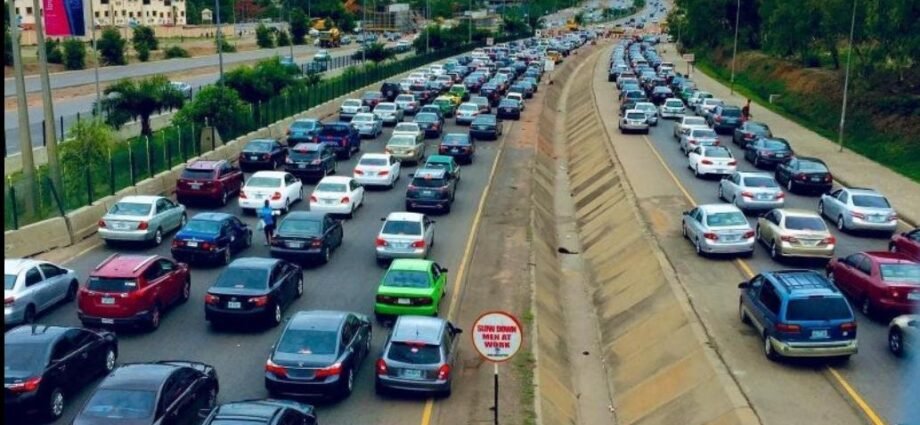
The News Agency of Nigeria (NAN), observed that the ever busy Kubwa express way, Suleja to Mandalla axis, is experiencing low vehicular movements, particularly on weekdays, because many car owners could no longer afford to fuel their cars.
NAN checks also revealed that other major routes in the FCT are also experiencing fewer vehicular movements.
Before the increase in the pump price of petrol, there used to be heavy traffic jam on these routes, thereby resulting in slower speeds and longer trip times.
Sholape Kolawole, a public servant and resident of Dutse Alhaji, in an interview with NAN on Sunday in Abuja, said she had stopped using her vehicle in months.
She said:, “It has been stressful using commercial vehicles, I have no choice since I cannot afford to fuel my car, and my salary is not enough to buy fuel everyday to work.
“To cut cost, I just stopped using the car for now and resolved to taking commercial vehicles to the office and back, which is also expensive but not as much as using my car,” she said.
Another car owner, Mr James Obasi, a commercial transporter in Kubwa village, said the situation had been so discouraging that some of his colleagues could not do business for weeks.
Obasi said the fuel situation had increased at unexpected times thereby impacting on many small businesses negatively.
He called on the Federal Government to make deliberate policy action to end the reoccurring situation.
Another car owner, Mr Emmanuel Ajayi, said he had not been able to buy petrol in his car for months, noting that the situation was really telling on his health, because of the stress of “jumping” from one public transport to another, just to make ends meet.
Ajayi called on the government to act swiftly and bring a lasting solution to the hike in fuel, save Nigerians from the stress and also make it beneficial to everybody.
Dr Aliyu Ilias, a development expert, and customer experience management specialist, said the hardship Nigerians were experiencing was deeply troubling.
Ilias said that Nigerians were forced to stay at home for several days a week because they could no longer afford transportation to work.
He said the challenge was due to the global oil market disruption caused by geo-political tensions and conflict.
He further said that as an oil-producing nation, Nigeria should ordinarily benefit from rising crude prices.
According to him, reports indicate that oil prices have surged significantly, meaning the government is earning more revenue, yet, ordinary citizens are not feeling the impact of this windfall.
He said since the government was benefiting from increased oil revenues, it should channel part of that windfall into easing the burden on citizens.
“One practical solution will be for the Federal Government to provide crude oil to local refineries at reduced rates, enabling them to refine and sell petrol at more affordable prices.
“Such a strategy can help stabilise fuel prices and reduce the pressure on transportation and living costs.
“The economic consequences are severe. Purchasing power has declined sharply, and disposable income has almost disappeared for many households,” he said.
Emmanuel Onwubikor, the National Coordinator of Human Rights Writers Association of Nigeria (HURIWA), said the hike in petrol prices represented nothing short of an economic ambush on Nigerians.
Onwubikor warned that millions of small businesses, the backbone of Nigeria’s informal economy were on the brink of extinction.
“Barbing salons, welding workshops, small-scale manufacturers, transport operators, and countless petty traders who depend on petrol for daily operations will be forced to shut down.
“This will trigger a dangerous surge in unemployment, particularly among youths and women, thereby worsening social instability and insecurity.
“We therefore, demand immediate and decisive intervention by President Bola Tinubu to halt this reckless escalation of petrol prices.
“The government must implement price stabilisation mechanisms, enforce strict regulatory oversight, and ensure that no private entity is allowed to exploit Nigerians under the guise of market forces,” he said. (NAN)(www.nannews.ng)
Edited by Ese E. Ekama – Williams