






By Oyintutu oyinkolade
Stakeholders in the health sector have called for more community involvement in grassroots malaria eradication strategies following a decline in international donor financing to tackle pandemic in the country.
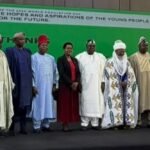
The stakeholders made the call in Abuja on Friday at a two-day High-Level Advocacy Engagement on Domestic Financing for Malaria Elimination in Nigeria.
The advocacy themed “Strengthening Malaria Financing, Surveillance, and Resistance Response in a Turbulent Global Context by Influencing Policy and Practice” was organised by the Malaria Consortium Nigeria.
Speaking at the event, the Country Director of the BudgIT Foundation, Mr Vahyala Kwaga, said that international donor funds for tackling malaria had dried up, making it imperative for Nigeria to look inward.
Kwaga emphasised the need for deeper community involvement in grassroots malaria eradication strategies.
According to him, the Federal Government should provide an enabling environment for the private sector through subventions, import licenses, policy sustainability, and adherence to the rule of law.
“It’s fairly not new that donor financing for the tackling of malaria has basically dried up.
“And that means that Nigeria and Nigerians need to take the bull by the horns and come up with innovative ways to fund and manage malaria prevention in the country.
“Communities need to be more involved in how they manage their grassroots attempts at ensuring that malaria is something that is eradicated.
“The government needs to provide more support to the private sector via subvention or import licenses or even the policy environment, rule of law and policy sustainability,” he said.
Also speaking, Frank Muonemeh, the Executive Secretary of the Pharmaceutical Manufacturers Group of the Manufacturers Association of Nigeria (PMG-MAN), said that Nigeria cannot eradicate malaria until it takes ownership of medicine production.
According to Muonemeh, true medicine security requires local dominance across the value chain, from research and development to Active Pharmaceutical Ingredients (APIs), budgeting, and strengthening accountability.
“So, when you talk about malaria, you cannot end malaria in Africa or in Nigeria until you take ownership.
“And I want to reiterate again, you cannot end malaria in Nigeria until you are on the driver’s seat, and take ownership”, he said.
In his remarks, Mr Isaac Adejo, the Project Director at Management Sciences for Health (MSH) Nigeria, noted that the success of Nigeria’s malaria interventions hinges entirely on consistent availability of essential health products at health facilities.
Adejo said if incentives were created for local manufacturers to produce Insecticide-Treated Nets (ITNs), Rapid Diagnostic Tests (RDTs), it would reduce dependency on importation and donor organisation.
Also speaking, Lovelyn Gabriel, the Monitoring and Evaluation Manager, Association of Civil Society Organization on Malaria Control, Immunization, and Nutrition, described the meeting as a key step towards ending the reliance on foreign aid.
Gabriel, who said finding local funding remained the only real way forward, added that government’s spending on healthcare had improved, even though there is still a long way to go.
“So, the plan to tackle this pandemic, or should I say part of the plan to tackle this pandemic is actually this meeting.
“We are looking at all the ways to source funding domestically and not rely fully on donor support, which has been the practice.
“This is imperative because that has shown not to be sustainable. It has shown not to be predictable considering the global funding landscape.
“So, this event is to raise funds domestically to sustainably fund malaria elimination,” she said.
She further urged the public to help by keeping their surroundings clean to prevent malaria from spreading.
The Chief Operating Officer of Codix Pharma, Mrs Mary Ogangwu, explained that local manufacturers face huge financial challenges when trying to meet international standards without government’s assistance.
According to her, getting funds from the Bank of Industry (BOI) is very challenging. This forces businesses to take high-interest loans from commercial banks.
“Having pursued BOI for some time it’s very challenging even to have access to some of those funding”.
Sharing experiences on the supply chain problems, she explained that free malaria tools brought in by donors often leak into open markets, which badly hurts the business of local producers.
“We continue to rely on donor support, it’s not great the country doesn’t have all the resources, so we are not against it, but not being able to control the movement of commodities to the last mile has a detrimental effect”, she said.(NAN) (www.nannews.ng)
Edited by Deji Abdulwahab