


By Habibu Harisu
An NGO, Connected Development (CODE), has mobilised government agencies, community-based groups and civil society organisations to address vaccine rejection and reduce the number of zero-dose children in Sokoto.
The News Agency of Nigeria (NAN) reports that the initiative is supported by Gavi, the Vaccine Alliance, and implemented in partnership with the Sultan Foundation for Peace and Development (SFPD).
The programme aims to reduce the number of zero-dose children in the state by 80 per cent through improved immunisation coverage and stronger community engagement.
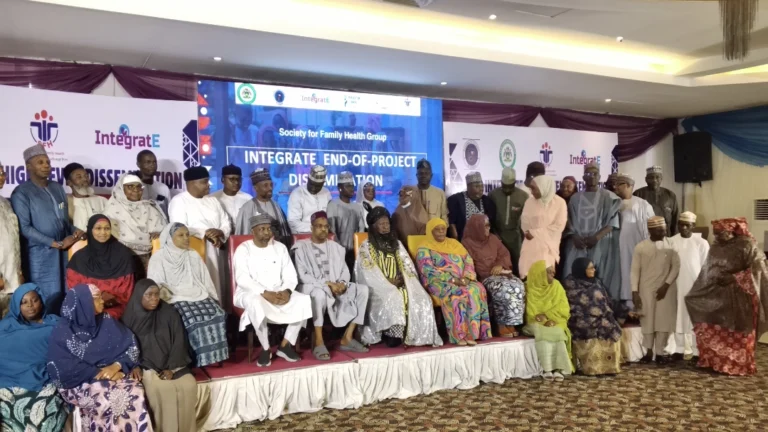
Dr Tukur Garba-Magaji, Director of Disease Control at the Sokoto State Primary Healthcare Development Agency (SSPHCDA), unveiled the initiative at a two-day inception meeting and workshop on Tuesday in Sokoto.
Speaking at the event, the Lead Facilitator and Anchor of the Sokoto Tracking and Accountability for Equitable Immunisation (S-Trace) Consortium, Mr Mukhtar Modibbo, said the initiative formed part of a broader regional programme.
According to him, the programme is being implemented in Kenya, Nigeria, Senegal, Zimbabwe, Cameroon and Malawi to address challenges in health, education, gender and community development.
Presenting the project’s baseline findings, Modibbo said Nigeria currently had the highest number of zero-dose children globally, with Sokoto among the most affected states in the country.
He said that an estimated 585,635 children under five years across 13 local government areas in Sokoto had not received routine immunisation, while Wamakko and Tambuwal LGAs recorded the highest burden.
“The S-Trace intervention is expected to directly target 468,504 zero-dose children across seven selected local government areas, with stakeholders expressing confidence that coordinated action would significantly improve immunisation coverage and child survival outcomes.
“Our mission is to break the barriers preventing children from accessing life-saving vaccines, particularly in hard-to-reach communities where poor access, widespread vaccine hesitancy and weak demand continue to undermine immunisation efforts,” Modibbo said.
He explained that the programme would be implemented through collaboration with government institutions and other stakeholders using strategies centred on community mobilisation, advocacy, financing, improved service delivery and health system strengthening.
Others, he said, included evidence generation, continuous learning and accountability mechanisms aimed at improving routine immunisation uptake and reducing the number of unvaccinated children.
Also speaking, CODE’s Programme Manager, Mr Abdul’azeez Abdul’azeez, described vaccination as one of the most cost-effective public health interventions for preventing avoidable childhood illnesses and deaths.
Abdul’azeez said Nigeria beared the world’s largest zero-dose burden, with Sokoto remaining at the centre of the challenge.
“Through this intervention, we intend to identify unreached children, reduce household resistance through sustained engagement with traditional and community leaders, and strengthen government systems to ensure long-term sustainability,” he said.
He added that the initiative aligned with Gavi’s 2026 Strategy and the global Immunisation Agenda 2030, both of which sought to ensure that no child was left behind in accessing essential vaccines.
The Programme Coordinator of SFPD, Dr Aminu Inuwa, said collaboration with non-governmental and community-based organisations would strengthen grassroots mobilisation and improve public confidence in routine immunisation.
Similarly, Dr Nuruddeen Aliyu of AFEN urged government institutions, development partners, traditional rulers and civil society organisations to actively support implementation through dialogue, innovation and accountability.
Earlier, the Acting Chief Executive Officer of CODE, Ms Hyeladzira James-Mshelia, described the S-Trace initiative as a strategic intervention designed to reverse the growing number of zero-dose children.
“This programme provides an opportunity for all stakeholders to work together in transforming the lives of vulnerable children. Collective commitment and collaboration remain critical to achieving sustainable improvements in immunisation coverage,” she said.
Representatives of UNICEF and the SSPHCDA described the initiative as a major milestone in expanding access to life-saving vaccines and strengthening child health outcomes across the state.
They emphasised that every child had the right to survive, thrive and access quality healthcare, noting that reaching zero-dose children remained both a public health priority and a moral responsibility.
Stakeholders at the meeting expressed optimism that the intervention would accelerate progress in reducing child mortality, expanding vaccine access and advancing Nigeria’s commitment to universal immunisation coverage under the Immunisation Agenda 2030.(NAN)(www.nannews.ng)
Edited by Abiemwense Moru
Comments