









By Funmilayo Adeyemi
Stakeholders have called for coordinated action by government, parents, the private sector and civil society organisations to address the growing number of young Nigerians who are not in education, employment or training.
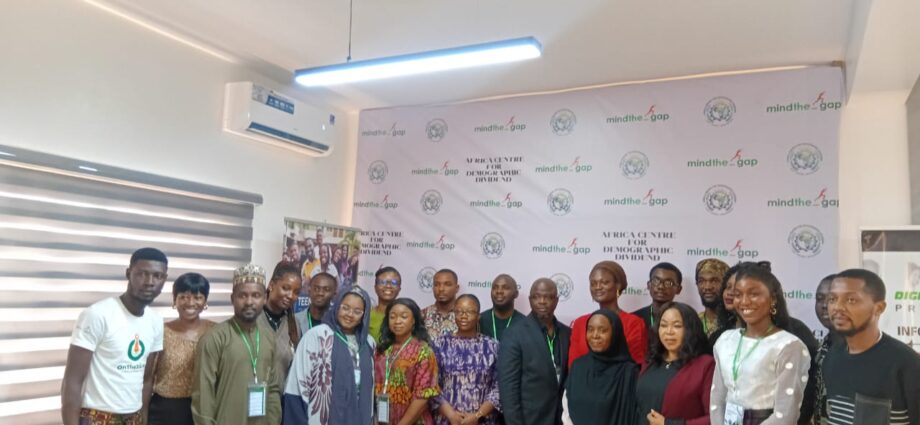
They made the call on Wednesday in Abuja during a technical review of a desk report on Young Nigerians Not in Education, Employment or Training, ( Y-NEET) organised by Mind the Gap Foundation.
Speaking at the event, the foundation’s Executive Director, Mr Tayo Olosunde, said findings from the report showed that Nigeria’s youth disconnection challenge remained significant.
According to him, about 3.9 million young Nigerians aged 15 to 24 are estimated to be disconnected from education, employment and training, based on a 13.4 per cent NEET rate and initial population estimates.
He added that applying the same 13.4 per cent rate to the latest population projections from the United Nations Department of Economic and Social Affairs (UN DESA) increased the figure to about five million young people.
“The figures underscore the scale of youth labour-market disengagement in Nigeria and the need for targeted interventions to reconnect affected young people to education, skills development and employment opportunities,” he said.
Olosunde noted that many households across the country had young people who were neither in school, employment nor skills training, a situation that continued to place pressure on families and communities.
He said participants at the review agreed that addressing the challenge required collective action rather than government intervention alone.
According to him, stakeholders also recommended expanding discussions into a broader national platform involving policymakers, development partners and relevant institutions.
He identified behavioural, structural and coordination challenges as key drivers of the NEET phenomenon.
“One of the issues raised is that interventions must address attitudes toward work and productivity among some young people.
“There are also structural challenges, as many businesses and institutions that should absorb young people are themselves struggling.
“Stakeholders equally emphasised the need for stronger collaboration among organisations working in the youth development space,” he said.
Olosunde said the next phase of the initiative would involve field research to validate existing data and engage directly with affected youths and their families.
He added that highlighting success stories of young Nigerians who had benefited from skills development programmes could encourage others to pursue similar opportunities.
Also speaking, the Head of Research and Policy at Mind the Gap Foundation, Mrs Josephine Opene-Terry, said evidence from the review suggested that structural barriers remained the major drivers of youth inactivity.
She stressed the need for targeted interventions rather than broad-based youth unemployment programmes, adding that agriculture, industry and services offered significant opportunities for youth employment if adequately supported.
In her remarks, Salamatu Abubakar of the Small and Medium Enterprises Development Agency of Nigeria (SMEDAN) said the agency was collaborating with organisations such as Mind the Gap Foundation to improve youth participation in entrepreneurship.
She said SMEDAN supported business sustainability through capacity building, access to finance and market opportunities, noting that 25 per cent of its programmes targeted youths, women and persons with disabilities.
According to her, the agency’s “Mindshift” programme is designed to reorient out-of-school youths towards productive and entrepreneurial activities.
“We help people across the country start and sustain businesses through capacity building, access to finance and market opportunities,” she said.
A beneficiary of Mind the Gap’s “On the Job” programme, Mr Joel Kiate, said the initiative had transformed his life through digital skills training.
Kiate said he acquired skills in digital marketing, email marketing and graphic design, which enabled him to secure employment and establish a business.
He urged government to proactively identify and engage young people in communities through skills acquisition and employability programmes.
According to him, many youths could become economically productive if given opportunities to acquire relevant skills. (NAN) www.nannews.ng
Edited by Tosin Kolade