


By Abdullahi Maku
As Democracy Day celebrations commenced, Gatefield, a non-governmental organisation, has called for greater inclusion of women in politics, lamenting that gender diversification continues receiving inadequate attention across Nigeria’s political landscape.
The organisation, which focuses on advocacy and campaigns aimed at promoting positive social change and ending gender harassment, expressed concern over what it described as the alarmingly low representation of women.
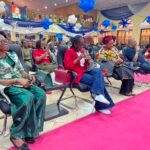
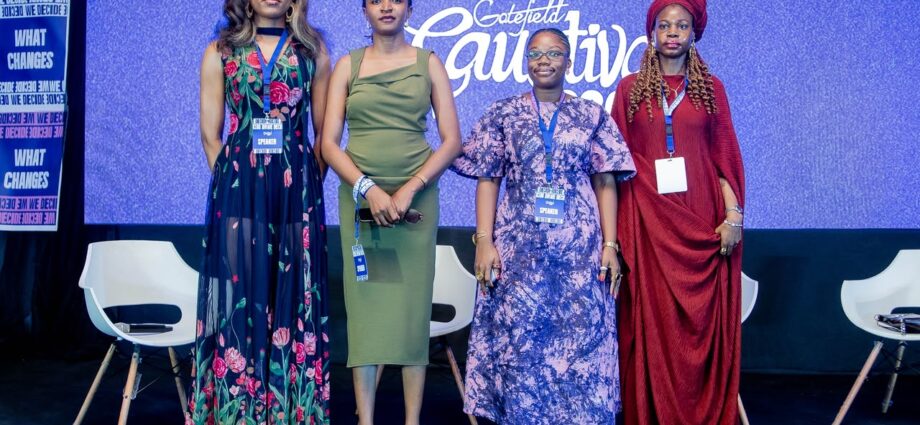
To strengthen its advocacy efforts, Gatefield organised a Coustival, an event in Abuja titled: “We Decide What Changes”, to raise awareness about gender-based harassment and other challenges faced by women participating in the political arena.
The organisation also unveiled a documentary titled “Double Minority,” highlighting experiences of female political figures, their journeys into politics, challenges encountered, and personal reflections on gender-based harassment and discrimination.
The documentary featured notable personalities including Sen. Natasha Akpoti-Uduaghan, Khadijah Abdullahi, former 2023 governorship candidate in Niger State, and Dr Abiola Akiyode-Afolabi, founder of the Women Advocates Research and Documentation Centre.
Experiences of female political actors were further examined during a panel discussion moderated by Dorreen Nwoke, alongside broadcaster Nabila Usman, communications specialist Solakpe Sonuga, and gender transformation advocate Nimisire Emitomo.
Panelists acknowledged that while digital platforms provided opportunities for women to promote ideas, aspirations and civic engagement, such spaces were frequently exploited to attack, harass, and undermine women.
Nabila Usman affirmed that women disproportionally go through what men go through in politics, but what women go through differs a lot.
“You can see where a strong political figure says his wife belongs only to his kitchen.”
According to her, such remarks demonstrate poor consideration for gender equality and reinforce harmful stereotypes that continue limiting women’s participation, acceptance, and advancement within political and leadership spaces.
Sonuga referenced a statement allegedly made by a lawmaker, saying: “I’m not against women inclusivity in politics, I would love women to participate, but they just shouldn’t take my space.”
The panel described such sentiments as evidence of a flawed mindset that continued hindering progress toward gender inclusion and equality, stressing the need for attitudinal change across society and institutions.
Nwoke also observed that certain forms of sexual and gender harassment were rooted in prevailing societal attitudes and cultural influences, which often shaped perceptions and treatment of women.
Sonuga said: “Initiatives like ‘Fix Politics’, talking to majority on civic actions to support women, volunteer-ship from youths to hold government accountable, can also be a step to square gender diversification.
“I think voters should also be diverse when deciding who to vote between genders, to balance the numbers in the political space,” she added.
Emitomo emphasised the importance of economic empowerment, saying: “When women have better access to finances, studies shows that it also developes the economical and financial growth of the society.”
She noted that sustainable funding remained essential for political participation and advised women to join political parties early, build strong structures, and actively contribute toward reshaping internal party systems.
“You must not be an aspirant or candidate before joining a party, build strong structures,” Emitomo said, urging women to position themselves strategically for future leadership and decision-making opportunities.
The event also featured an art exhibition showcasing talented young artists whose works conveyed social values, national realities, and personal experiences through compelling visual narratives and creative expression.
Artist Kelechi Chukwueke presented a piece titled “How Much,” which cautioned citizens against vote-selling and encouraged greater appreciation of the value and consequences of electoral choices.
Explaining the artwork, she said: “If u look at the naira notes, you can see images relating to thriving agriculture, infrastructure, resources which isn’t a true reality in the nation today.
“Creating the piece thought me a lot of patience and was actually a meditating experience for me. It takes patience and small steps in the right direction.”
Chukwueke encouraged young female artists to prioritise their passion for art above gender-based criticism, saying women should never be discouraged from exhibiting talents or pursuing creative excellence.
Another artist, Mustapha Musa, showcased a work titled “The Game We Play,” depicting a chessboard on an African map to illustrate socio-economic realities and power dynamics.
Musa said the artwork reflected how privilege and influence shaped national outcomes, stressing that ordinary citizens must not surrender opportunities for active participation in governance and decision-making.
The News Agency of Nigeria (NAN) reports that the event featured entertainment, dance performances and recreational activities.(NAN)(www.nannews.ng)
Edited by Abiemwense Moru