







By Ibironke Ariyo, News Agency of Nigeria (NAN)
The arrest of three Mexican methamphetamine experts and seven Nigerian collaborators deep inside a forest in Ogun marked far more than another successful anti-drug operation.
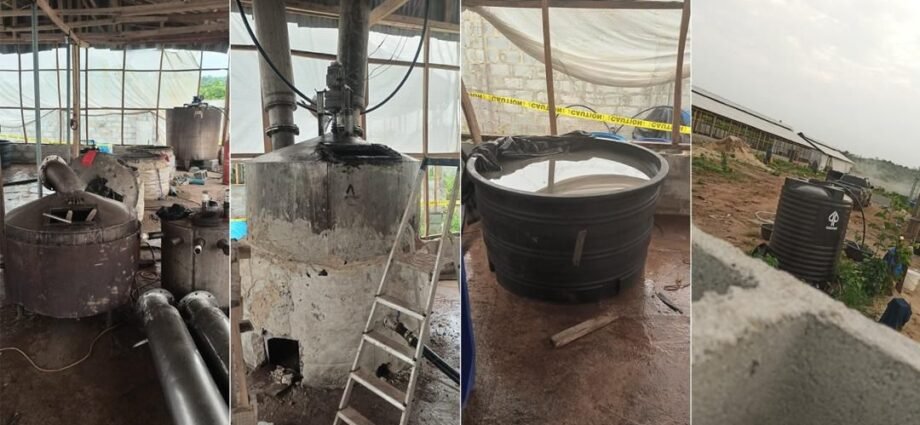
Hidden within the Abidagba Forest in Ijebu East Local Government Area was what the National Drug Law Enforcement Agency (NDLEA) called the largest clandestine methamphetamine laboratory ever uncovered in Nigeria.
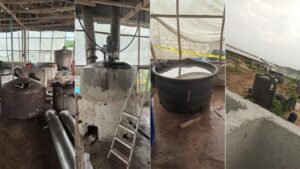
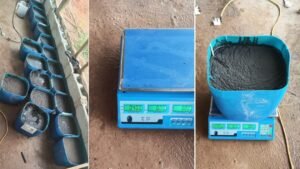
Alongside the arrests, operatives recovered more than 2.4 tonnes of methamphetamine and precursor chemicals valued at over N480 billion in the international illicit market.
For security experts, however, the operation exposed an emerging reality.
Nigeria is no longer viewed merely as a transit route for narcotics.
Rather, it is emerging as a target for industrial-scale drug manufacturing by transnational criminal organisations.
Against this backdrop, the operation has become one of the clearest examples of the strategic shift that has characterised the NDLEA’s activities over the past five years.
It reflects a move from intercepting illicit drugs after they have entered circulation to identifying, infiltrating and dismantling trafficking organisations before they flood communities with dangerous substances.
Indeed, that proactive strategy, driven by intelligence gathering, surveillance and inter-agency collaboration, has steadily defined the agency’s approach under its Chairman, retired Brig.-Gen. Buba Marwa.
Unlike previous enforcement models that focused largely on seizures at airports, seaports and border crossings, the current approach seeks to attack the infrastructure of organised drug crime itself.
It does this by identifying production sites, tracing financial networks and dismantling trafficking syndicates at their operational bases.
The Ogun operation aptly illustrates that philosophy.
Following months of intelligence gathering, elite operatives of the agency’s Special Operations Unit simultaneously raided multiple locations in Ogun and Lagos States.
The operation led to the arrest of the alleged cartel kingpin, three Mexican methamphetamine specialists and six Nigerian collaborators, while shutting down the industrial-scale laboratory before finished products could reach consumers.
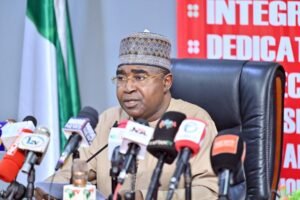
Giving details of the operation in Abuja, Marwa described the breakthrough as another crippling blow to transnational organised crime.
“Today, I am proud to announce that the NDLEA has struck another crippling blow to the heart of transnational organised crime.
“This happened following months of painstaking and credible intelligence gathering. Operatives of the Special Operations Unit launched well-coordinated strikes across Ogun and Lagos States within a space of 48 hours”.
He said the operation reflected the agency’s determination to dismantle criminal organisations rather than merely intercept drug consignments.
“This network did not just traffic drugs. They were actively manufacturing industrial-scale quantities of highly lethal illicit substances right on our soil, threatening the national security and public health of Nigeria”.
Marwa said intelligence gathered by the agency also confirmed the growing involvement of foreign criminal experts in Nigeria’s illicit drug industry.
“Among those arrested are three Mexican nationals brought into the country specifically to cook this deadly substance, alongside four Nigerian collaborators”.
According to the NDLEA, the operation prevented millions of street doses of methamphetamine from entering local and international markets.
Significantly, the seizure came only weeks after another major operation involving the dismantling of an international drug trafficking organisation linked to multiple foreign law enforcement agencies, suggesting an increasingly coordinated offensive against organised drug networks.
Taken together, these operations reflect, for many analysts, a broader evolution in Nigeria’s response to drug trafficking.
The global narcotics trade has become more decentralised.
Consequently, as enforcement pressure intensifies in traditional production centres, criminal organisations have begun relocating manufacturing facilities to regions where governance challenges, porous borders and expanding transport networks provide new opportunities.
As a result, West Africa has emerged as a region of growing concern.
The involvement of Mexican methamphetamine producers in the Ogun laboratory demonstrates how international criminal syndicates are exporting technical expertise beyond Latin America while partnering with local networks to establish production hubs closer to African and European markets.
In response, this changing landscape has compelled Nigerian authorities to move beyond reactive enforcement.
Marwa said the volume of illicit substances recovered from the forest laboratory underscored the scale of the threat posed by industrial-scale drug production.
“The operation yielded more than 2.4 tonnes of chemical materials, including highly toxic, volatile and crystallised methamphetamine worth over N480 billion.
“Imagine this humongous amount in the control of criminal elements.
“The finished and liquid methamphetamine seized represents millions of street doses that would have flooded our local communities and international markets, causing untold destruction, psychosis and violence”.
He warned that the agency remained alert to changing tactics adopted by international drug syndicates.
“We are fully aware of the shifting tactics of these cartels, including the disturbing trend of hiring South American cartel specialists to set up production factories in our rural communities.
“Let it be known that no matter how deep into the bush you hide, no matter how secure your gated estate is, the NDLEA will hunt you down, disrupt your networks and seize your ill-gotten wealth.”
According to NDLEA statistics, more than 80,000 suspected drug offenders have been arrested over the past 65 months, while more than 15 million kilogrammes of assorted illicit drugs have been seized.
The agency has also secured over 15,000 convictions through intelligence-led operations and enhanced prosecution.
Beyond supply reduction, the agency has expanded efforts to reduce demand through its War Against Drug Abuse (WADA) campaign, which has reached schools, markets, workplaces, religious centres and communities across the country.
More than 50,000 people have also received counselling, treatment and rehabilitation services through NDLEA facilities nationwide.
Even so, drug policy experts caution that enforcement alone cannot eliminate drug abuse.
According to Dr Hope Omeiza, Executive Director of Vanguard Against Drug Abuse (VGADA), sustainable success depends on balancing law enforcement with prevention, treatment, rehabilitation and social reintegration.
“The fight against drug abuse cannot be won by enforcement alone. It requires prevention, treatment, rehabilitation, recovery and reintegration working together as one comprehensive response”.
Omeiza said Nigeria and other countries in West Africa were also becoming targets for international drug syndicates seeking new production hubs.
“Nigeria and other countries in the region are no longer viewed solely as transit routes for illicit substances but are increasingly being targeted as production hubs by international criminal organisations.
“Against this backdrop, the Ogun operation assumes even greater significance”.
He, however, urged stakeholders not to relent, noting that emerging drug trends and new psychoactive substances require continuous innovation, public awareness and stronger institutional responses.
In the same vein, the United Nations Office on Drugs and Crime (UNODC) has commended Nigeria’s efforts to integrate supply reduction with public health interventions while strengthening intelligence systems capable of detecting emerging synthetic drugs and evolving trafficking patterns.
Speaking at the commemoration of the 2026 World Drug Day, the UNODC Country Representative, Mr Cheikh Toure, praised the Federal Government and the NDLEA for sustaining a balanced approach to drug control.
According to him, combining law enforcement with prevention, treatment and respect for human rights remains consistent with global best practices.
“Innovation is not always about introducing entirely new ideas but about implementing proven interventions consistently, effectively and at scale”.
Toure said UNODC was strengthening intelligence gathering and data systems, including early warning mechanisms capable of detecting emerging drug trends, particularly synthetic substances, to support timely policy decisions.
He added that sustained political commitment, strategic investment and stronger collaboration among institutions remained essential to addressing the country’s evolving drug challenge.
Meanwhile, security analysts warn that organised criminal groups are highly adaptive.
As authorities dismantle one network, traffickers often establish new routes, recruit different collaborators and modify production methods.
Accordingly, sustaining recent gains will require continuous intelligence gathering, stronger financial investigations, tighter border surveillance and closer international cooperation.
To achieve this, collaboration has become one of NDLEA’s strongest operational tools.
Partnerships with the Nigeria Customs Service, Nigeria Police Force, National Agency for Food and Drug Administration and Control, Nigeria Immigration Service, Nigeria Security and Civil Defence Corps and the Armed Forces have strengthened the agency’s domestic response.
This has been complemented by intelligence sharing with counterparts in the United States, Europe, Asia and other African countries.
The agency has also strengthened cooperation with the U.S. Drug Enforcement Administration, the U.S. Bureau of International Narcotics and Law Enforcement Affairs, the UK National Crime Agency, UK Border Force and other international partners.
These collaborations have enhanced Nigeria’s ability to investigate sophisticated transnational drug networks whose operations span several jurisdictions.
Nevertheless, experts argue that reducing the profitability of the illicit drug trade will ultimately depend not only on arrests and seizures but also on reducing demand through education, youth engagement, economic opportunities and accessible treatment and rehabilitation services.
Viewed from that perspective, the Ogun methamphetamine laboratory seizure represents more than an impressive enforcement statistic.
It illustrates an evolving strategy aimed at dismantling criminal organisations before they establish deeper roots within Nigerian communities.
By locating and destroying an industrial-scale production facility before millions of doses reached consumers, the NDLEA demonstrated a growing capacity to strike at the heart of organised drug networks rather than merely intercepting their products after distribution.
Whether this approach can permanently disrupt the sophisticated international drug cartels remains to be seen.
Nonetheless, recent operations indicate that Nigeria’s anti-drug campaign is becoming more intelligence-driven, more proactive and more focused on targeting the architects of organised drug crime than simply reacting to its consequences.
For many observers, that represents a major shift in the country’s response to one of its most persistent security and public health challenges.(NANFeatures)
Edited by Tosin Kolade
***If used, please credit the writer and the News Agency of Nigeria.