


By Salamat Abu, News Agency of Nigeria (NAN)
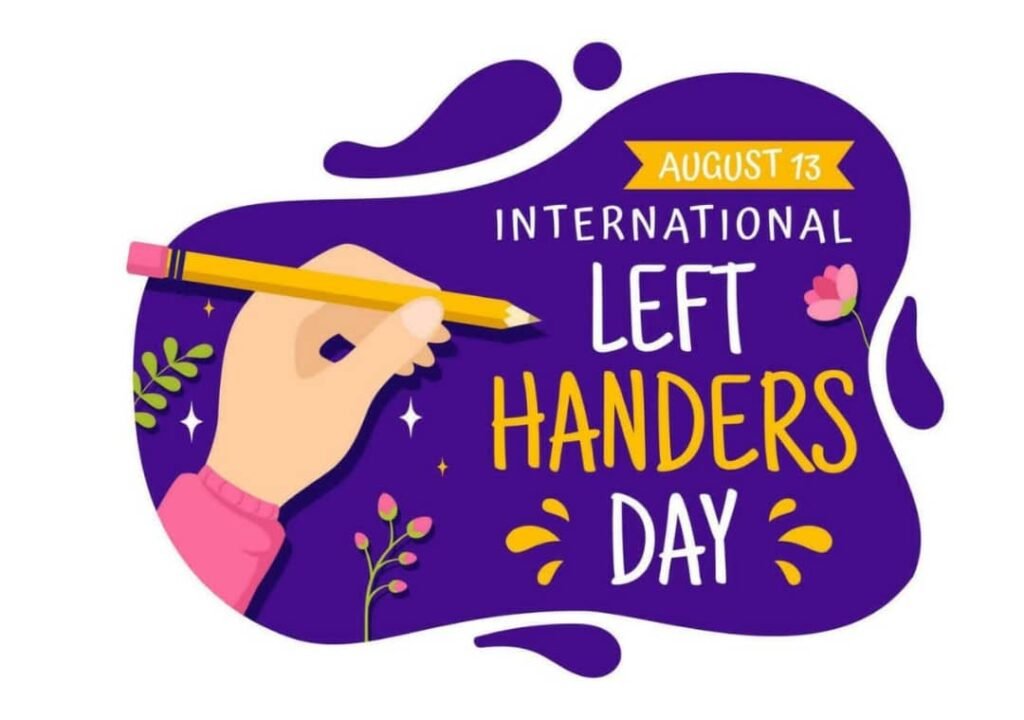
On Aug. 13, the world marked International Left-Handers Day, an annual observance.
The day provides an opportunity to recognise left-handed people and highlight the challenges they face in a world largely designed for right-handed people.
For many people, using the left hand may appear to be an ordinary preference, but for some Nigerians, it has been a lifelong experience of correction, cultural expectations and learning to embrace who they are.
About 10 per cent of the world’s population is estimated to be left-handed, while roughly 90 per cent predominantly use their right hand for complex manual tasks.
The observance was created in 1992 by the Left-Handers Club to raise awareness about the advantages and disadvantages experienced by left-handed people.
Although left-handedness is a natural variation in human behaviour, cultural beliefs have historically influenced how left-handed people are treated in different societies.
According to Ocklenburg and Güntürkün (2018), research on the biological basis of handedness indicates that it is influenced by genetic, developmental, hormonal, and environmental factors rather than being caused by one single gene or medical condition.
Medical research shows that handedness is a normal variation in human development influenced by a complex interaction of genetic and developmental factors.
Scientists have identified multiple genetic variants associated with handedness, but there is no single gene responsible for whether a person becomes left- or right-handed.
Karim Abu, a 74-year-old retired civil servant, shared his experience of growing up left-handed in a society where using the left hand was discouraged.
Abu said he was naturally left-handed but was forced by tradition to use his right hand for writing and eating.
He said the pressure was particularly strong in school, where children were expected to write and eat with their right hands.
“I changed from writing with my left hand in Class Five, around 1965, after all the pressure and beatings.”
According to him, the experience reflected the strong cultural belief at the time that using the left hand for eating or writing was unacceptable.
Abu said he currently has a child who was left-handed, although he was unsure whether she eventually changed to using her right hand.
He added that he also has a grandchild who currently uses the left hand.
Abu advised parents to allow children to retain their natural hand preference, saying forcing them to change could have negative consequences.
“It is better for people to continue with what God has blessed them with. Changing it can affect their thinking faculty,” he said.
In many African communities, including some Nigerian cultures, the left hand has traditionally been associated with activities considered less acceptable–particularly greeting elders, eating and giving or receiving items.
For Modupe Ahmed, 44-year-old businesswoman, growing up left-handed in a Yoruba home meant constantly being reminded that her preferred hand was considered the “wrong hand.”
“Being a left-handed person has been an interesting experience for me, especially growing up in an African home.
“In our culture, a left-handed person is often seen as using the wrong hand, particularly when greeting, giving or receiving things, especially eating,” she said.
Ahmed said she was frequently corrected while growing up and was encouraged to use her right hand because of cultural beliefs surrounding left-handedness.
“Sometimes, it was done out of discipline and sometimes because that was simply how our parents were brought up.
“As a Yoruba person, they will say ‘owo osi’; they believe that the left hand is associated with bad luck,” she said.
According to her, reactions to her left-handedness have varied, with some people finding it interesting while some older people still hold traditional beliefs about using the left hand.
Ahmed recalled that even her late grandmother tried to change her hand preference by helping her learn to eat and write with her right hand.
“I used my left hand for everything but she was able to manage my left hand by helping me to use my right hand.
“I couldn’t even use my right hand to eat before, but with the culture and fear that was instilled in me, I am able to write and eat with my right hand today.”
In spite of learning to use her right hand, Ahmed said she remained naturally left-handed and could perform tasks with both hands, including writing.
She said her experience showed how cultural expectations could sometimes make simple activities more difficult for left-handed people.
“I wouldn’t say I was denied opportunities because I was left-handed, but I would say there are times when being left-handed made things more difficult.”
Ahmed recalled an incident at a market where a seller reprimanded her after she used her left hand to taste garri.
“I was in the market one day, testing garri, and I just took a little portion with my left hand into my mouth. The seller admonished me not to use my left hand on what she was selling.”
She, however, noted that attitudes appeared to be changing, with greater acceptance among younger people.
Ahmed said she was happy to have a left-handed child and would not force the child to change a natural preference.
“I wouldn’t force a child to change something that comes naturally to them. I will still teach them the cultural aspect that comes with showing respect, especially to elders.
“But I will also tell them that being a left-handed child is not a bad thing,” she said.
Similarly, Jumai Musa, a 40-year-old civil servant, said her experience was shaped by being forced to switch hands during her primary school years.
“As early as primary school, I wrote and used my left hand for practically everything.
“From school, I was forced to use my right hand to write.”
Musa said the experience continued to affect her even as an adult, particularly when she was learning practical skills.
“Today, I wish I wasn’t forced to change because this affects me a lot.
“I remember when I was learning to sew, despite that my teacher was left-handed, I was always confused about which side to toe.”
She said that being forced to abandon her natural hand preference created unnecessary confusion and made her appreciate those who were allowed to remain left-handed.
“Today, I simply admire people who use their left hands and silently wish that was me.”
She said she would ensure her children were not subjected to the same experience if they turned out to be left-handed.
“When I start having my children, I will not allow them to experience this kind of confusion. If they are left-handed, I will let them be and fully express themselves.”
Beyond cultural expectations, left-handed people may also face practical challenges because many everyday items are designed predominantly for right-handed users.
These include scissors, school desks, writing surfaces, computer mice, kitchen utensils, sports equipment and some specialised tools.
International Left-Handers Day therefore seeks to encourage greater awareness and more inclusive designs that make everyday activities easier for left-handed people.
Musa urged society to accept people with their natural differences rather than trying to change them.
“My advice to people is to accept people for who they are because some things are just natural and shouldn’t be changed or tampered with,” she said.
Analysts say celebrating left-handedness is about embracing differences, as real acceptance means letting children naturally use the hand they prefer.(NANFeatures)
***If used, please credit the writer and the News Agency of Nigeria.

Comments