





By Emmanuel Oloniruha
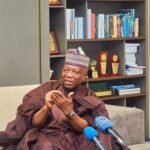
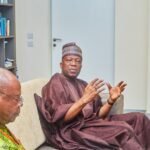
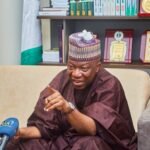
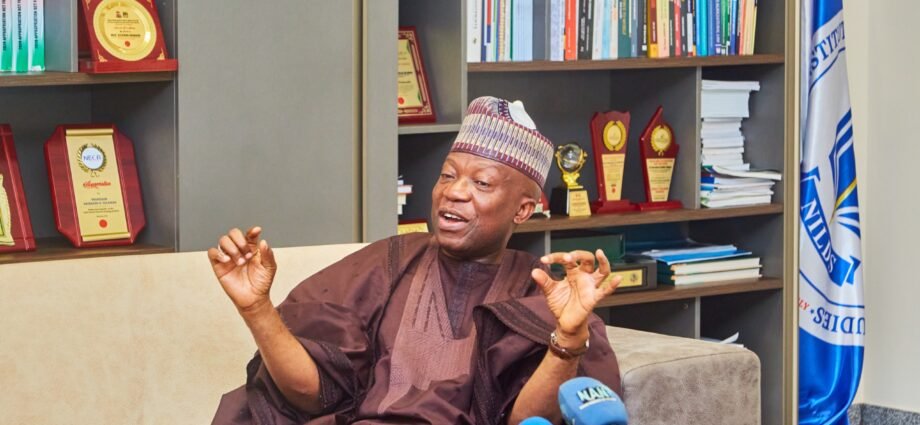
Prof. Abubakar Sulaiman, Director-General, National Institute for Legislative and Democratic Studies (NILDS), says the institute is currently functioning as the primary engine room, bridging the gap between academic research and legislative policy-making in Nigeria.
Sulaiman stated this when he featured on the News Agency of Nigeria (NAN) Personality Interview Series on Sunday in Abuja.
According to him, the institute operates on both demand-driven and supply-driven frameworks to support parliamentarians in drafting bills, motions and enhancing comprehensive policy interventions.
“Everything we do here is about research. The legislature makes laws and sends bills to us for our inputs.
“Demand-driven interventions are requested directly by lawmakers, while supply-driven ones are critical policy issues we identify independently and forward to them,” Sulaiman explained.
He said that NILDS routinely addressed critical national issues such as security, police reform, local government autonomy and conflicting judicial pronouncements by convoking workshops, dialogues and expert interfaces to inform legislative actions.
On emerging national challenges, including electoral reforms and constitutional amendments, he said that NILDS fellows were actively engaged with both the Senate and the House of Representatives.
The director-general cited a recent international engagement in Morocco where experts gathered to evaluate structural options for national security and policing reforms.
“NILDS is the capacity-building institution of the Nigerian parliament. It’s the knowledge think-tank for Nigerian democratic institutions in the country and, by extension, the West African sub-region.
“Our mandate is very clear: to nurture the skills of democratic actors, to nurture the skills of parliamentarians and parliamentary staff.
“It is also to serve as the research and academic hub for legislatures, both at the state and national levels, democratic actors, democratic institutions and to enhance the capacity of any critical actor that has something to do in democracy,’’ he said.
On his achievements, Sulaiman said that the last seven years in NILDS had been rewarding and challenging, while it also came with lots of exposure.
“Since I took over in the year 2019, precisely June 3, 2019, it has been from one remarkable mileage to another,’’ he said.
He said that NILDS, under his watch, had been able to keep tabs with the mandate of the institute, especially in the areas of enhancing the capacity of parliamentarians and parliamentary staff members, both at the National Assembly and state Houses of Assembly.
“We have also trained a lot of Nigerian legislators at the state level. We have enhanced the capacity of democratic actors: political parties, NGOs and critical institutions in democracy,’’ he said.
Sulaiman added that under his leadership, NILDS had gone beyond award of degrees at B.Sc. level to award of Master’s degrees (M.Sc) and Doctorate (PhD), in collaboration with some universities, including Federal University of Lokoja and University of Abuja.
“In other words, the partnership I met on ground at that level was just for University of Benin.
“But now, we are collaborating with Federal University of Lokoja; we are collaborating with UniAbuja, now Yakubu Gowon University.
“We are collaborating with Institute of Korea Strategy and Administration Network (IKSAN) and quite a lot of other institutions even outside the country,’’ he said.
The director-general also pointed out that under his watch, NILDS had expanded from four departments to 13 departments, thus addressing the challenge of career stagnation suffered by members of staff before his assumption of office.
He listed the existing departments before his assumption of office as Research and Training, Postgraduate Studies, Administration and Finance, and Legislative Support Services.
Sulaiman said that today, NILDS could boast of 13 specialised departments, including Training and International Cooperation, Human Resources and Administration, Internal Audit, Security Analysis and Democratic Radio, with additional divisions and units.
“When I took over, we were operating at a temporary site. Where you are today is the permanent site. It was an abandoned project with a lot of liabilities on the projects.
“Within two or three years of my stewardship, we were able to settle all the outstanding liabilities, get this place completed, get (former) President Muhammadu Buhari to commission this edifice four days to his exit. Today, we are operating from our permanent site,’’ he said.
In the areas of staff welfare, Sulaiman said that before his appointment, less than 10 out of 103 staff members he inherited could boast of exposure to international training.
“Within six months of my stewardship, it’s on record that I ensured that at least, almost 60 per cent of the staff members went for international training because you can’t train people without you yourself being trained.
“It’s not just for us as an institute to facilitate international training for parliamentarians, for senators, for House of Representative members, for state assemblies. What about our staff members? What is good for them is good for my staff members too,’’ he said.
Sulaiman added that through the “Train the Trainer’’ initiative, he had expose NILDS staff members to international best practices.
“Both research and non-academic staff members were opportune to attend international training before the end of my first tenue in 2023. And when I say all, I’m talking of almost 130-something staff members.
“This does not take away our services to National Assembly in terms of facilitating training and workshops for them; in terms of conducting research; in terms of outputs, briefs, analyses; in terms of bills drafting,’’ he said.
The director-general also stated that before now, the institute only facilitated research grants for researchers.
He, however, said that in less than one year in office, he ensured that the Governing Council increased the grants from 100 to 200 per cent and that it was extended to researchers in the institute.
“Also for the non-academic staff members who were not taking anything too, I introduced hazard allowance. They are now collecting hazard allowance, which was not known before.
“Before I took over, there wasn’t anything like staff members going on sabbatical, or researchers coming on sabbatical from other universities. The sabbatical engagement started when I took over in the last seven years,’’ he said.
Sulaiman also disclosed that the institute, under him, had trained no fewer than 300 young lawyers on legislative drafting pro bono.
Also on career enhancement, Sulaiman said that before his appointment, research fellows in NILDS were not advancing beyond senior research fellows.
He said his leadership did not only have senior researchers, he got the approval of the Governing Council for the institute to award professorial chairs to its staff members.
“Today, we have staff members who are professors, courtesy of the inputs of the DG, which saw the approval and the blessings of the governing council.
“Beyond that, we have increased salaries of staff members up to two times in the last seven years of my stewardship.
“Staff members who were on contract for years got their contract confirmed as permanent staff. We had issues of stagnations in promotions which I also addressed,’’ he said.
Sulaiman added that his leadership had also established clinic, approved maternity leave for women and also established creche for breastfeeding mothers, among other several innovations and achievements.(NAN)(www.nannews.ng)
OBE/FEO/WAS
========
Edited by Francis Onyeukwu/’Wale Sadeeq