


By Emmanuel Oloniruha
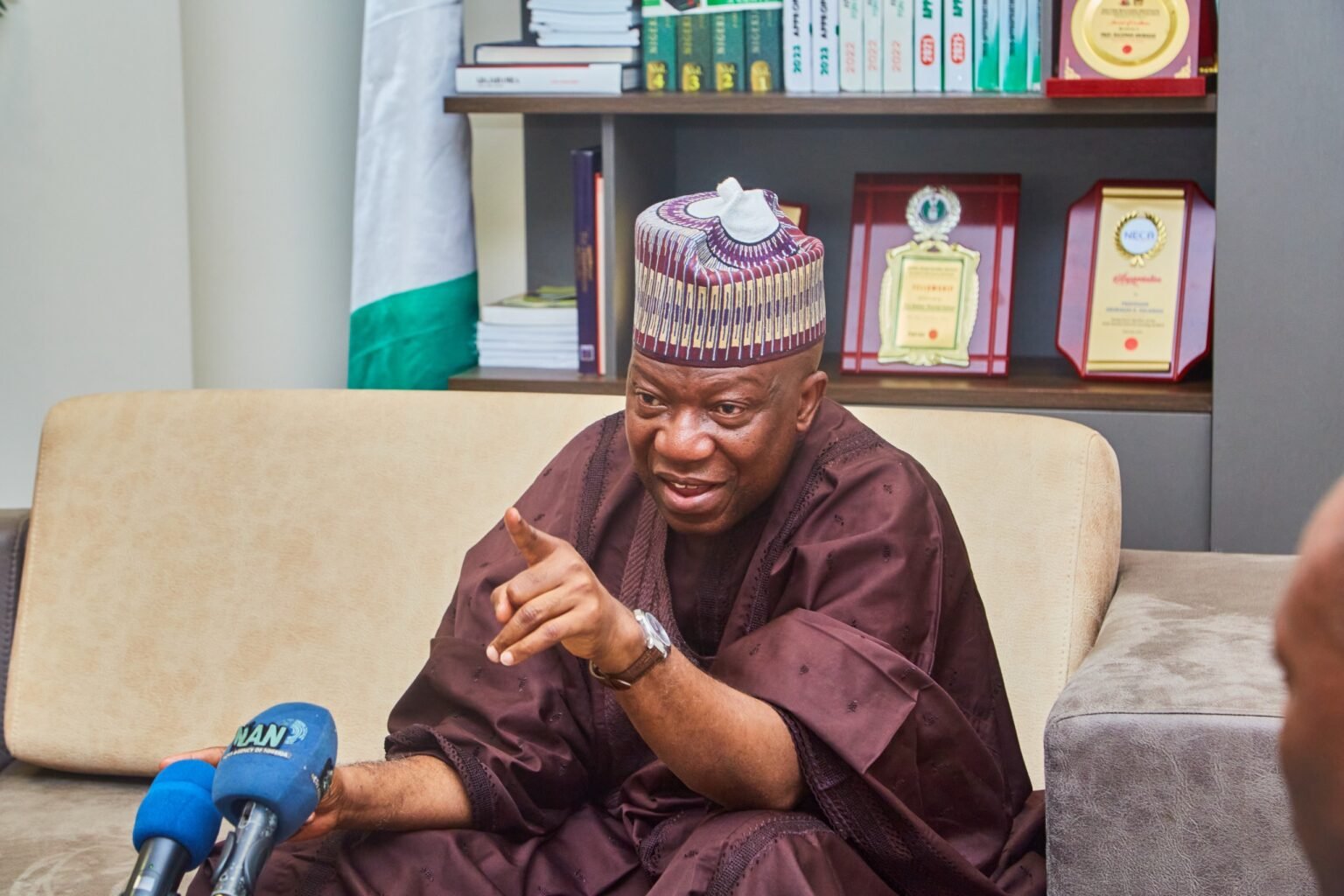
The Director-General, National Institute for Legislative and Democratic Studies (NILDS), Prof. Abubakar Sulaiman, says nothing is wrong with having a harmonious relationship between the executive and the legislature arms of government in a democratic system.
According to him, rather than people tagging the legislative arm engaging in such a relationship with the executive as “rubber stamp”, the harmonious relationship is vital for the smooth running of government.
Suleiman stated this on Sunday in Abuja while featuring on the News Agency of Nigeria (NAN) Personality Interview Series.
He argued that a cordial relationship between the two arms of government does not necessarily make the national assembly a rubber stamp.
Reacting to public criticisms framing the 10th National Assembly as an appendage of the executive arm, Sulaiman said that democracy had more to benefit when the two arms of governments were in unity than in friction.
He recalled previous assemblies where severe political frictions halted legislative progress and delayed the delivery of democratic dividends to Nigerians.
“We have history to ourselves. We have had Assemblies that had it rough with the executive in the past, and when they had it rough with the executive, the Nigerian masses lost.
“The masses lost because the face-off, the friction, did not allow the smooth sailing of interactions between the two arms of government.
“An indelible case was under former President Olusegun Obasanjo, and the last one was under Sen. Bukola Saraki as the President of the Senate and former President Muhammadu Buhari.
“What ought to have been dividends of democracy in terms of lofty programmes, in terms of lofty legislation, in terms of lofty policies, eluded us because of that friction.
“Perhaps that informed the disposition of the Ninth Assembly and, by extension, the 10th Assembly, that rather than “war-war,” let’s “jaw-jaw,” he said.
The director-general described the current disposition toward cooperation, rather than confrontation, as standard democratic practice globally, including advanced democratic systems.
“Not only in Nigeria; even in the US, there tends to be some relative collaboration between the legislature and the executive.
“That is why in any parliament, there’s what you call the lobby group, there’s what you call the caucus group.
“The caucus group serves as buffer that tends to assist the executive. By the time they are advancing anything to the House, they receive it first, they look into it and so, it’s normal in any democracy,” he said.
Sulaiman said while the harmonious relationship was critical, the lawmaker could sometimes overreach or handle sensitive deliberations inappropriately in full public glare, making them to be stigmatised as an appendage of the executive, glue or rubber stamp.
“Perhaps the abuse here, or where we are getting it wrong here, is that when you want to go on any “jaw-jaw” that has some serious national implication, you go into executive session.
“Some of the issues, debates, resolutions that were televised live shouldn’t be televised live.
“Some of the utterances of some parliamentarians are becoming unexpected of parliamentarians and they tend to anger Nigerian people,’’ Sulaiman said.
While encouraging continued executive-legislative cooperation, the director-general urged lawmakers to exercise better discretion and conduct in order to regain public confidence.(NAN)(www.nannews.ng)
OBE/FEO/WAS
==========
Edited by Francis Onyeukwu/’Wale Sadeeq

Comments