


By Aderogba George
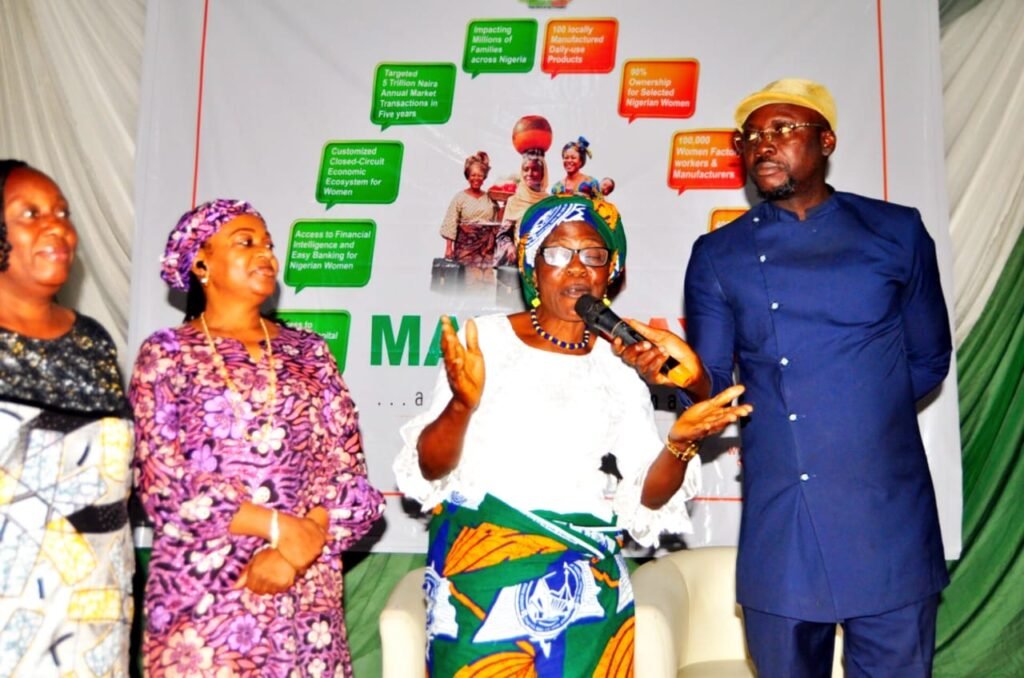
Mrs Chinwe Obi, National Coordinator, Mama’s Manufacturing Company, says the “Mama Pay” empowerment programme will train more than 5,000 women in manufacturing across Nigeria.
Obi said this at the unveiling of the programme on Monday in Abuja, where stakeholders highlighted strategies for women’s economic empowerment nationwide.
She said the initiative was designed to increase women’s participation in manufacturing through training, ownership opportunities, raw-material supply chains and product distribution networks across Nigeria.
According to her, 90 per cent of the company’s shares will be allocated to Nigerian women, enabling them to earn dividends and build sustainable wealth.
Obi said the company was targeting 100,000 direct factory jobs within its first five years and expected more than 400,000 women to participate nationwide.
She said the initiative would promote local production by sourcing about 80 per cent of its raw materials from within Nigeria to strengthen domestic industries.
Obi said the company would produce food, beverages, beauty, hygiene and household products, with factories established across states based on availability of raw materials.
She said the programme would also provide business and technology training to women, strengthening their capacity to participate effectively in manufacturing and value-chain activities.
Obi said the organisers were collaborating with relevant government and private-sector organisations to ensure compliance with regulatory standards and global best manufacturing practices.
She said the initiative would deploy technology to improve transparency, accountability and efficiency while facilitating women’s access to finance, information and broader market opportunities.
Obi said the programme would face challenges, particularly knowledge gaps, but regular training, mentorship and orientation programmes would help address such limitations effectively.
She urged Nigerian women to participate actively in the programme and take advantage of opportunities provided for ownership, entrepreneurship and long-term economic empowerment.
Earlier, Mrs Ruth Akoh, Head of Screening and Mobilisation, Mama Pay West Africa, said the initiative was designed to address gaps between government policies and implementation.
Akoh said ‘Mama Pay’ had moved beyond seminars and training programmes to practical implementation, focusing on equipping women with skills and linking them directly.
“We have good policies in Nigeria, but implementation is where the challenge is. This is where Mama Pay is coming in,” she said.
Akoh said the initiative would help bridge information gaps while providing trained women with access to established markets for products manufactured through the programme.
She said Mama’s Manufacturing Company was designed to create an ecosystem where women could produce goods while enjoying guaranteed access to viable markets.
She said the programme would not be restricted to Abuja, adding that activities would extend to Akwa Ibom, Lagos and other states nationwide.
Akoh said the initiative would subsequently expand into other West African countries, creating broader opportunities for women entrepreneurs and strengthening regional economic integration efforts.
Also speaking, Dr Victoria Akai, Chief Executive Officer of Duchess Nigeria Ltd. and former Director-General, Abuja Chamber of Commerce and Industry, emphasised women’s economic inclusion.
Akai, who delivered the keynote address, said women’s participation in ownership, production and decision-making processes remained critical to sustainable economic development and growth.
She said a women-centred economic system should effectively connect skills acquisition with finance, production, market access and long-term wealth creation opportunities.
Akai called for improved access to finance, infrastructure, markets, technology and legal protections to support growth and sustainability of women-owned businesses nationwide.
She said such interventions would strengthen productivity, promote job creation, enhance food security and boost intra-African trade across multiple sectors and industries.
Akai urged government and private-sector organisations to create more procurement opportunities for women-owned businesses and ensure timely payment for goods and services.(NAN)
Edited by Abiemwense Moru
Comments