









By Catherine Egwuom
The Center for the Advancement and Protection of the Rights of Vulnerable People (CAPRIGHTS-VP) has introduced child protection clauses into residential estate governance frameworks in Lagos.
The initiative seeks to make child safeguarding a mandatory condition of community residency and curb child domestic labour, abuse and exploitation within private households.
CAPRIGHTS-VP implemented the initiative under the Freedom Fund’s Programme to address Exploitative Child Domestic Work in Lagos, securing commitment from Goodluck Jonathan Estate, Isheri-Idimu, a statement on Monday said.
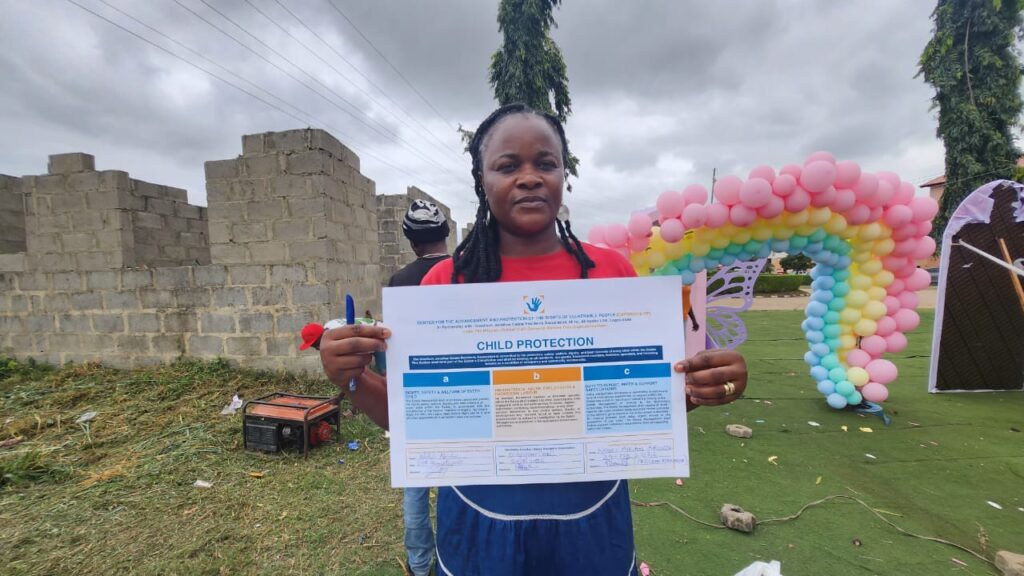
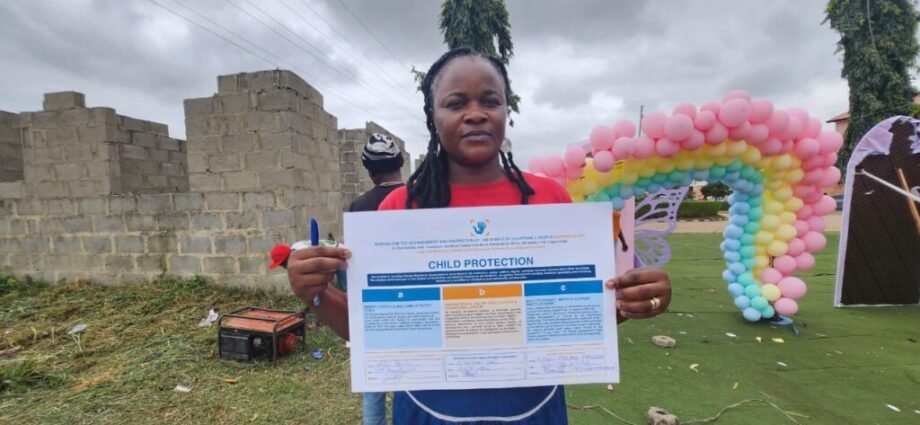
The estate, located in Alimosho Local Government Area and housing more than 4,000 residents, committed to adopting child protection measures in its governing constitution.
The commitment document was signed by the estate’s Chairman, Mr Adelaja Abiodun; Secretary, Mrs Olusegun, and CAPRIGHTS-VP Programme Manager, Ngozi Arinze.
A 2024 Freedom Fund and NORC University of Chicago study found that 96.7 per cent of surveyed child domestic workers experienced at least one indicator of worst forms of child labour.
The study, titled Behind Closed Doors: Measuring the Scale and Nature of Exploitative Child Domestic Work in Nigeria, covered child domestic workers in Lagos and Edo.
It also found that 88.9 per cent faced working conditions violating Nigerian labour or child-rights laws, while 53 per cent worked seven days weekly without rest.
According to the study, 21.4 per cent worked more than 42 hours weekly, while children entered domestic work at an average age of 10.1 years.
The organisation said 35 per cent of the children studied started domestic work before age 10, highlighting the need for stronger community-level protection mechanisms.
CAPRIGHTS-VP said residential estates were targeted because child abuse and domestic exploitation largely occurred behind closed doors, away from public inspection systems.
The organisation noted that estate management constitutions could provide direct local mechanisms for establishing and enforcing child protection standards within residential communities.
The adopted clause requires estate management to uphold children’s rights, safety, welfare, dignity and best interests, in line with relevant Nigerian and Lagos laws.
It prohibits residents, household members and business operators from subjecting children to abuse, neglect, exploitation, trafficking, hazardous labour or conduct detrimental to their welfare.
The clause further provides that residents violating the provision would face investigation by estate management and referral to appropriate government authorities.
It also places a duty on residents to promptly report suspected child abuse, exploitation or neglect, while requiring estate management to keep reports confidential.
Serious cases, according to the clause, must be immediately referred to relevant government or law enforcement authorities, without internal processes delaying urgent intervention.
The estate is also required to support initiatives promoting child safeguarding within the community, strengthening collective responsibility for children’s welfare.
CAPRIGHTS-VP said Alimosho, one of Nigeria’s most densely populated local government areas, has significant concentrations of child domestic workers in private households.
The organisation attributed the situation partly to rural-urban economic pressures, which contribute to children being placed in domestic work in private homes.
CAPRIGHTS-VP said negotiations were ongoing with other estate associations, Local Council Development Authorities (LCDAs) and state actors to expand the safeguarding model across Lagos.
The organisation urged landlords, estate executives and community leaders nationwide to emulate Goodluck Jonathan Estate by embedding child protection provisions alongside routine residential rules. (NAN)
Edited by Vivian Ihechu