


By Edith Tsokar
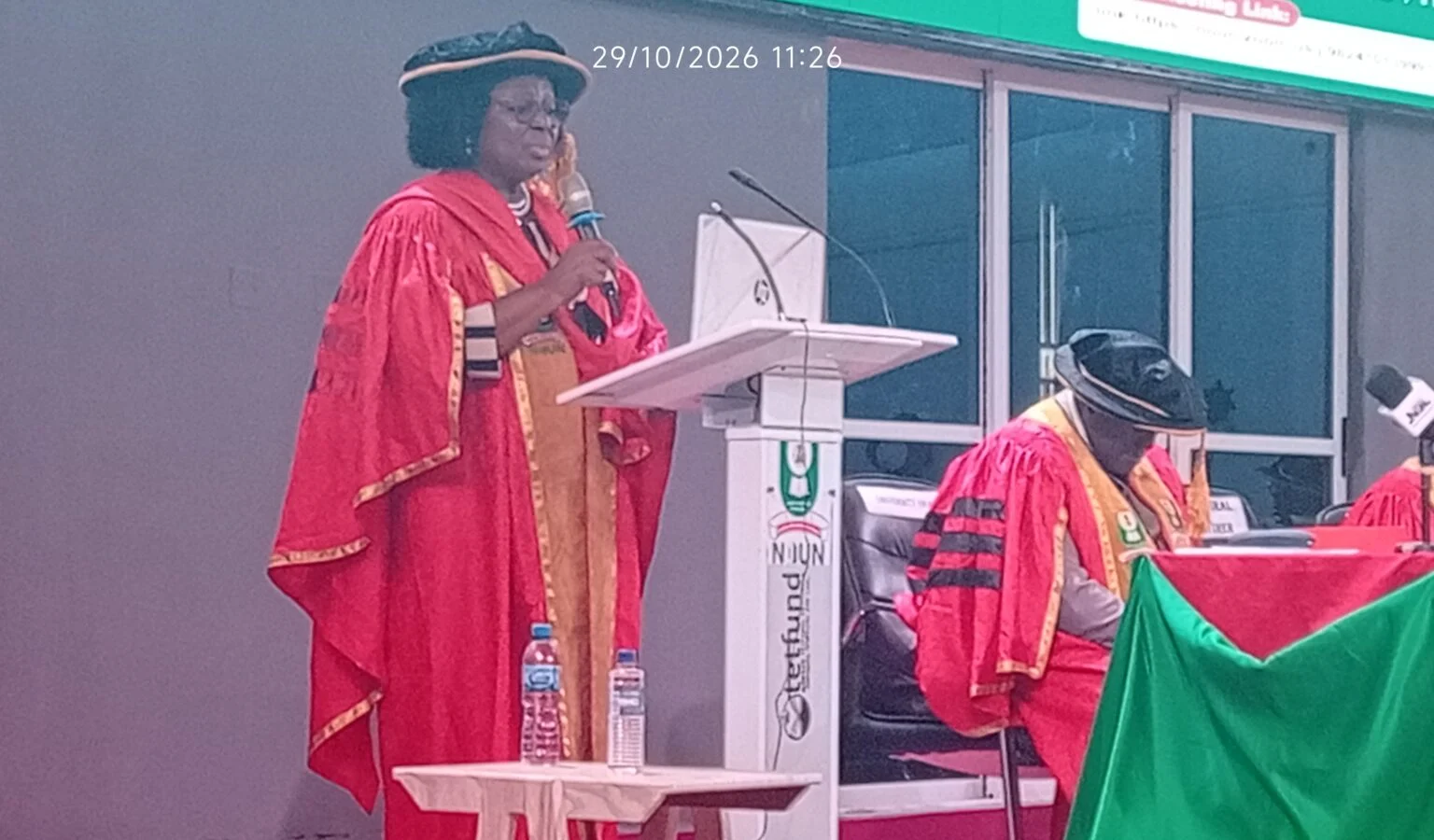
Prof. Yemisi Ogunlela of the National Open University of Nigeria (NOUN), has urged the Federal Government to adopt gender-responsive policies to address inequalities in education, healthcare and political representation.
Ogunlela, a Professor of Public Administration, Public Policy and Gender Studies, made the call on Thursday in Abuja, while delivering the university’s 44th inaugural lecture.
The lecture, titled, “She is a Beautiful Baby Girl; He is a Bouncing Baby Boy”, examined how societal perceptions shape public policies and national development.
She said that seemingly harmless descriptions of newborn girls as “beautiful” and boys as “bouncing” reinforce stereotypes that influence expectations, responsibilities and opportunities available to individuals from childhood.
According to her, such perceptions often become embedded in family practices, educational institutions, workplaces and government policies, thereby limiting individual potential and undermining inclusive development.
The don noted that gender differences become development inequalities when institutions attach unequal opportunities, responsibilities, resources and decision-making powers to men and women.
“If women are disadvantaged, it limits the country’s productive, intellectual, and civic capacity,” she said..
Noting that gender inequality affects human capital, Ogunlela stressed the need to address structural barriers.
Drawing from personal experience, Ogunlela recalled how a family acquaintance once questioned her father’s decision to have several daughters, suggesting they would eventually leave the family and achieve little.
She said the encounter, although painful, strengthened her determination to pursue education and investigate the social beliefs responsible for women’s marginalisation.
The professor also recalled instances in her academic career when colleagues discouraged her from contributing during departmental meetings because she was a woman, describing such experiences as institutional barriers to equal participation.
She called for a gender-responsive public administration that considers the different needs and experiences of citizens during policy formulation, budgeting, implementation, monitoring and evaluation.
According to her, policymakers should examine who benefits from government programmes, who remains excluded, and whether prevailing stereotypes influence the distribution of public resources.
She explained that gender-responsive budgeting does not necessarily require separate budgets for women and men, but demands an assessment of how public expenditure affects different demographic groups.
The don also highlighted caregiving responsibilities as a major factor limiting women’s professional advancement, urging institutions to address practical barriers affecting their participation in training, research, and leadership.
She stressed the importance of gender-disaggregated data in evaluating government interventions, noting that aggregate figures could conceal inequalities in access to public resources and essential services.
Addressing healthcare inequalities, Ogunlela drew from her research on obstetric fistula—a childbirth-related condition that exposes affected women to stigma, rejection and social isolation.
She recalled interviewing affected women during a 2010 study on human poverty and obstetric fistula, describing their experiences as heartbreaking while highlighting the consequences of inadequate maternal healthcare.
The academic called for improved maternal healthcare awareness, timely medical attention during childbirth and greater accountability in the management of public healthcare resources.
She expressed concern that some women continued to incur substantial medical expenses despite government claims of free maternal healthcare, citing cases where hospital charges reportedly reached N150,000 or more.
Ogunlela also questioned the alleged diversion of medical equipment donated to public hospitals and clinics to private facilities, urging relevant authorities to investigate the allegations and strengthen accountability.
On political representation, she cited figures indicating that women account for about four per cent of National Assembly membership and 18 per cent of senior positions in the executive arm of government.
She asserted that women’s meaningful participation in decision-making is essential to ensuring that public policies reflect citizens’ actual experiences, adding that gender equality should not be interpreted as favouring one sex over another.
“The aim is not to favour one gender over another, but to ensure that all genders enjoy equal opportunities, equal rights, and equal access to resources,” she said.
She urged government institutions, families and communities to challenge limiting stereotypes, support girls’ education and adopt evidence-based policies capable of promoting accountability, equal opportunities and sustainable national development.
In his remarks, the Vice-Chancellor of NOUN, Prof. Uduma Uduma, who was represented by the Deputy Vice-Chancellor (Academic), Prof. Chinedu Mafiana, commended Ogunlela for her insightful presentation and exemplary time management. (NAN)
Edited by Philip Yatai
Comments