


By Priscilla Osaje
Mr Lateef Fagbemi, the Attorney-General of the Federation and Minister of Justice, has urged stakeholders to develop concrete frameworks to strengthen inter-agency coordination between copyright authorities and cybersecurity agencies.
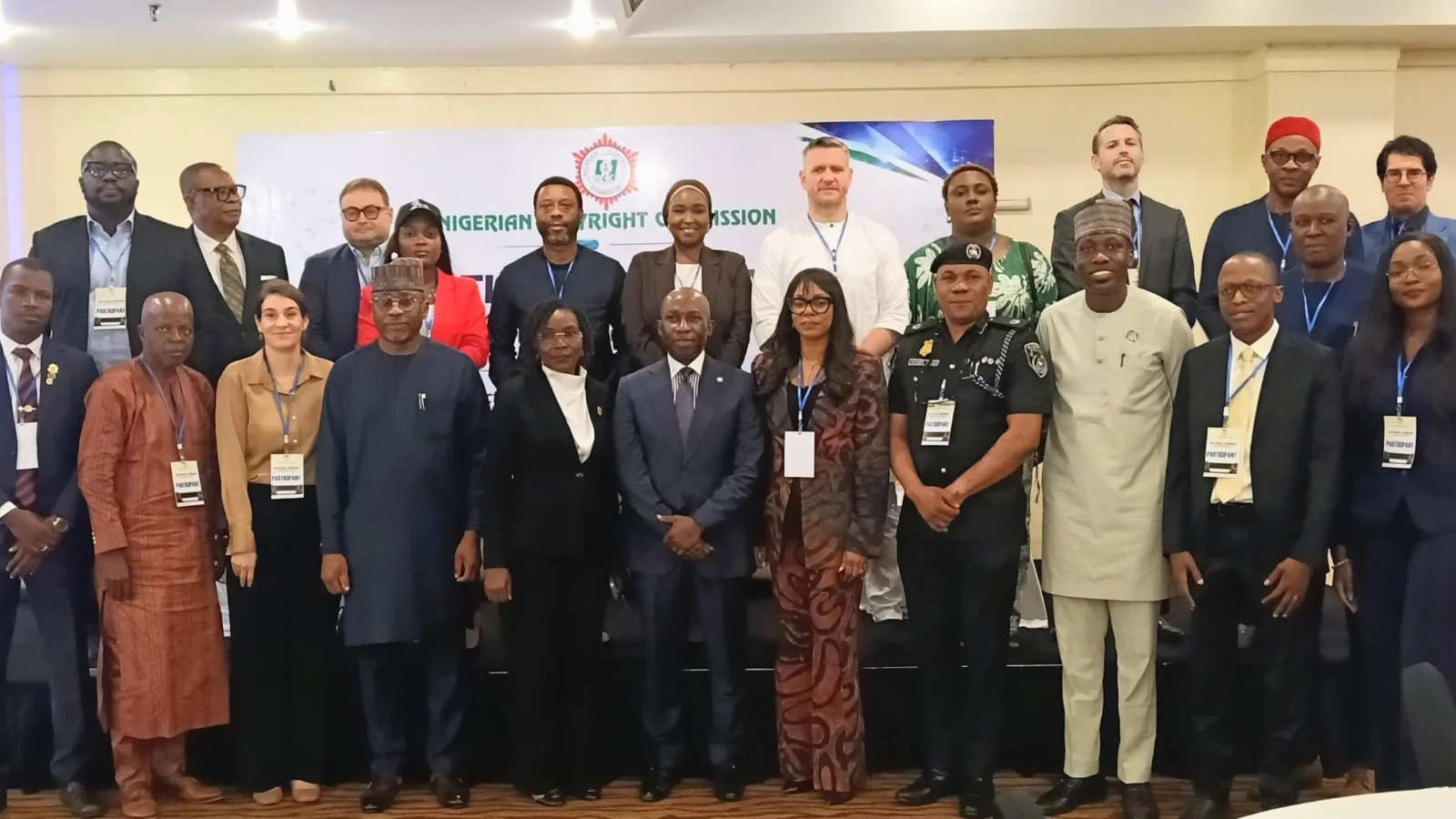
Fagbemi made the call at the National Seminar on Copyright, Cybersecurity and Nigeria’s Creative and Digital Economy on Monday in Abuja.
He said this could be achieved by establishing real-time intelligence exchange mechanisms across sectors.
The seminar entitled, ‘Protecting Nigeria’s Creative Economy and Digital Infrastructure Against Online Piracy,` was organised by the Nigerian Copyright Commission (NCC).
The minister, who was represented by Mrs Beatrice Jedy-Agba, Permanent Secretary of the ministry, said this would also deepen formal engagement with internet service providers and digital platforms.
According to him, developing standardised, lawful procedures for expeditiously taking down and blocking infringing online content should also be a focus.
“I call on all participants to explore and leverage advanced technological tools for detecting, disrupting and preventing online piracy, while maintaining unwavering fidelity to the rule of law, constitutional due process and the protection of legitimate digital enterprise.
“In this regard, I am particularly satisfied that a primary deliverable of this seminar is the formulation of the ‘Abuja Copyright Action Plan’.
“This Action Plan must not remain a mere statement of intent. It must serve as an operational blueprint, identifying concrete priority actions, assigning unambiguous institutional responsibilities and establishing a binding mechanism for continuous oversight, evaluation and enforcement.
“Where regulatory, statutory or operational gaps exist, they must be explicitly highlighted, where institutional roles are assigned, designated entities must take immediate and decisive ownership,” he said.
He said that the theme of the seminar sat at the delicate intersection of law, cybersecurity, public policy and economic development, forming a vital pillar of our strategic national discourse.
“Nigeria’s creative industry has grown exponentially in recent years; our music, films, literature, broadcasting, software, fashion and other creative assets continue to gain global acclaim.
“Digital technology has accelerated this expansion, creating unprecedented opportunities for content creation, multi-platform distribution/and commercial exploitation.
“While this growth offers crucial pathways for job creation, foreign direct investment and economic diversification, it simultaneously exposes our creative sector to complex, evolving threats, most notably the proliferation of digital piracy,” he said.
According to him, today, infringing content is reproduced, modified and globally distributed in seconds through illegal streaming platforms, pirate websites and rogue digital services operating across borderless networks.
Fagbemi noted that online piracy cannot be tackled effectively by copyright enforcement authorities operating in isolation.
He said that eliminating digital piracy demands a deliberate, multi-sectoral coalition spanning security and law enforcement agencies, telecommunications operators, among others.
“This collaboration is more urgent because copyright infringement in the digital domain no longer exists in a vacuum.
“It increasingly intersects with organised cybercrime, e-commerce vulnerabilities and threats to the overall integrity of our critical national digital infrastructure.
“There is, consequently, an imperative need for a synchronised national strategy grounded in cross-institutional synergy, shared accountability and actionable consensus.
“The Copyright Act, 2022 has established a modern progressive statutory framework for copyright protection and enforcement.
“Our primary imperative today is to ensure that this law is rigorously operationalised and backed by robust institutional, technological, and procedural arrangements.
“I, therefore, charge all participants and stakeholders to move beyond diagnosing well-known challenges to applying professional zeal to fashioning practical, actionable and sustainable solutions,” he said.
He said the Abuja Copyright Action Plan would serve as a clear reaffirmation of Government’s sustained commitment to eradicating all forms of copyright infringement and safeguarding intellectual property across the Federation.
Fagbemi emphasised that this initiative directly advanced the Renewed Hope Agenda of President Bola Tinubu, particularly its strategic focus on economic diversification, digital transformation, innovation, capital investment, and youth empowerment.
“The Federal Ministry of Justice remains dedicated to strengthening the regulatory and administrative frameworks necessary to fortify investor confidence in Nigeria’s creative economy.
“Our long-term policy objective is to establish “safe corridors” for copyrighted works, creating secure, transparent and accountable legal channels through which creative content can be produced, licensed, distributed, and monetised with absolute certainty.
“I am indeed pleased to also highlight that the Nigerian Copyright Commission (NCC) has significantly upgraded its enforcement posture against online piracy,” he emphasised.
He urged participants to approach the working sessions over the course of the seminar with the seriousness, professional dedication, and strategic discipline this task demands.
“At the end of these proceedings, we must emerge with unambiguous clarity on required interventions, designated executing agencies, and concrete execution timelines.
“On behalf of the Federal Government, I reiterate our firm commitment to building a resilient legal and institutional ecosystem for intellectual property protection, ensuring Nigeria’s creative and digital economy thrives in a secure and orderly environment,” he said.
He commended the leadership of the NCC for this timely initiative, as well as appreciating all distinguished delegates for their participation.
Dr John Asein, Director-General of NCC, said that the timing was significant because the parties have reached a clear convergence on the matter.
According to him, NCC does not in any way abdicate their responsibilities to ensure that every player in the creative sector and the tech sector is governed by certain clear protocols.
“In the part of the Joint Comprehensive Commission, we have stepped up our commitment and we have done more in recent times to ensure that the sector is not only regulated by law.
“But we also took steps to implement and ensure that our huge creative enterprises, creative industry gets the benefits of the technology that is not available for them to be able to put out their works.
“We must recognise that the very technology helping us also poses a significant threat to our industry. Addressing this challenge requires collective effort, as no single agency can tackle it alone,” he said.
He explained that the seminar did not focus on just one sector, but rather intersected copyrights, cybercrime, the creative industry, and the digital economy.”
“I promise that the outcome of this conversation will help us shape policies and advise on the legal framework needed, not only to grow our abundant creativity, but also to make Nigeria an indeed prosperous nation.
”A nation where foreign direct investments will be attracted and every player, whether you are in Nigeria or outside, will be comfortable that indeed you have government backing your industries,” he stressed.(NAN)
Edited by Joseph Edeh



Comments