


By Philomina Attah
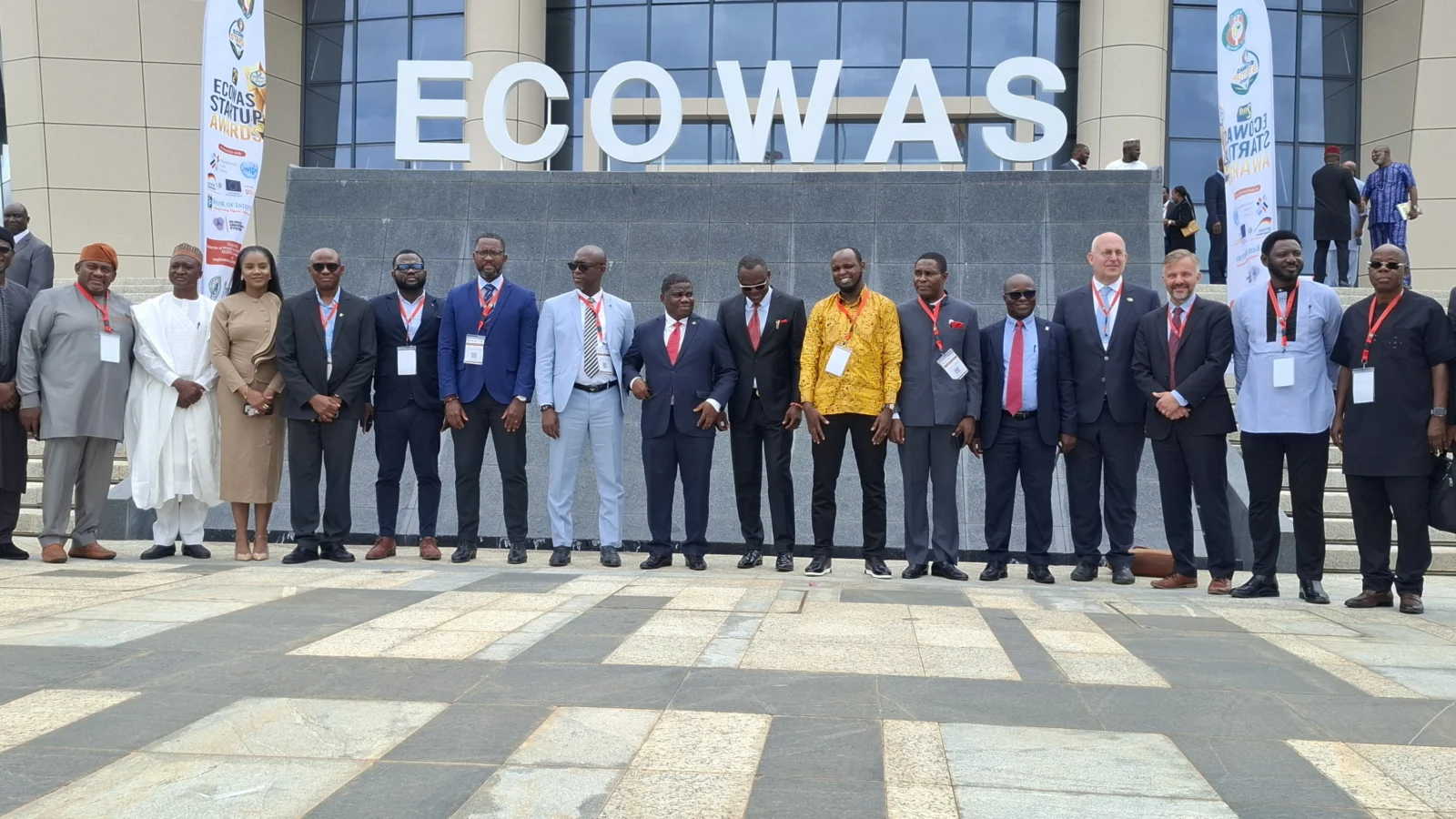
The Economic Community of West African States (ECOWAS) says its Startup Awards will drive regional integration, industrialisation and inclusion by producing scalable West African businesses that survive, create jobs and expand.
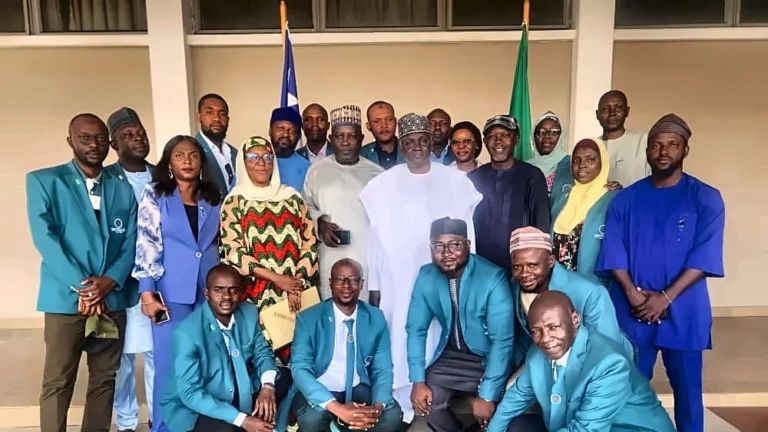
ECOWAS Commissioner for Economic Affairs and Agriculture, Mr Dehpue Zuo, stated this at the opening ceremony of the 2nd ECOWAS Startup Awards on Monday in Abuja.
The News Agency of Nigeria (NAN) reports that the event is themed: “Scaling West African Startups for Digital Transformation, Regional Integration and Sustainable Value Chain Ecosystem Development to Drive Market Access.”
Zuo explained that the programme was not just a competition but a platform for building regional champions.
He said the response to the second edition was remarkable, with 6,679 registrations from across the 12 ECOWAS Member States.
According to him, 1,499 applications were received, with 60 startups emerging as finalists after a rigorous evaluation supported by the International Trade Centre (ITC).
The 60 finalists represent six strategic sectors, including agriculture and food systems, fintech, healthtech, edutech and skills development, cleantech and green innovation, tourism, hospitality and travel tech.
The Commissioner said women-led enterprises constituted a significant portion of the finalists, reflecting ECOWAS’ commitment to inclusive entrepreneurship.
He said all 60 finalists had undergone a one-week intensive masterclass on business validation, market access, investment readiness and fundraising.
Zuo added that the top three winners would receive 30,000 dollars, 20,000 dollars and 15,000 dollars, respectively.
Zuo said beyond the prize money, all 60 participants would benefit from a six-month acceleration programme, mentorship, investor access and enrolment into the ECOWAS Startup Network and the ECOWAS Private Sector Development Academy.
“When your business succeeds, West Africa succeeds. When you create jobs, you change lives.
“When you expand across borders, you strengthen regional integration,” he said.
Giving an overview of the programme, ECOWAS Acting Director, Private Sector and Industry, Mr Peter Oluonye, said the inaugural edition in 2021 was a proof that the region had no shortage of innovative talent.
“If you got 60 from over 10,000 attempts, how rigorous can the process be? I congratulate the 60.
“The physical phase from Sept. 28 to 30 will feature policy dialogue, regional pitch finals, structured B2B engagements and investor deal rooms,” he said.
Declaring the event open, Nigeria’s Minister of State for Industry, Sen. John Enoh, said Nigeria was pleased to host the gathering to recognise the ingenuity and enterprise of young West Africans.
Represented by the ministry’s Permanent Secretary, Dr Chris Isokpunwu, he said the event called for institutionalisation and continued development of the ECOWAS Startup Awards.
“Since its inauguration in 2021, the programme has provided an important platform for showcasing innovative solutions to some of the development challenges confronting our region,” he said.
Emphasise noted that West Africa was undergoing profound transformation with more than 60 per cent of its population below 25 years.
He, however, noted that access to finance, infrastructure deficits and regulatory fragmentation still constrained growth.
“For Nigeria, the development of an enabling environment for innovation remains central to our economic transformation agenda.
“The Nigeria Startup Act signed in October 2022 provides a comprehensive framework for incentives, regulatory support and access to funding,” he said.
The minister said Nigeria had over 39 million MSMEs contributing about 84 per cent of national employment, with more than 1.3 trillion naira disbursed through the Bank of Industry.
He added that under the Nigeria Industrial Policy 2025, government was targeting raising manufacturing contribution to GDP from 8.9 per cent to 15 per cent by 2030.
“In August 2026 alone, Nigerian startups raised 364.1 million US dollars. This is encouraging, but capital is only one component.
”Sustainability will depend on their ability to build capacity, create jobs and compete over time,” Enoh said.
He said the Small and Medium Enterprises Development Agency of Nigeria (SMEDAN) would adopt the national finalists into its post-event coaching programme.
He said this would support transition from prototype to production and facilitate access to regional and continental markets under the ECOWAS Trade Liberalisation Scheme and the African Continental Free Trade Area.
The Head of Cooperation, European Union Delegation to Nigeria and ECOWAS, Mr Martin Boylan, said startups drive innovation and job creation but do not succeed on their own.
“Around the world, startups bring new ideas to the market. In the EU, SMEs represent 99 per cent of all businesses and provide around two-thirds of private sector employment.
“Entrepreneurship does not succeed on its own. Startups flourish when there is an enabling ecosystem around them,” Boylan said.
He listed access to finance, reliable infrastructure, digital connectivity, skills and predictable regulation, and protection for intellectual property, as critical.
Boylan stressed that regional integration was key for West African startups to operate across borders.
“The European Union does not see you simply as beneficiaries of programmes. We see you as partners in West Africa’s economic transformation,” he said.
The Chief Technical Adviser and National Coordinator, International Trade Centre in Nigeria, ITC, Mrs Natasha Akoje, said ITC was pleased to provide technical and financial support for the awards.
“Supporting entrepreneurs is not simply about helping individual businesses grow but about ensuring that promising enterprises have the skills, finance, network and market opportunities required to become competitive and scale across borders,” she said.
Akoje said ITC’s support included the five-day virtual masterclass on investor storytelling, pitch refinement and investment readiness, and support for selection of semi-finalists, jury mobilisation and pitching sessions.
She also thanked the EU for funding the programme and acknowledged UNIDO, its implementing partner.
Akoje added that ITC was working with ECOWAS on the development of the ECOWAS Development Academy to extend learning beyond the awards.(NAN)
Edited by Mark Longyen
Comments