


By Rukayat Moisemhe
Gov. Babajide Sanwo-Olu of Lagos State and economic experts have urged businesses to prioritise ethical governance and sustainability alongside profitability to drive economic growth.
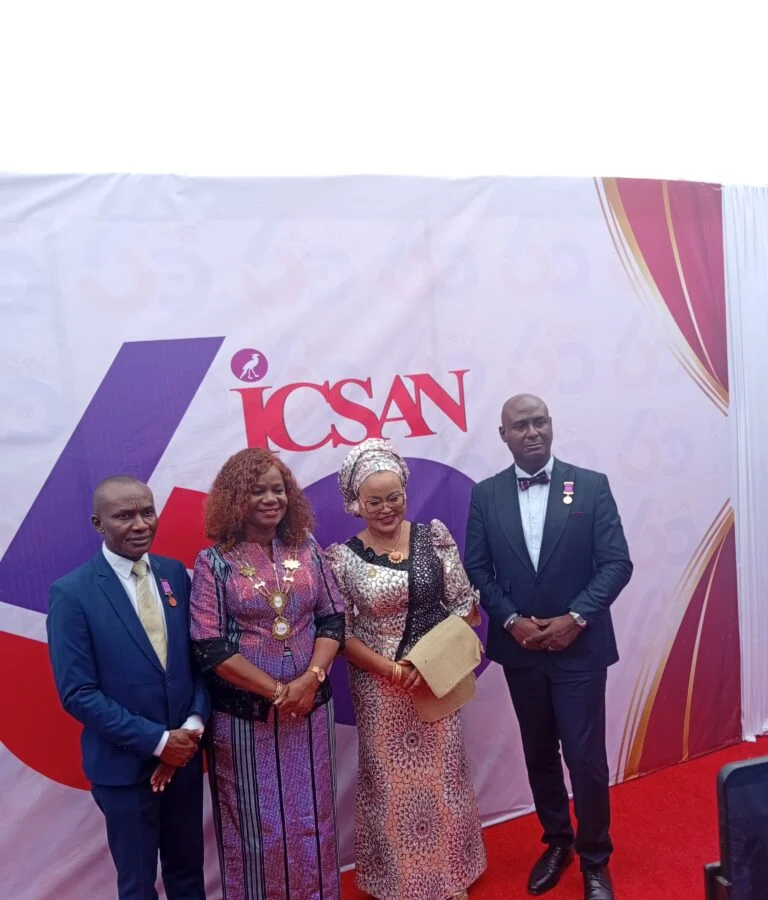
They made the call at the 60th anniversary celebration and 50th Annual Conference of the Institute of Chartered Secretaries and Administrators of Nigeria (ICSAN) on Friday in Lagos.
The conference theme was: “Balancing Profit and Purpose: Advancing Sustainable Business Practices in Emerging Economies.”
Sanwo-Olu, represented by the Secretary to the State Government, Mrs Bimbola Salu-Hundeyin, said sound corporate governance was critical to accountability, effective decision-making, risk management and institutional resilience.
He said businesses were judged not only by their earnings but also by how they generated profits, treated stakeholders and contributed to society.
He stressed the need for businesses that could create jobs, attract investment and compete globally while upholding integrity and social responsibility.
Sanwo-Olu also highlighted the need for stronger governance in the deployment of artificial intelligence, digital finance and data analytics.
He said emerging technologies offered significant opportunities but required effective oversight, transparency and accountability.
“Innovation must be matched by governance, and growth must be matched by responsibility,” he said.
The governor urged ICSAN to help business leaders and public institutions establish clear standards for board oversight of artificial intelligence and data use.
He also called for stronger collaboration between the institute, the state government and businesses to improve governance in the public and private sectors.
Former Group Chief Executive Officer of Nigerian Exchange Group, Mr Oscar Onyema, commended ICSAN for six decades of promoting professional excellence, ethical leadership and sound corporate governance.
Onyema said businesses must balance profitability with sustainable development and national prosperity amid economic uncertainty, technological disruption and rising stakeholder expectations.
He said profit and purpose should complement rather than compete with each other.
“Properly aligned, purpose strengthens profitability, while profitability provides the resources to sustain purpose,” he said.
Drawing on his experience in capital markets and corporate leadership, Onyema said company secretaries and governance professionals had assumed increasingly strategic roles.
He said they were trusted advisers to boards and champions of institutional integrity, rather than merely custodians of compliance.
“As we deliberate today, I encourage us to focus on three priorities: strengthening governance, aligning commercial success with long-term stakeholder value, and building institutions capable of attracting capital and sustaining public confidence,” he said.
The Chief Consultant of B. Adedipe Associates Ltd., Prof. Biodun Adedipe, said sustainable business practices required organisations to balance people, the environment and profit.
He explained that the triple-bottom-line approach placed people, the planet and profit at the centre of business decisions.
Adedipe identified economic viability, environmental responsibility, social accountability and effective governance as key pillars of sustainable business.
He urged organisations to manage risks, improve efficiency, conserve energy and water, reduce waste, protect employees and customers, promote ethical conduct and ensure transparent reporting.
He identified stakeholder expectations, regulatory requirements, climate change, investor interest in environmental, social and governance (ESG) performance, technological advances and global sustainability commitments as drivers of responsible business practices.
According to him, sustainable practices could reduce operating costs, strengthen resilience, attract investment, build customer trust and improve access to global supply chains.
Adedipe urged business leaders to consider their organisations’ long-term legacy and whether their businesses would remain stronger, more responsive and more profitable after their departure.
President of ICSAN, Mrs Uto Ukpanah, said the institute’s 60th anniversary reinforced its responsibility to promote professional standards, ethical leadership, corporate administration and good governance.
She said the conference theme was relevant as Nigeria pursued its ambition of becoming a one-trillion-dollar economy by 2030.
Ukpanah said the country needed to consider not only the value businesses created but also who benefited from it and how the value could be sustained.
She said organisations must navigate economic uncertainty, technological disruption, climate concerns, regulatory changes and evolving stakeholder expectations while maintaining responsible business practices.
Ukpanah also announced that the institute’s new national secretariat had reached an advanced stage of completion.
She expressed hope that the building would be completed and commissioned before the end of her tenure in July 2027.
“We would not have been able to do this without the support of members in this hall, members online, members across the footprint of ICSAN.
“We would not have been able to do it without the donations from various stakeholders, including the Lagos State Government, and so I use this opportunity to urge everyone in this room, please be in this project,” she said.
Ukpanah disclosed that a bill seeking to rename the institute the Chartered Governance Institute of Nigeria and expand its mandate passed second reading in the Senate in June.
She said ICSAN was working to secure the bill’s passage before the end of the 10th National Assembly.
According to her, the proposed change reflects the global evolution of governance as a professional discipline and would better position the institute to address emerging governance demands.
She urged members and stakeholders to support the institute’s development projects and efforts to strengthen Nigeria’s governance profession. (NAN)
Edited by Chinyere Joel-Nwokeoma



Comments