


By Franca Ofili
The Federal Government has called for stronger regional cooperation among ECOWAS member states to improve the training, accreditation and retention of health professionals across West Africa.
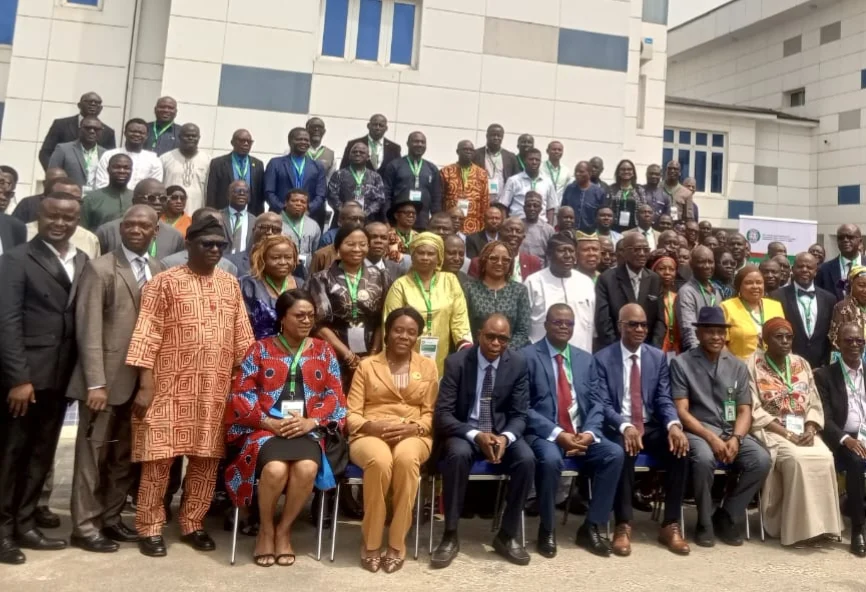
Coordinating Minister of Health and Social Welfare, Prof. Ali Pate, made the call at the 11th Statutory Meeting of the Regional Council for Health Professionals Education in Abuja on Monday.
Pate, represented by Dr John Ovuoraye, Director of Health Planning, Research and Statistics in the ministry, said a competent and resilient health workforce was essential to addressing regional health challenges.
He identified emerging infectious diseases, non-communicable diseases, health emergencies, workforce shortages and migration as challenges underscoring the need for adequately trained and equitably distributed health professionals.
The minister said the quality of health systems depended largely on the competence and availability of health professionals, making investment in their education and development a strategic priority.
He commended the West African Health Organization (WAHO) for promoting regional cooperation and harmonising health professionals’ education across West Africa.
Pate urged the council to strengthen competency-based curricula, accreditation, quality assurance, mutual recognition of professional qualifications, faculty development and institutional collaboration.
He also called for the integration of research, digital health, artificial intelligence and innovative learning approaches into professional education to prepare graduates for evolving healthcare needs.
The minister said Nigeria recognised human resources for health as a central pillar of the Federal Government’s Renewed Hope Agenda and ongoing health sector reforms.
He said the government was committed to strengthening training institutions, improving professional standards, addressing workforce shortages and maldistribution, and promoting better working conditions and career development.
According to him, the objective should extend beyond producing more health professionals to ensuring they acquire appropriate competencies and are equitably deployed where their services are most needed.
Pate reaffirmed Nigeria’s commitment to collaborating with WAHO, ECOWAS member states, regulatory bodies, academic institutions and development partners to strengthen health professionals’ education across the region.
He urged the council to review existing progress, address outstanding challenges and agree on practical, measurable and time-bound actions to accelerate regional harmonisation.
The minister said the meeting’s outcome should translate into effective implementation, stronger institutional collaboration and improved quality of health professionals’ education.
He called on member states to renew their commitment to developing a competent, ethical, innovative and resilient workforce capable of meeting their populations’ healthcare needs.
Speaking on the meeting’s objectives, Prof. Joseph Olorunda, Head of Training and Human Resources for Health at WAHO, said the Regional Council for Health Professionals Education was established in 2012.
Olorunda said the council was created through a resolution of the ECOWAS Assembly of Health Ministers in Conakry, with its membership structure subsequently modified in 2020.
He described the council as the regional body responsible for accrediting training programmes for different categories and disciplines of health professionals across ECOWAS member states.
He said its membership comprised accredited West African professional colleges, deans of health sciences faculties, the African and Malagasy Council for Higher Education (CAMES), and national academic and professional regulatory bodies.
Olorunda added that other relevant stakeholders could be co-opted when necessary, while WAHO served as the council’s secretariat.
He said the council’s mandate included establishing and regularly reviewing training standards to ensure harmonised curricula complied with agreed regional requirements.
According to him, the council also accredits health professionals’ training programmes and institutions in collaboration with relevant bodies and advocates stronger government commitment to professional education.
Olorunda said the meeting would review draft guidelines for harmonising university education systems across the ECOWAS region.
He said participants would also examine the ECOWAS framework for recognising and establishing equivalence of health professionals’ certificates and review the roadmap for developing and training the regional health workforce.
Other deliverables, he said, included deliberations on criteria for recognising and establishing equivalence of certificates, as well as recommendations for improving the council’s operations.
Olorunda said WAHO would continue promoting coordinated efforts to train, develop, motivate and retain health professionals across the region.
He added that the organisation was committed to advancing universal health coverage through the recognition of professional qualifications and their equivalence among ECOWAS member states.
He said WAHO also sought to facilitate cross-border mobility of health professionals, exchange of skills and knowledge, training of trainers and joint research networks.
Olorunda said the initiatives were aimed at strengthening cooperation and achieving greater integration of health professionals’ education and services across ECOWAS countries.(NAN)
Edited by Abiemwense Moru


Comments