


By Folasade Akpan
Two health and hygiene experts have called for the integration of professionally trained cleaning practitioners into Nigeria’s epidemic preparedness and response framework to strengthen infection prevention and control.
They made the call in separate interviews with the News Agency of Nigeria (NAN) on Monday in Abuja.
The experts said inadequate cleaning practices, cross-contamination and the exclusion of trained cleaners from emergency response planning could undermine efforts to prevent the spread of infectious diseases, including Ebola.
Mr Olubunmi Fagbuyiro, Founder and Convener of the Pan-African Industrial Cleaning Academy (PAICA), said professionally trained cleaning practitioners were frontline defenders against disease transmission.
He said their contributions were critical to preventing the spread of infections in hospitals, schools, hotels, airports and other public spaces..
“They are the first line of defence in preventing the spread of Ebola or any kind of diseases, and the last line of protection of our community,” he said.
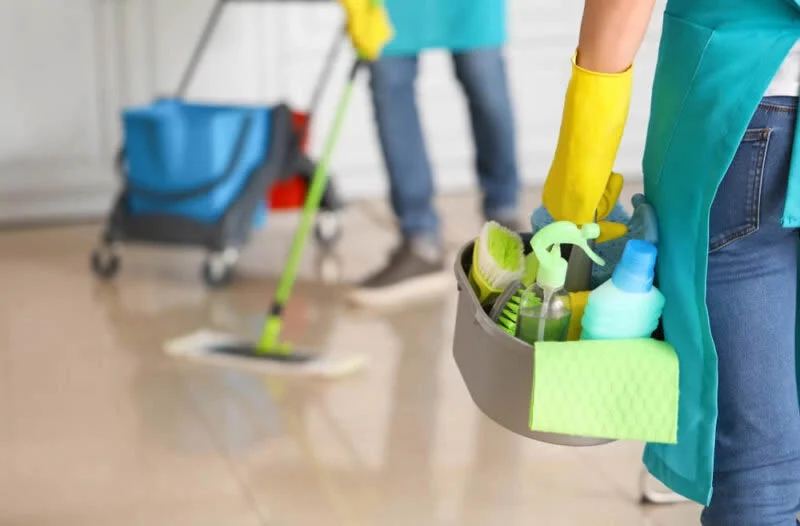
Fagbuyiro said cleaning went beyond the use of mops, buckets and detergents, requiring technical knowledge of infection prevention, appropriate chemicals, disinfection procedures and cross-contamination prevention.
He warned that using the same cleaning equipment across toilets, living rooms and kitchens could facilitate the transfer of contaminants from one area to another.
“In our homes, many of us only have two mops or one. In some places, you will just see one mop. It is the same mop that they use in their toilet that they use in their sitting room.
“The same mop that they have used in the toilet, they will take it again into the kitchen where they make their food,” he said.
The PAICA convener said the distinction between ordinary cleaning and professional decontamination was particularly important during disease outbreaks.
He explained that professionally trained practitioners understood the appropriate dilution of disinfectants, the required contact time for chemicals to work and the correct use of Personal Protective Equipment (PPE).
“An untrained person may wipe a surface and believe the work is done, leaving infectious materials behind.
“Professionally trained practitioners know the difference between soap and disinfectant. They know the correct dilution ratio.
“They know the required contact time for chemicals to work, which PPE to wear, how to wear it and, just as importantly, how to remove it without infecting themselves,” he said.
Fagbuyiro said cleaners should be involved in developing hygiene policies and emergency response protocols rather than being engaged only after decisions had been taken.
“You cannot make policies that have to do with hygiene, disease response and preparedness without calling the real people who are supposed to work and make those policies happen, which are the cleaning practitioners,” he said.
He identified training, professional recognition and coordination among government agencies, healthcare institutions, international organisations and private cleaning companies as critical gaps requiring attention.
“When we undervalue the sector, we under-protect the nation. We must pay fairly, equip fully and respect the vital role these practitioners play,” he said.
He called for trained cleaning professionals to be represented in emergency response coordination structures, adding that adequate supplies of PPE and approved disinfectants were also necessary.
Fagbuyiro said PAICA was ready to deploy rapid-response training teams across Abuja to hospitals, isolation centres, hotels, transport hubs and public institutions to teach safe decontamination procedures.
He said the academy was also developing a mobile application to support its activities, including the identification and deployment of trained cleaning professionals.
Meanwhile, the Head of the Institute for Humanitarian Studies and Social Development, Prof. Prince Origa, said environmental cleanliness was inseparable from epidemiology, disease outbreaks and public health.
Origa said organisations involved in professional cleaning should help raise awareness about the relationship between environmental hygiene and health challenges.
“You cannot talk about these issues of epidemiology, outbreaks of diseases and epidemics without linking them to cleanliness,” he said.
He said frequently touched surfaces, including staircase rails and other shared facilities, required proper cleaning because several people could come into contact with them daily.
“When you are climbing the staircase of an office, you hold the rail, and that rail you are holding, about 10 other persons have held the same rail while climbing up.
“So, it becomes very imperative that an organisation such as this begins to raise awareness and marry some of the health challenges that we are having with the issues of cleanliness,” he said.
Origa commended PAICA for drawing attention to professional hygiene at a time Nigeria was monitoring the imported Bundibugyo Ebola case.
He said the country needed sustained public awareness and vigilance to prevent further transmission, while emphasising that the importance of cleanliness extended beyond the current Ebola situation.
“Ebola will fizzle out, but beyond Ebola, let it become part of our daily lifestyle to make sure that we live a healthy life.
“We should fumigate our environment and, wherever we stay, always make sure that we clean them so that we can also live long and have a healthy and prosperous nation,” he said.
The experts urged government agencies, healthcare institutions, cleaning organisations and other stakeholders to strengthen collaboration, professional training and public education on environmental hygiene and infection prevention.(NAN)
Edited by Abiemwense Moru
Comments