


By Edith Tsokar
NOVA-Nigeria Educator Space Innovation Project will train 30 Science, Technology, Engineering and Mathematics (STEM) teachers from 15 public secondary schools in the Federal Capital Territory (FCT) to promote practical space science education.
The Project Lead, Mrs Stella Uzochukwu-Denis, disclosed this at a news conference on the initiative on Monday in Abuja.
Uzochukwu-Denis said the project was designed to equip teachers with practical knowledge and resources to introduce space science, aerospace engineering and related STEM activities into classroom teaching.
She said the initiative, supported by the U.S. Mission Nigeria through the 2026 Alumni Engagement Innovation Fund, was being implemented by a team of U.S. exchange programme alumni, with Odyssey Educational Foundation as its technical delivery partner.
According to her, the project targets an estimated 3,000 students through the trained teachers and establishment of student-led space clubs in participating schools.
”The project will train 30 STEM educators from 15 public secondary schools in the Federal Capital Territory, and we aim to reach an estimated 3,000 students,” she said.
She explained that space science provided opportunities to make classroom learning more practical by enabling students to apply mathematical, scientific and engineering principles to real-life challenges.
”Space science provides a powerful way to make classroom learning practical,” she said.
Uzochukwu-Denis said activities involving rocket flight, protective structures and payload designs would expose students to practical applications of physics, mathematics, materials science and engineering.
She said the programme would feature 40 hours of hybrid training, comprising eight virtual sessions, practical engineering laboratories and a planned demonstration event.
According to her, participating teachers will receive training in rocket flight principles, materials science, mission planning and methods of integrating aerospace activities into the Nigerian school curriculum.
She said the programme would also introduce teachers to Artificial Intelligence (AI) as a support tool for lesson planning and scientific investigations.
”They will also learn how to use artificial intelligence as a support tool,” she said, adding that teachers would be trained to verify AI-generated information, check calculations and identify incorrect assumptions.
”We want teachers and students to develop sound judgement alongside digital skills,” she said.
She added that Augmented Reality (AR) activities would also be incorporated to help teachers and students visualise complex scientific concepts beyond conventional textbook explanations.
Uzochukwu-Denis said practical sessions would involve designing, building and testing prototypes, including an astronaut challenge in which participants would develop protective structures for fragile egg payloads.
She said planned model-rocket activities would be conducted under qualified supervision and appropriate safety arrangements.
The project lead said each participating school team would receive a reusable space lab in a box toolkit to sustain practical STEM teaching and learning.
She added that 15 student-led space clubs would be established to provide platforms for learners to engage in practical projects, teamwork, mentorship and exploration of space technology.
According to her, the initiative will target at least 40 per cent female participation among the educators to encourage more girls to participate confidently in STEM activities.
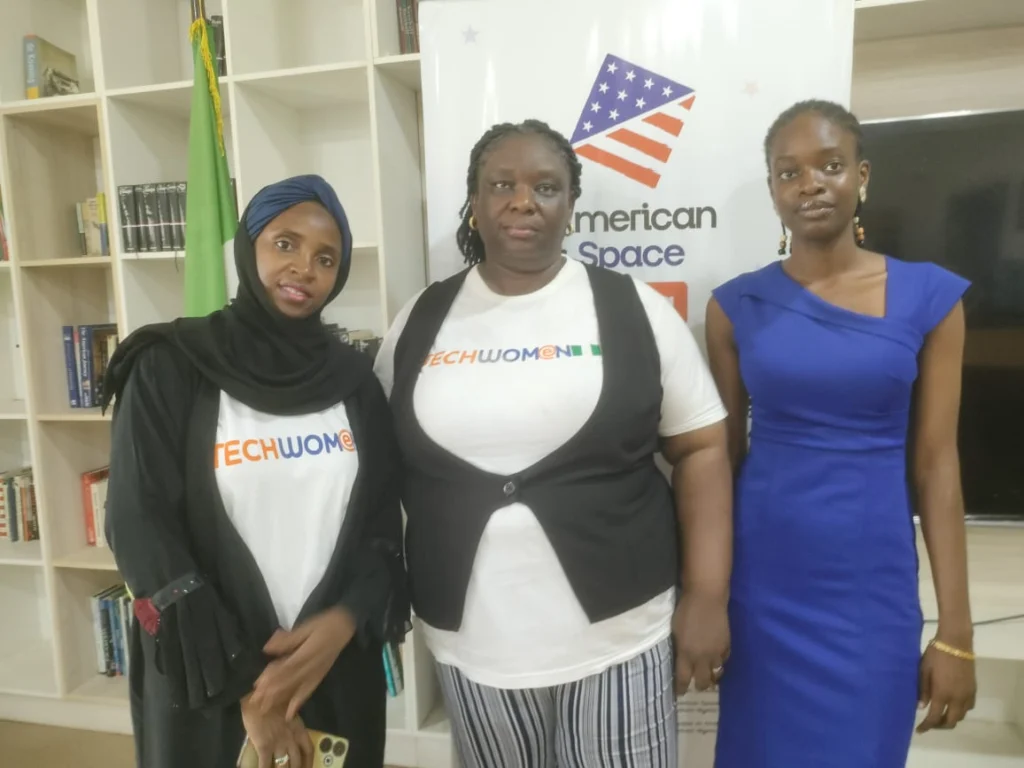
She said the alumni implementation team included herself, Fortune Somuadina, Angel Chukwudi-Denis and Rumana Aminu.
She said the team members brought experiences from the TechWomen and UNVIE Youth Space Camp exchange programmes, which they were applying to address the needs of Nigerian teachers and students.
”These experiences can help students understand their school subjects while opening their eyes to careers in engineering, computer research and the space sector,” she said.
Uzochukwu-Denis said the team was engaging education authorities, schools and relevant technical institutions to support implementation and explore opportunities for sustaining the space clubs beyond the grant period.
She said the project’s progress would be assessed through teacher participation, improvements in technical knowledge, practical project outcomes, establishment of school clubs and verified student reach.
She emphasised that the figures announced were project targets rather than achievements, adding that documented results and lessons learned would be shared as implementation progressed.
The project lead called on school administrators to support participating teachers by providing time and opportunities for club activities.
She also invited scientists, engineers and other professionals to contribute mentorship and technical support to the initiative.
Uzochukwu-Denis urged the media to follow the progress of participating teachers and students and promote public awareness of the importance of practical STEM education.
She expressed appreciation to the U.S. Mission Nigeria, Odyssey Educational Foundation and other stakeholders for supporting the initiative.
”Our ambition is that a teacher trained through NOVA-Nigeria will continue creating opportunities for new groups of students to investigate, build and discover,” she said. (NAN) www.nannews.ng
Edited by Deji Abdulwahab
Comments