


By Grace Abe
The Federal Capital Territory Emergency Management Department (FEMD) and RCL Industrial Safety Center Ltd. have intensified calls for proactive emergency preparedness, early detection and coordinated response mechanisms to mitigate disasters across Nigeria.
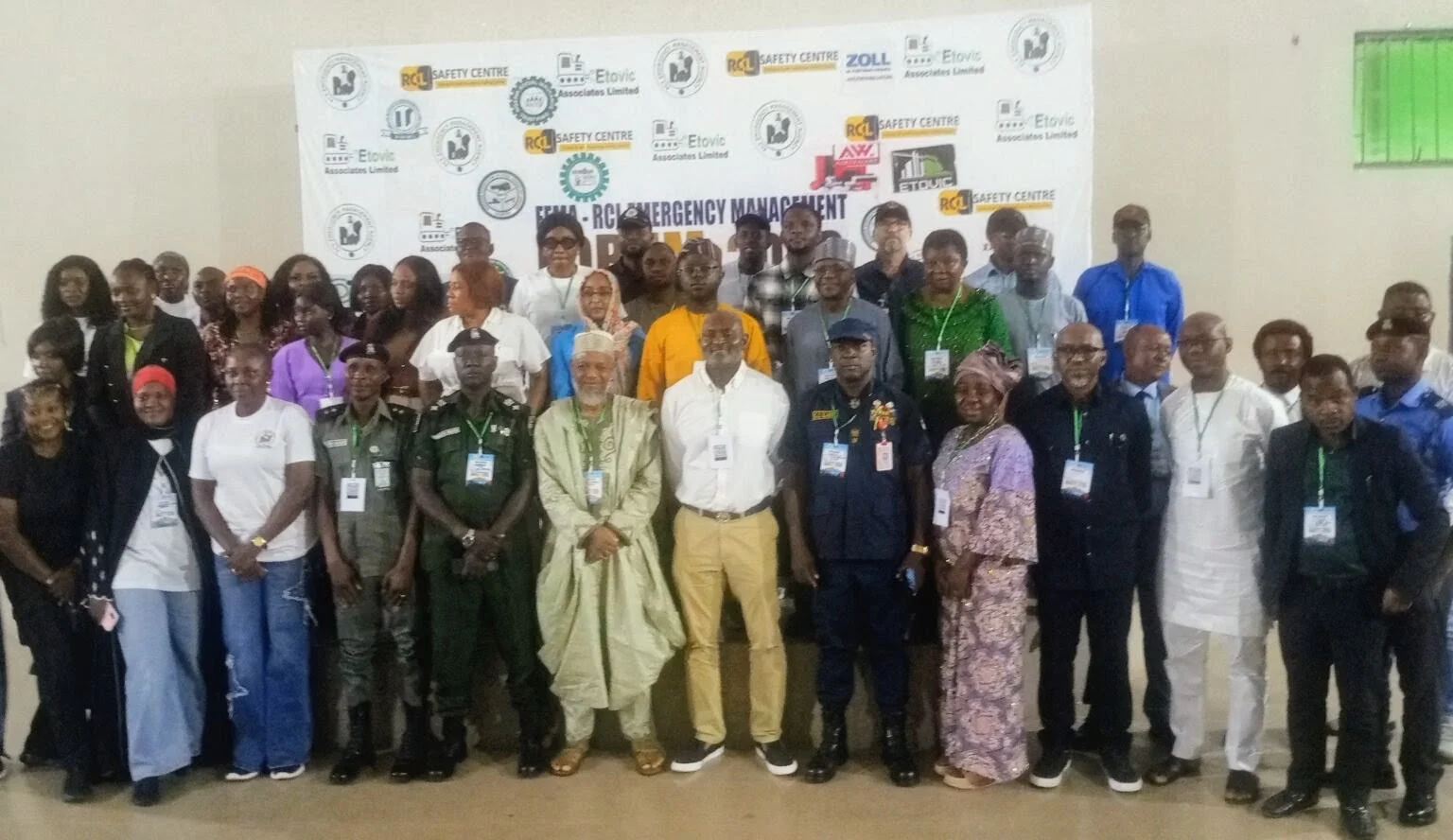
Director of FEMD, Mr Mohammed Dikko, made the call during the FEMA-RCL 2026 Emergency Management Forum themed, “Preparing for the Worst”, in Abuja on Thursday.
Dikko said that while disasters and emergencies might not always be prevented, their impact could be significantly reduced through adequate preparation, prevention strategies, public awareness and timely intervention.
He noted that rapid urbanisation, population growth and infrastructure expansion in the FCT presented enormous opportunities alongside increasing emergency management challenges such as fire outbreaks, building collapses, flooding and road traffic incidents.
“The reality is that emergencies do not give prior notice, and that is why they are emergencies. The difference between a manageable incident and a major disaster often lies in the level of preparedness before the incident occurs,” he said.
Dikko reaffirmed the department’s commitment to strengthening the FCT’s emergency management architecture through prevention, early detection, coordinated response and recovery initiatives, adding that every building must have functional fire safety provisions and evacuation plans.
He stressed that emergency management required a whole-of-society approach, calling for stronger synergy among government institutions, the private sector, communities and citizens.
He highlighted plans to expand training in basic life support, cardiopulmonary resuscitation, automated external defibrillator use, and safe evacuation for children, the elderly and persons with disabilities.
In his remarks, Mr Joel Oduah,
Chief Executive Officer of RCL Industrial Safety Center Ltd, said the stakeholder engagement, which began in 2021, was designed to equip institutions, organisations and individuals with modern practices and readiness for emergency response.
“Emergencies don’t book appointments, and workplaces, markets, schools and high-rise buildings are not immune.
“This forum gives staff, managers and the public practical skills to protect themselves, their families and their communities,” he said.
Earlier, the acting Coordinator of the Abuja Metropolitan Management Council (AMMC), Mrs Mary Ahmadu, stressed that early risk identification and strict adherence to preventive regulations were vital to averting avoidable incidents.
“The theme, ‘Preparing for the Worst,’ reminds us that emergencies should not catch us unprepared. We must identify risks early, prevent avoidable incidents, and build the capacity to respond effectively when emergencies occur,” Ahmadu said.
She noted that building a safe city went beyond emergency responders to include proper urban planning, regular infrastructure maintenance, well-maintained drainage systems, accessible emergency routes and responsible waste management by residents.
Ahmadu called for seamless inter-agency coordination among FEMD, the Fire Service, security agencies, health institutions and environmental authorities, urging widespread safety training in workplaces, schools and residential estates to save lives before responders arrive.
Also speaking, Mr Oluwaseun Falaye, the Managing Director and Chief Executive Officer, Nigeria Social Insurance Trust Fund (NSITF), said the consequences of any emergency were largely determined by the preventive controls and warning systems put in place long before an incident occurred.
“A fire does not become a disaster simply because something ignites; its consequences are influenced by whether hazards were identified, whether preventive controls were maintained, whether warning systems functioned, and whether those responsible knew what to do,” Falaye said.
He added that effective preparedness must go beyond having written procedures or response teams to becoming an integral part of organisational leadership, proactive risk management and workplace protection.
The Head of the National Emergency Management Agency (NEMA), Abuja Operations Office, Mr Zakari Abubakar, said although disasters might not always be predicted, their devastating effects could be averted through thorough preparation, noting that “preparedness saves lives, coordination saves time, and effective response protects communities.”
Similarly, the Chief Superintendent of Police, Department of Operations, FCT Command, CSP Abubakar Ibrahim, said the command had invested heavily in training and equipping a specialised quick intervention force to serve as first responders to stabilise crisis situations.
Ibrahim explained that the Police worked closely with FEMD, NEMA, the Fire Service, Federal Road Safety Corps (FRSC), Nigeria Security and Civil Defence Corps (NSCDC) and the Red Cross from joint preparedness meetings to rescue operations.
Representing the Acting Assistant Comptroller-General of the Federal Fire Service, FCT Command, Adesina Abioye, maintained that fire prevention remained safer and far less expensive than post-disaster response.
Abioye, who was represented by Chief Superintendent of Fire, Mr Gbenga Olabode, said: “the best fire we fight is the fire that never happens, and the safest building is the one that never collapses”. (NAN)
Edited by Philip Yatai



Comments