


By Perpetua Onuegbu
The Civil Society Legislative Advocacy Centre (CISLAC) and its partners have reiterated the vital role of active citizen participation in fostering transparent and accountable governance across Nigeria.
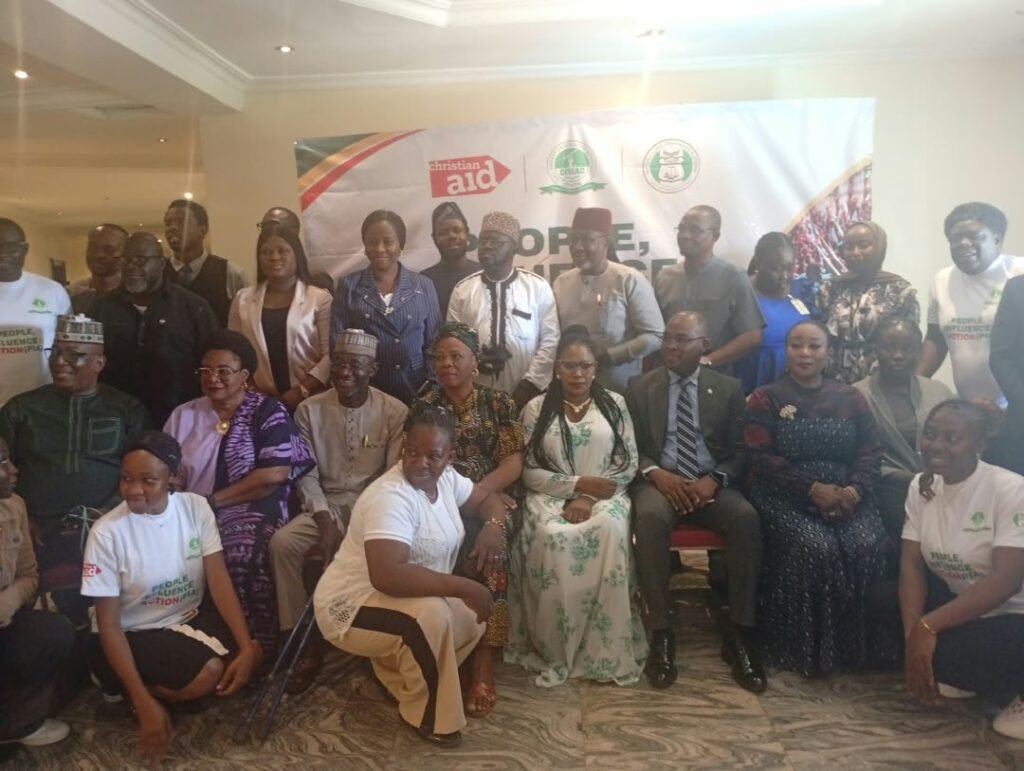
The organisations made the call during the inception meeting of the People Influence and Action (PIA) Project, jointly organised by CISLAC and the Tax Justice and Governance Platform on Tuesday in Abuja.
The News Agency of Nigeria (NAN) reports that the initiative, supported by Christian Aid under its People in Action Signature Programme, aims to bridge the gap between grassroots communities and government policymakers.
Executive Director of CISLAC, Mr Auwal Rafsanjani, said that the project would focus heavily on strengthening civic agency, fostering collective action, and building responsive governance systems.
Rafsanjani noted that sustainable democratic progress relies heavily on empowering everyday citizens to speak out, influence policy decisions, organise collectively, and hold public institutions accountable.
He noted that the PIA project places special focus on marginalised groups, ensuring the inclusion of women, youths, persons with disabilities, informal workers, and underserved communities in formal decision-making processes.
Drawing from past initiatives such as the Fostering Inclusive Economic Recoveries and Fiscal and Gender Justice project, Rafsanjani highlighted the necessity of deep public engagement.
He stressed that real societal transformation occurs only when citizens move beyond passive consultation to become active stakeholders capable of shaping institutional priorities.
The executive director explained that the Abuja meeting served as a strategic platform to analyse the current civic space, assess local power dynamics, and establish robust accountability mechanisms.
He confirmed that local partners in Kano, Kaduna, and Plateau states have been positioned to drive the implementation of the project at the sub-national level.
Also speaking, Botti Isaac, Coordinator of the FCT Tax Justice and Governance Platform, identified systemic barriers limiting citizen involvement, including severe information deficits, political interference, and widespread public frustration.
Isaac noted that complex tax structures often intimidate ordinary citizens, deterring them from demanding fiscal transparency, proper expenditure tracking, and tax justice from authorities.
He further observed that the ongoing repression of vocal critics, civil society members, and media outlets creates an atmosphere of fear that severely suppresses public participation.
To counter these challenges, Isaac urged civil society groups and media organisations to amplify public education and sensitisation campaigns across the country.
He encouraged citizens to resist intimidation, continuously speak out against fiscal injustice, and utilise available tools to demand transparency regarding national debt and tax policies.
Highlighting structural communication gaps, CISLAC’s Senior Programme and Gender Officer, Dorcas Asaolu, observed that citizens are frequently excluded from vital governance discussions due to a lack of timely information.
Asaolu pointed out that community members often learn about budget hearings, town hall meetings and public consultations long after decisions have already been finalised and passed.
She explained that the four-year PIA project was specifically designed to expand the civic space, equip citizens with advocacy tools, and compel government institutions to remain responsive to public demands.
She outlined that the initiative will commence with participatory assessments to evaluate civic power, access to public forums, gender inclusion, and community-led accountability structures.
According to her, the project will mobilise civic actors, build evidence-based research, conduct targeted policy dialogues, and directly link grassroots populations with government decision-makers.
On her part, Dr Blessing Irabor-Oza, Deputy National Coordinator of the Association of Nigerian Business Women Network (ANBWN), advocated for increased representation of women in policy formulation.
Irabor-Oza urged government bodies to consult affected demographics, particularly businesswomen and informal workers, before implementing fiscal regulations, ensuring that tax policies reflect economic realities on the ground.
She advised the government to view civil society organisations as strategic allies, maintaining that inclusive policy formulation from the outset prevents public friction and improves overall governance outcomes. (NAN)
Edited by Philip Yatai

Comments