


By Fortune Abang
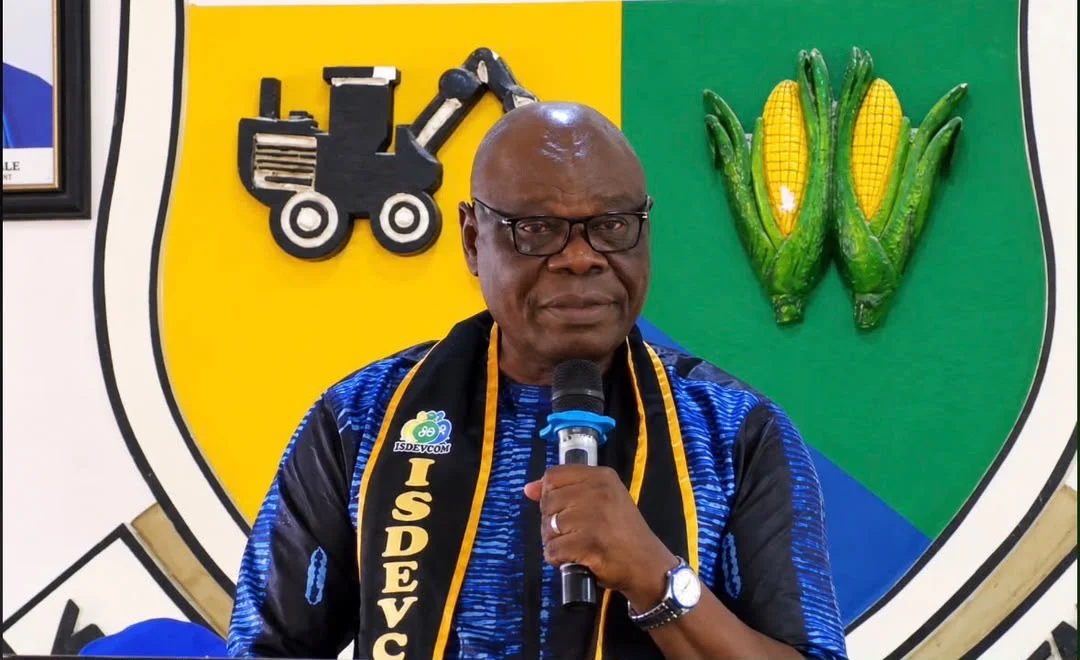
Prof. Chris Orngu of Rev. Fr. Moses Orshio Adasu University, Makurdi, has stressed the need for the global use of strategic communication to sustain democracy in the digital age.
Orngu said this in his keynote address on Wednesday at the 7th International Virtual Conference of the Institute of Strategic and Development Communication (ISDEVCOM), hosted at Nasarawa State University, Keffi.
He described the conference theme, “Strategic communication and democratic sustainability in the digital age”, as apt. He defined strategic communication as planned and purposeful conversation aimed at a specific goal.
He said the conference provided a platform for intellectual engagement, knowledge exchange and discussion of the role of strategic communication and digital media in strengthening democratic institutions.
“Although communication has been democratised in the digital age, it has failed to democratise truth. An ambassador now tweets foreign policy before informing his own capital.
“A war can be activated on TikTok before it is declared in the United Nations,” Orngu said.
He said the world faced a profound paradox, with democracy in its 18th consecutive year of global decline even as people lived in the most communicative era in human history.
He argued that democracy in the digital age was unlikely to be destroyed by military coups alone, but could be undermined by the political class’s failure to use strategic communication in governance.
Orngu said strategic communication should be prioritised as a tool of democratic governance.
He said it went beyond public relations, press releases and social media exchanges, and was the deliberate alignment of words, actions and policies to advance governance and secure public legitimacy.
“Strategic communication is developmental communication with intentionality. It is carefully planned and deliberately conceived to achieve the business of governance,” he said.
He warned that fabricated information could influence electoral outcomes, adding that a fake audio recording released 24 hours before an election could manipulate public perception without altering the ballot.
He said democratic sustainability required more than periodic elections, as it depended on the ability of democratic institutions to sustain public trust continually.
“We need regulation. Regulation is what we need to protect democracy. We do not need punishment of opposition to sustain democracy,” he said.
Prof. Sa’adatu Liman, Vice-Chancellor of Nasarawa State University, Keffi (NSUK), emphasised the importance of intellectual engagement in generating ideas and sharing knowledge to tackle societal challenges.
Liman, represented by Prof. Stephen David, Head of the Department of English and Literary Studies, commended the institute’s director for sustaining the annual conference.
She said such conferences sought to produce new ideas, theories and propositions that would advance humanity.
“I want to thank the keynote speaker because from the depth of what he presented today, most of us will go home very happy, because the conference added value to our knowledge-base,” she said.
The Acting Director of ISDEVCOM, Dr Daniel Chikada, said the conference was designed to promote intellectual exchange, challenge existing propositions and explore solutions to Nigeria’s developmental challenges.
He said Nigeria continued to grapple with economic, social and political challenges, and that research findings were needed to address them and to communicate effectively with the wider society.
“We have economic, social and politically challenges; there must be a way that we can come out with our research, which will speak and communicate governance goals with the people out there,” he said.
The conference attracted scholars, researchers, academics and communication professionals seeking innovative approaches to contemporary communication and governance challenges in Nigeria. (NAN)
(Edited by Emmanuel Yashim)



Comments