


By Justina Auta
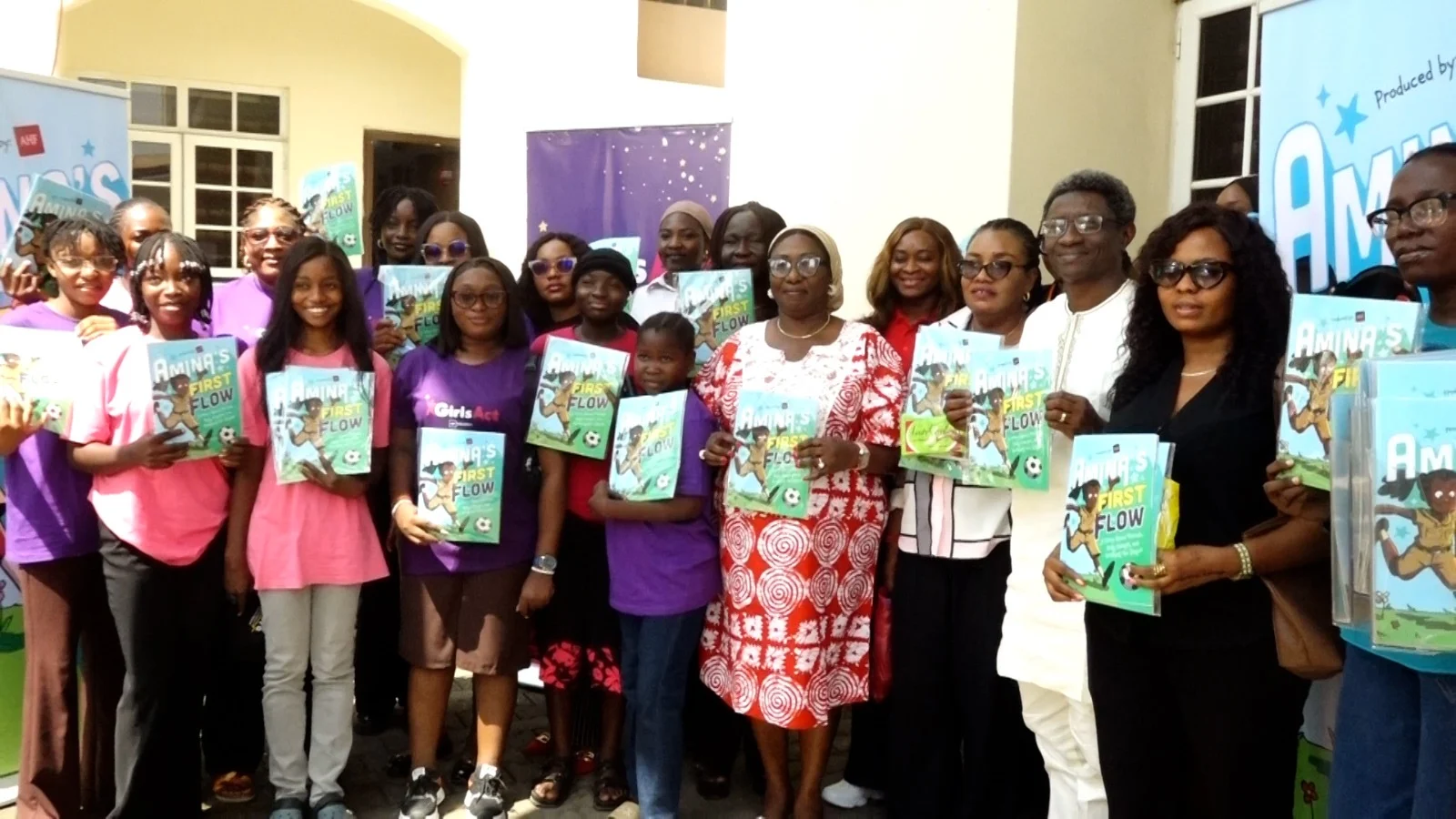
The AIDS Healthcare Foundation (AHF) Nigeria in Abuja unveiled a 26-page comic book aimed at promoting menstrual health education and hygiene among girls.
The comic book, titled “Amina’s First Flow”, highlights challenges faced by girls, including misinformation, stigma and poor menstrual hygiene practices.
AHF Country Programme Director, Dr Echey Ijezie, said menstruation was normal but remained surrounded by misinformation and stigma in many communities.
Ijezie said stigma and poor menstrual hygiene had caused many girls to struggle with acceptance and management of menstruation.
“Menstruation is a normal phenomenon, but it is also usual in our community to see a paucity, a lack of information, and a stigmatisation of what is physiological and stigmatisation of what is normal in girls.
“Because of this stigmatisation, and other issues around menstrual hygiene, there are many girls who struggle with how to accept it, how to deal with it, and some of them even miss school because of a lack of proper menstrual hygiene,” he said.
He described the book as AHF’s effort to bridge information gaps, break stigma and encourage open conversations around menstruation.
Ijezie said the book would help correct misconceptions, noting that menstruation was sometimes wrongly regarded as a disease in some communities.
“The goal of this book is to eradicate those myths and perceptions and ensure everyone understands that it is a natural process which should be encouraged and supported,” he said.
Nursing Manager at AHF, Dr Christie Awunor, described the comic format as an effective way to make menstrual education accessible and engaging for girls.
Awunor said presenting the information through comics would make reading easier and more interesting for young girls.
“Children do not like reading these days, so presenting it in a comic form will make it much easier for girls to read,” she said.
She explained that Amina’s First Flow was a story about periods, body changes and breaking stigma.
“Menstruation is not a disease. It is simply a normal monthly flow. When a girl starts menstruating, she has reached puberty.
“It is a biological process. It is not a disease or a punishment for any girl. It is special and unique because women have the reproductive organs that make childbirth possible,”she said.
She encouraged the use of the book in schools and among mothers to improve menstrual education among adolescents.
“This book is an educational material for young girls and adolescents. It is also good for mothers because they can use it to educate their children,” she said.
Awunor added that AHF uses schools and community platforms to educate girls and provide menstrual hygiene products.
The FCT Clinical Coordinator, AHF Nigeria, Dr Ugochi Ajaero, said the book promoted confidence and helped girls understand their bodies.
“This book is about confidence. It is about owning your body. As a woman, there is nothing to be ashamed of,” she said.
Ajaero stressed the need to involve boys and men in menstrual health education to reduce stigma.
“We involve both boys and girls because they are growing up together. If you focus on one gender alone, the other gender may undermine the effort,” she said.
She added that early education would help boys understand menstruation as a natural process rather than a subject of ridicule.
The Programme Manager, Stand With A Girl (SWAG) Initiative, Maureen Torkula, said misconceptions about menstruation remained common among girls in vulnerable communities.
Torkula recalled a Safe Spaces session in an internally displaced persons’ camp where a 10-year-old girl described menstruation as “a disease that is compulsory for women.”
She said the experience showed the need for more education because some women and girls stigmatise themselves due to misinformation.
Torkula said the book could reach communities where health organisations might not always have physical presence.
Representing the Minister of Women Affairs, Hajiya Imaan Sulaiman-Ibrahim, Mrs Osaro Osa-Jarikre, Child Social Welfare Officer, Child Development Department, said menstruation should never attract shame or discrimination.
“Menstruation is part of a girl’s development and should never be a source of shame, discrimination or stigma,” she said.
Osa-Jarikre said access to accurate information, menstrual products, sanitation facilities and supportive environments remained important for girls’ dignity.
“The ministry remains committed to advancing policies and programmes that promote menstrual health and hygiene management, empower girls and ensure no girl is left behind because of her period,” she said. (NAN)
Edited by Folasade Akpan
Comments