


By Sarafina Christopher
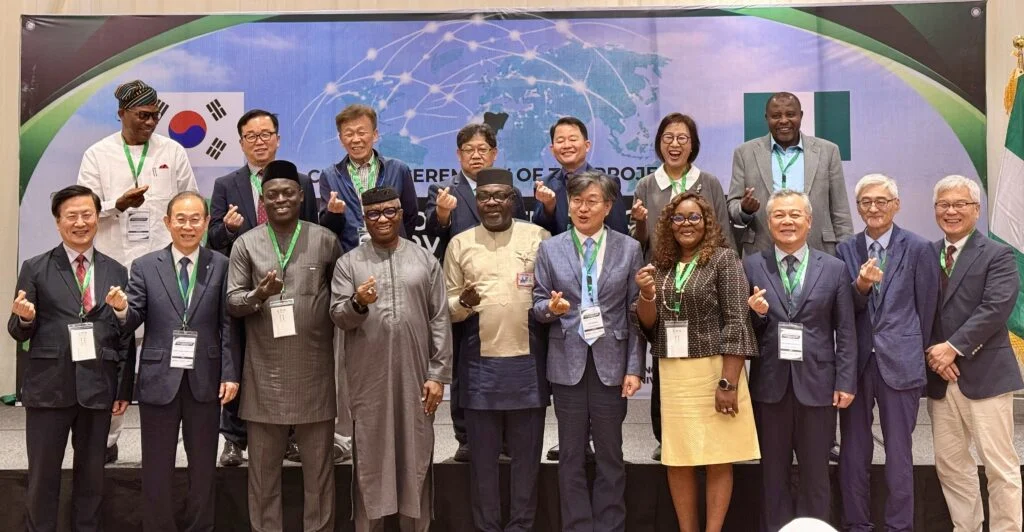
The Korea International Cooperation Agency (KOICA) has handed over the final report of Nigeria’s e-Government Master Plan 2.0 to the Federal Ministry of Communications, Innovation and Digital Economy for formal adoption.
Mr Kim Eunsub, KOICA Country Director, handed over the report on Thursday in Abuja at the closing ceremony of the agency’s Building Foundations Towards Digital Governance in Nigeria project.
Kim said the completion of the plan marked the beginning of its national implementation, which would require Nigerian ownership, sustained investment and effective coordination across government institutions.
He described digital governance as an important pillar of Korea-Nigeria cooperation, saying KOICA’s support represented a long-term investment in Nigeria’s institutional capacity and people.
“The close of a project is not the close of a partnership.
“The systems, frameworks and skills developed under this project now belong to Nigeria, and KOICA stands ready to remain a trusted partner as Nigeria takes this work forward,” he said.
Mrs Koriotaa Okobiah, the ministry’s Acting Permanent Secretary, said the plan would provide strategic direction for moving Nigeria from fragmented digital initiatives to an integrated, coordinated and citizen-centred government system.
Okobiah said the ministry would work with relevant agencies, including the National Information Technology Development Agency (NITDA), Galaxy Backbone, Nigeria Data Protection Commission and Nigerian Postal Service, to ensure effective implementation.
“Our responsibility is to translate the recommendations of the Master Plan into practical results.
“This will require strong institutional ownership, effective interagency collaboration, sustained investment, appropriate governance arrangements and the commitment to implement what we have collectively developed,” she said.
She said the success of the initiative would be measured by improvements in Nigerians’ everyday interactions with government, including easier access to services, faster delivery and greater transparency.
Mr Johnson Bareyei, Director of E-Government in the ministry, said the project had helped Nigeria make significant progress towards a more connected and coordinated digital governance system.
Bareyei said the country was moving from isolated digital systems towards a more integrated government structure, with technology supporting improved public service delivery.
He described the e-Government Master Plan 2.0 as a collective effort to rethink how government institutions work together, deliver public services and use technology to improve citizens’ lives.
He also expressed appreciation to the Korean government, KOICA and the experts involved in the project, saying the ministry was committed to building on the foundations established.
Prof. Hung Park, Project Manager from Sangmyung University, South Korea, who presented the plan, outlined its development, strategic initiatives, critical success factors and implementation roadmap.
The plan, developed from May 2022 through consultations with relevant government ministries, departments and agencies, provides a framework for Nigeria’s digital government transformation from 2026 to 2030.
It consolidates 25 initiatives under the first e-Government Master Plan into 10 strategic initiatives across five pillars.
The pillars are Integrated Digital Infrastructure; Sustainable Digital Government; Citizen-Centric Digital Service Transformation; Digital Governance and Institutional Reform; and Innovation, Partnerships and Digital Capacity.
Other project outcomes include enterprise architecture deliverables for NITDA, the Nigeria Customs Service, Nigeria Immigration Service and National Identity Management Commission (NIMC).
The project also supported the development of an Enterprise Architecture Portal, handed over to NITDA in March 2026, and the soft launch of Nigeria’s first single-window Government Service Portal in July 2026.
KOICA also donated 572 National Identification Number mobile registration devices to NIMC and the Nigerian Postal Service to strengthen digital identity registration.
In capacity development, 630 state government officials from six states were trained to develop their states’ e-Government Master Plans, while 69 instructors were trained for the e-Government Training Centre.
More than 1,646 public-sector information technology professionals also benefited from four KOICA-supported Devs in Government training sessions.
The intervention builds on an earlier phase of KOICA support, which produced Nigeria’s first e-Government Master Plan.
It also and established the Nigerian e-Government Training Centre, while training more than 2,000 government officials in Nigeria and South Korea.(NAN)
Edited by Mark Longyen
Comments