


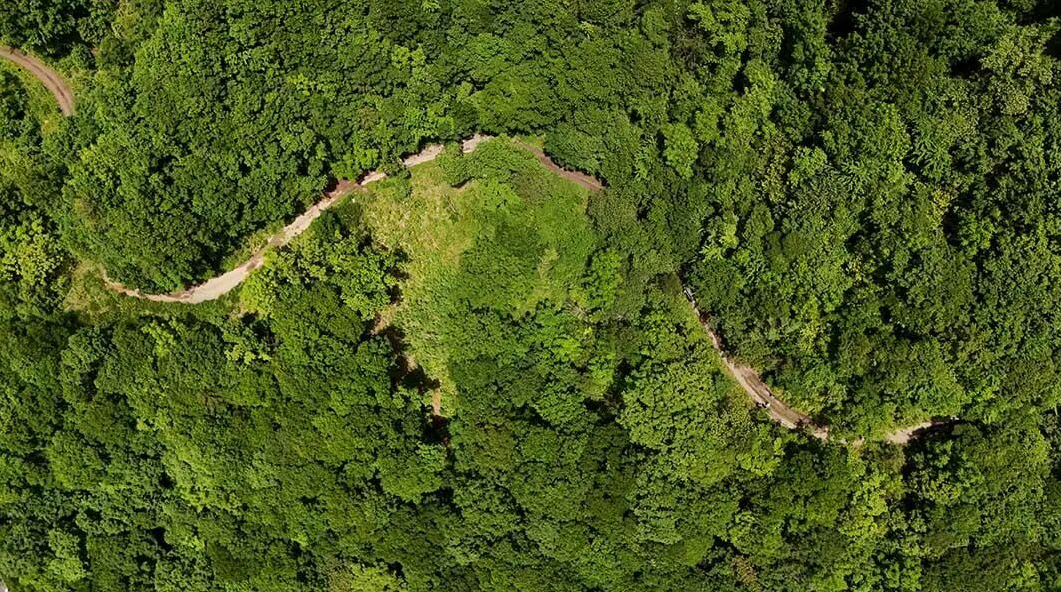
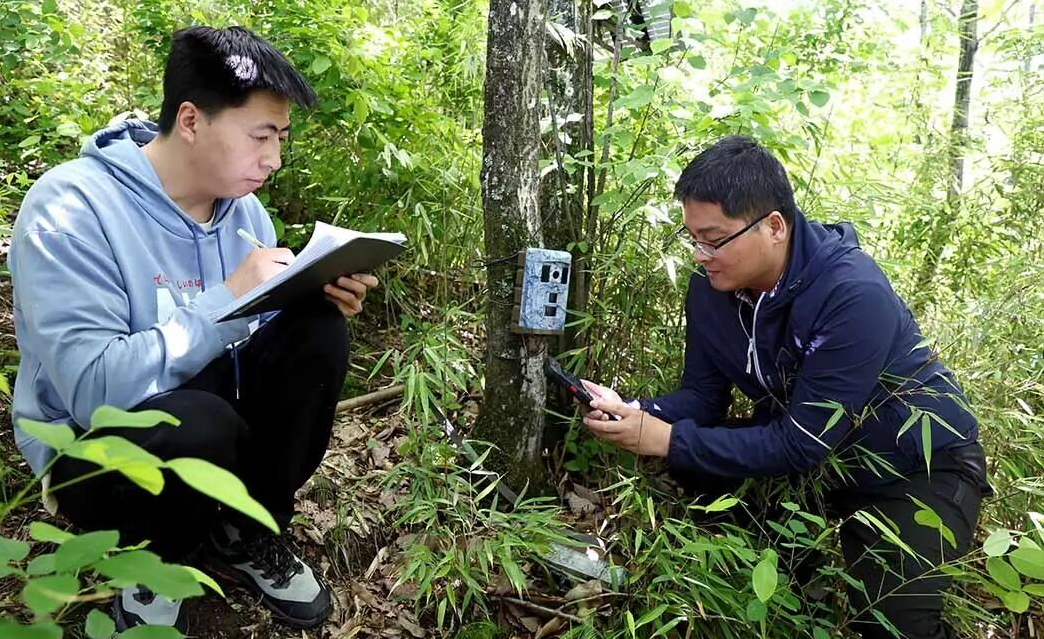
On the morning of Jun. 10, Li Qiang, Deputy Director of the Banfangzi Protection Station in the Zhouzhi National Nature Reserve in Shaanxi Province, and his colleague set off early on their routine patrol with inspection equipment. The patrol route from the Banfangzi Protection Station to the Giant Panda Ecological Corridor along National Highway 108 has long been familiar to them.
“Not long ago, we sorted out the infrared camera monitoring images from within the reserve and found a significant increase in wildlife activity along the Giant Panda Ecological Corridor along National Highway 108. Many first-class national protected animals, such as giant pandas, Sichuan golden snub-nosed monkeys, leopards, and forest musk deer, have frequently appeared and freely moved through the area.” Li Qiang said that since the abandonment of National Highway 108, the former road that once separated wildlife habitats has now transformed into a vital lifeline for the migration, dispersal, exchange, and reproduction of wild animals deep within the Qinling Mountains, marking that this ecological restoration project has achieved substantive results.
Li Qiang told the journalist that the Shaanxi Zhouzhi National Nature Reserve is the northernmost and high-density distribution area of wild giant pandas in China, with rich biodiversity. Before 2000, National Highway 108 ran through the reserve, and the constant flow of vehicles to some extent disrupted connectivity among wildlife habitats, affecting the migration, dispersal, and population exchange of species such as giant pandas.
“On the west side of this highway lives the largest giant panda population in the Qinling Mountains — the ‘Xinglongling Population’, while on the east side is the extremely small ‘Tianhuashan Population’ of giant pandas. If isolated over the long term, these two populations would be unable to exchange genes, leading to inbreeding, which would severely hinder the development of giant panda populations,” Li introduced. With the completion and opening of the Qinling Tunnel, the original highway has been gradually abandoned, and this abandoned section has become a natural corridor for giant panda populations.
In 2016, the Zhouzhi National Nature Reserve launched the Giant Panda Ecological Corridor Restoration Project, focusing on reconnecting the “fragmented” migration and dispersal routes of wild animals along the abandoned highway section. During the restoration process, native plants such as Qinling arrow bamboo were prioritized for planting, restoring 46.7 hectares of vegetation and gradually improving the feeding and habitat conditions for giant pandas. At the same time, comprehensive measures were taken to rehabilitate damaged slopes, bare plots, and areas suffering from soil erosion, promoting the recovery of native vegetation. Based on the activity habits of wild animals, the reserve optimized and upgraded existing animal trails by widening passages and adding resting areas, thereby enhancing both the suitability and safety of the corridor. Over the past decade, this carefully restored ecological corridor has functioned like an “ecological bridge” across the Qinling Mountains, enabling giant pandas within the region to migrate freely and reproduce naturally.
“On Feb. 13 this year, my colleague and I discovered giant panda wastes during a routine patrol along the Giant Panda Ecological Corridor along National Highway 108,” said Li Qiang, visibly delighted. Prior to this, giant panda wastes had only been found on the east and west sides of the corridor or inside the corridor, never directly on the highway surface. This discovery fully indicates that the corridor has become a regular activity zone of giant pandas.
Monitoring data also clearly show that the connecting function of the ecological corridor is gradually becoming evident. The distance between traces of giant pandas’ activities on either side of the corridor has decreased from 8.7 kilometers in 2015 to approximately 2 kilometers today. Since 2018, infrared cameras have repeatedly captured images of giant pandas crossing the road and moving towards the eastern area; in 2024, monitoring equipment clearly recorded giant pandas walking in the restored corridor, indicating their habitat is continuously expanding eastward. The exchange conditions for the two giant panda populations, Tianhuashan and Xinglongling, which were once separated by the road, have been improved, providing strong support for enhanced gene exchange and long-term stable reproduction of the populations.
In addition to giant pandas, rare wildlife such as leopards, forest musk deer, and Sichuan golden snub-nosed monkeys are also increasingly active in the corridor. In May 2024, a single monitoring site recorded images of an adult leopard leading cubs twice within ten days. In the latest monitoring images of 2026, forest musk deer were seen strolling slowly, Sichuan golden snub-nosed monkeys playing in groups, and leopards patrolling their territory. A variety of wild animals are making regular use of the corridor, and the stability and integrity of the regional ecosystem are constantly improving.