



Bwari chairman reviews 100-Days gains, unveils development agenda
By Veronica Dariya
The Chairman of Bwari Area Council, Mr Joshua Ishaku, says his administration has recorded major gains in infrastructure and agricultural empowerment since assuming office in June.
Ishaku said this in his address at an event to mark 100 days of his administration on Thursday in Bwari, Abuja.
Outlining the interventions undertaken across the council, he said plans were underway to deepen development in the district in the coming months.
He said: “This administration is built around four broad priorities: security of lives and property; infrastructure and basic services; human capital development and empowerment; and food security and agricultural development.
“As providence would have it, one of the first things we did was to begin addressing basic infrastructure.
“Among our early interventions was the commissioning of a 40,000-litre solar-powered borehole donated by Lions Club at Dutsepe within our first week in office.”
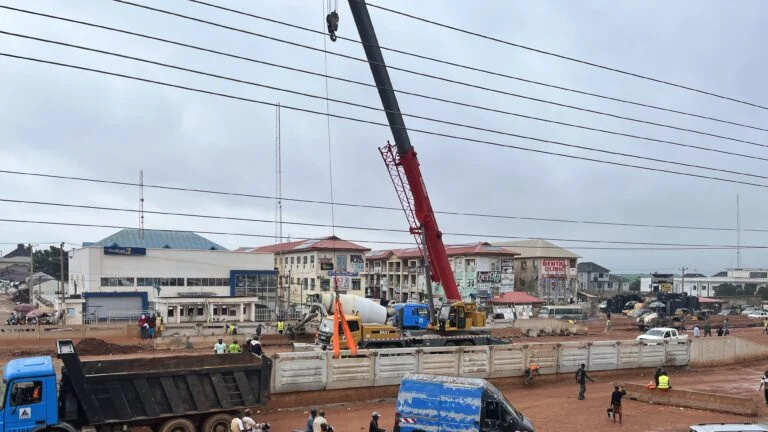
He said other infrastructure interventions within the period included asphalt overlays in Zango and Sokale communities and the construction of a box culvert bridge linking Dugbadna with Bwari township.
The chairman said the council had distributed thousands of bags of fertiliser directly to farmers across the 10 wards to boost agricultural production and food security.
He added that the council responded to concerns of residents of Kawu Ward by rehabilitating the police outpost in the area to enhance security.
Ishaku said his administration had also commenced a project to provide at least “10 smart toilets in each political ward as part of efforts to improve sanitation and basic services.”
He said he had directed the Works Department to commence work on the Women Development Centre in Kuduru, describing the facility as having potential to transform Bwari into a skills acquisition and ICT hub.
According to him, the projects executed within the first 100 days were deliberately selected to reflect the administration’s four-point agenda, particularly human capital, infrastructure and food security.
He noted that his administration had inaugurated an Asset and Liability Verification Committee to examine transition documents from the previous administration and engage heads of departments and other stakeholders.
According to him, the committee submitted its report alongside a development blueprint, providing a framework for the development of Bwari over the next 20 years.
“We inaugurated the Bwari Economic Council to chart a pathway towards economic growth, while a Chieftaincy Affairs Committee was established to assist in addressing intergenerational disputes in accordance with traditional institutions,” he said.
Ishaku said the council had partnered with non-governmental organisations, faith-based organisations and civil society groups to accelerate interventions across various sectors.
He cited the adoption of the Bwari Residents’ Charter of Demand on Urban Development in collaboration with HipCity Innovation Centre, as part of efforts to incorporate residents’ priorities into development planning.
The chairman also acknowledged contributions from the Bwari Think Tank Initiative and interventions by the Church of Jesus Christ of Latter-day Saints in education and security.
He, however, admitted that the achievements recorded in the first 100 days were not enough to address the council’s development challenges.
“We know this is not enough. There are communities still waiting for roads, drainage and reliable water.
“There are communities still demanding better healthcare, better schools, better sanitation and improved access,” he said.
He promised that the administration would pursue completion of ongoing projects, explain genuine obstacles and engage other levels of government whenever additional support was required.
He commended the FCT Administration, led by the Minister of the Federal Capital Territory, Mr Nyesom Wike, for interventions in roads, water, education and other critical infrastructure within the council.
Ishaku particularly mentioned the Bwari Satellite Town Water Project and interventions along the Bwari-Kubwa corridor as examples of collaboration between the FCT Administration and the Area Council.
He said workers’ welfare remained a priority, noting that the administration inherited significant outstanding obligations and had commenced efforts to clear them.
According to him, the council will recognise workers who demonstrate excellence while strengthening accountability, professionalism and productivity in the local government service.
On youth development, Ishaku said the council had placed human capital development at the centre of its agenda, noting that youths constituted a significant proportion of his cabinet.
He said the administration had graduated 50 professionally trained fashion designers and supported young people through filmmaking training in collaboration with Abuja Film Village.
The chairman added that the council had supported vulnerable students with WAEC and NECO fees and provided financial grants to the Student Association of Bwari Area Council (SABAC).
He further said the administration’s broader objective was to equip young people with skills to earn a living, support women to build businesses, strengthen artisans and create entrepreneurs capable of employing others.
Ishaku reiterated his commitment to an inclusive administration, saying every resident of Bwari deserved access to government regardless of political affiliation or community.
He urged councillors, traditional rulers, community leaders, religious leaders, youth and women leaders and civil society organisations to continue engaging with the administration.
According to him, development cannot be achieved from the chairman’s office alone, stressing the need for collective efforts by residents and stakeholders.
He also commended members of the 10th Legislative Assembly for their support and urged them to remain close to their constituents and work with the executive arm for the development of the council.
Ishaku said the first 100 days had provided direction for the administration but were not enough to solve all the challenges confronting Bwari.
He said the next phase would focus on completing ongoing projects, strengthening workers’ welfare, expanding youth and women empowerment, supporting agriculture and improving healthcare, education and basic services.
Other priorities, he said, would include strengthening market management, improving revenue systems and financial accountability, engaging communities and attracting further interventions from the FCT Administration and other levels of government.
The chairman noted that Bwari would mark 30 years of its existence within the next 100 days, describing the milestone as both a privilege and challenge for stakeholders.
He pledged that the administration would build on the contributions of past leaders, including Samson Baba Galuwyi, Isah Dara, Peter Yohanna, Musa Dikko and John S. Gabaya, towards taking the council forward.
He said: “By the grace of God, we shall leave Bwari better than we met it.”(NAN)
Edited by Dorcas Jonah

Comments