


By Rukayat Moisemhe
The Corporate Affairs Commission (CAC) and other stakeholders in business recovery and insolvency have called for a homegrown insolvency framework that reflects Nigeria’s economic realities and addresses emerging global business risks.
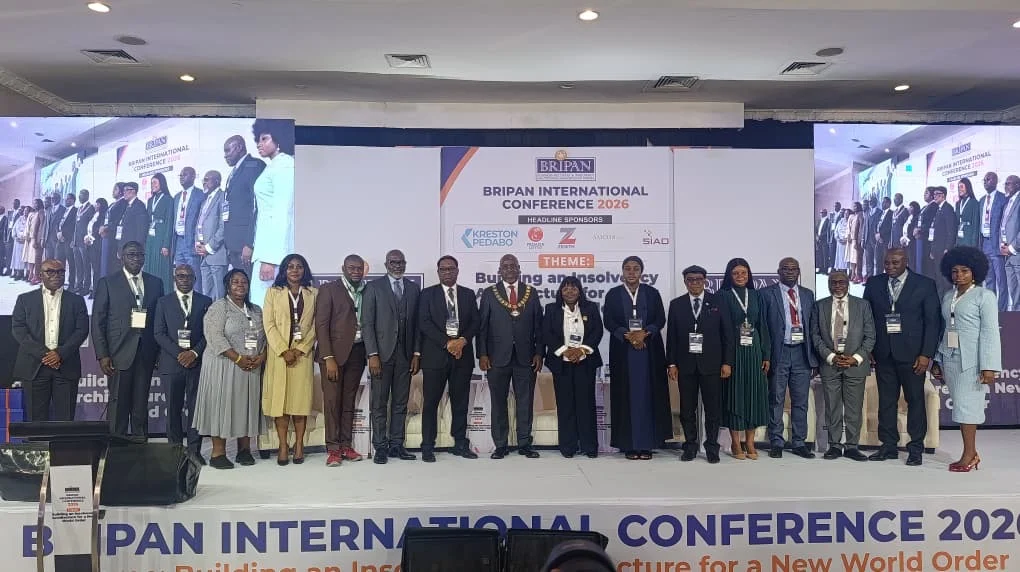
They made the call on Thursday in Lagos at the 2026 Annual International Conference of the Business Recovery and Insolvency Practitioners Association of Nigeria (BRIPAN).
The conference has the theme: “Building an Insolvency Architecture for a New World Order”.
The stakeholders said the framework should address emerging challenges posed by digital assets, artificial intelligence, climate-related distress and increasingly complex cross-border business failures.
Hussaini Magaji, Registrar-General/Chief Executive Officer, CAC, said Nigeria could draw lessons from advanced insolvency jurisdictions without simply transplanting their models.
Magaji, represented by his Special Adviser, Mr Justine Nidiya, said the country needed to identify principles that would strengthen business rescue and restructuring within its own economic and institutional circumstances.
He said the need for a responsive insolvency architecture had become more urgent as businesses globally faced technological disruption, volatile markets and tighter financial conditions.
He added that climate-related risks, geopolitical uncertainty and increasingly complex cross-border transactions underscored the need for a new insolvency architecture.
“Nigeria should not simply transplant foreign models.
“We should identify the principles that respond to our own circumstances, including earlier intervention, rescue financing with clear priority rules, effective treatment of dissenting creditor classes, specialised and expedited court procedures, transparent practitioner remuneration, stronger cross-border cooperation and simplified processes for micro, small and medium-sized enterprises,” he said.
Magaji added that Nigeria must also prepare its insolvency system for emerging forms of business distress involving digital assets, platform businesses, multinational corporate groups and artificial intelligence.
The CAC chief executive said the current realities demanded an insolvency system that went beyond liquidating failed companies — one that can intervene early, rescue viable businesses, protect jobs and maximise returns to creditors.
He said the Companies and Allied Matters Act (CAMA) 2020 had provided an important foundation for such a system by shifting Nigeria from a predominantly liquidation-centred regime toward business rescue and recovery.
According to him, provisions on Company Voluntary Arrangements and administration give distressed but viable companies opportunities to restructure their obligations, continue trading and preserve value.
He, however, said the effectiveness of the reforms would depend on how well they were implemented and adapted to changing business realities.
Magaji said Nigeria needed to examine whether existing procedures were being utilised as intended, whether delays and costs were discouraging business rescue, and whether smaller businesses had access to simple, affordable and proportionate restructuring mechanisms.
He also called for stronger cross-border cooperation as businesses increasingly operate across multiple jurisdictions.
“The commission would continue to strengthen digital filing, corporate records, practitioner regulation and collaboration with the courts, professional bodies and other regulators to improve the insolvency framework,” he said.
Mr Albert Folorunsho, President, BRIPAN, said insolvency practitioners should be viewed not merely as administrators of failed businesses but as “architects of business resurrection”.
Folorunsho said six years after the introduction of the insolvency and business rescue provisions of CAMA 2020, the profession had gained practical experience that should inform the next phase of Nigeria’s insolvency architecture.
He said the conference provided an opportunity to identify gaps in the existing framework and develop practical solutions capable of influencing policy and strengthening institutions.
“When a business faces distress, what is at stake goes far beyond its financial statements or balance sheet.
“There are entrepreneurs whose investments and aspirations are at risk, employees whose livelihood depend on the enterprise, creditors seeking fairness and recovery, and an economy that benefits when viable businesses are rescued and restored to sustainability,” he said.
Mr Abiodun Ariyibi, Vice President, BRIPAN, stressed the need to examine emerging insolvency trends and contribute to reforms capable of strengthening restructuring and insolvency practice in Nigeria and beyond.
He said the conference theme highlighted the need for modern, resilient, transparent and responsive insolvency systems capable of addressing economic uncertainty, technological advancement and regulatory change.
Ariyibi added that the event would shed light on cross-border commercial activity while preserving enterprise value, protecting stakeholders and promoting sustainable growth. (NAN)
Edited by Folasade Adeniran



Comments