


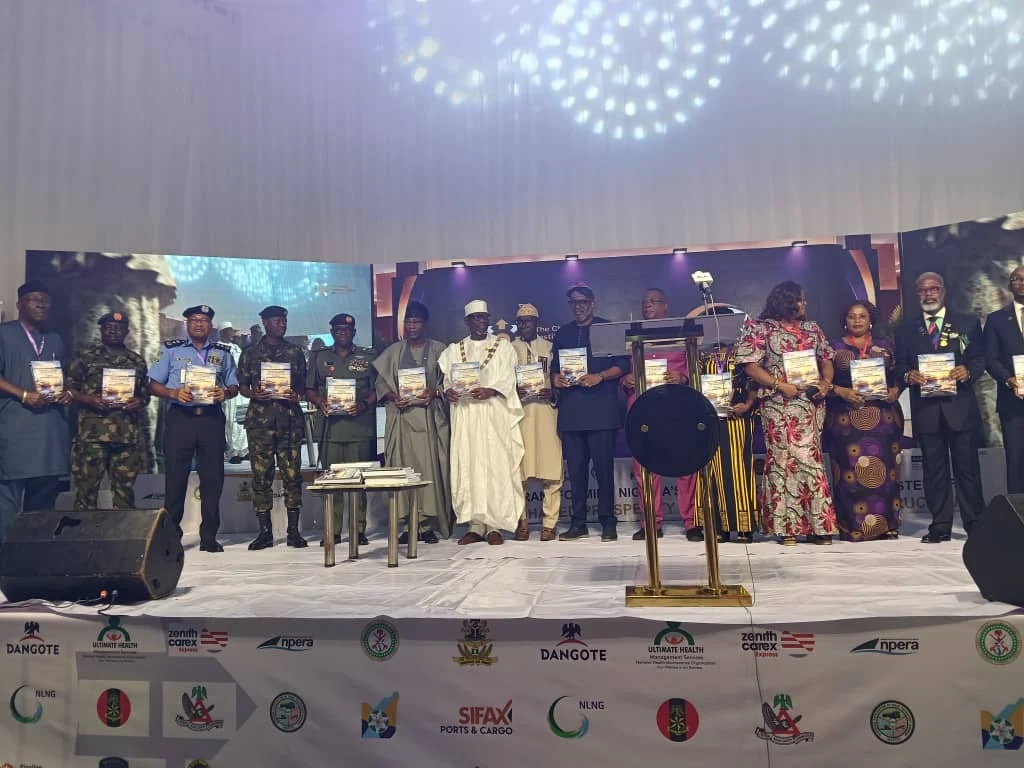
By Jacinta Nwachukwu
The Chartered Institute of Logistics and Transport (CILT), Nigeria, has called for an integrated, efficient and modern transportation system to drive economic growth.
The National President of CILT, Dr Boboye Oyeyemi, made the call at the institute’s 2026 National Conference and Annual General Meeting in Abuja on Wednesday.
The News Agency of Nigeria (NAN) reports that the conference has as its theme: “Transforming Nigeria’s Transport and Logistics Systems for Shared Prosperity and Sustained National Development.”
Oyeyemi said the conference brought together policymakers, development partners and industry leaders from Nigeria, Africa and beyond to exchange ideas and develop practical solutions for the sector.
He identified infrastructure gaps, poor institutional coordination, high logistics costs, inconsistent regulations, weak terminal connections, security risks, climate pressures and capacity limitations as major challenges.
He said transportation and logistics were central to economic activities and people’s livelihoods, influencing the movement of goods, access to opportunities and Nigeria’s competitiveness in international trade.
“They determine how quickly a farmer can get produce to market, how reliably a manufacturer receives materials, and how affordable goods reach consumers,” he said.
Oyeyemi said Nigeria needed to move beyond building roads, railways, ports, airports and inland waterways to ensuring that the infrastructure functioned as an integrated national system.
“We must make road, rail, maritime, aviation, inland waterways, ports, terminals and logistics hubs work together as one integrated system,” he said.
He said the conference would examine sustainable infrastructure financing, the use of data, digital tools and Artificial Intelligence (AI), stronger connections between transport modes, improved governance and consistent regulation.
According to him, discussions will also focus on developing mobility systems that serve all Nigerians, particularly those in underserved communities.
Oyeyemi congratulated the authors, reviewers and editorial team whose publications would be presented at the conference, saying their contributions strengthened the intellectual foundation of the profession.
He also announced that the institute would confer fellowship on two distinguished personalities, the Chief of Army Staff and the Inspector-General of Police.
He said the recognition reflected their contributions to the profession, public service, industry, scholarship and national development.
“Fellowship is not merely an honour; it is an invitation to greater responsibility,” Oyeyemi said.
He urged participants to engage actively in the conference, stressing that its success would depend on partnerships, commitments and actionable plans rather than discussions alone.
Earlier, the former President of the Chartered Institute of Transport Administration of Nigeria (CIoTA), Mr Segun Obayendo, challenged stakeholders to formalise Nigeria’s largely informal transport system.
He said formalisation would help transform the sector into a viable contributor to the national economy.
Obayendo recounted an experience during a courtesy visit when some people who did not recognise him described him as a tout, popularly known as an agbero, because of his transport uniform.
He said the incident reflected the negative public perception of the transport profession, particularly in road transport and inland waterways.
“We have not been well represented. The impression people have about transport is just ‘agbero’,” he said.
Obayendo, however, stressed that transport professionals were more than the informal image associated with parts of the sector.
In his remarks, the Chief of Naval Staff, Vice Admiral Idi Abbas, commended CILT for promoting discussions on sustainable and integrated transportation and logistics systems.
Abbas, represented by Rear Admiral Sulaiman Abdulahi, Chief of Logistics, Nigerian Navy, pledged support for efforts to develop an integrated transport system in Nigeria and Africa.
The naval chief, who was also conferred with a fellowship award, was recognised for his contributions to the institute.
He commended the conference organisers, saying the gathering provided an opportunity for stakeholders to exchange ideas on emerging conventions and approaches to addressing transportation and logistics challenges.
Abbas expressed confidence that the conference would produce meaningful discussions and practical solutions to Nigeria’s transportation and logistics problems.(NAN)
Edited by Rotimi Ijikanmi
Comments