


By Peter Okolie
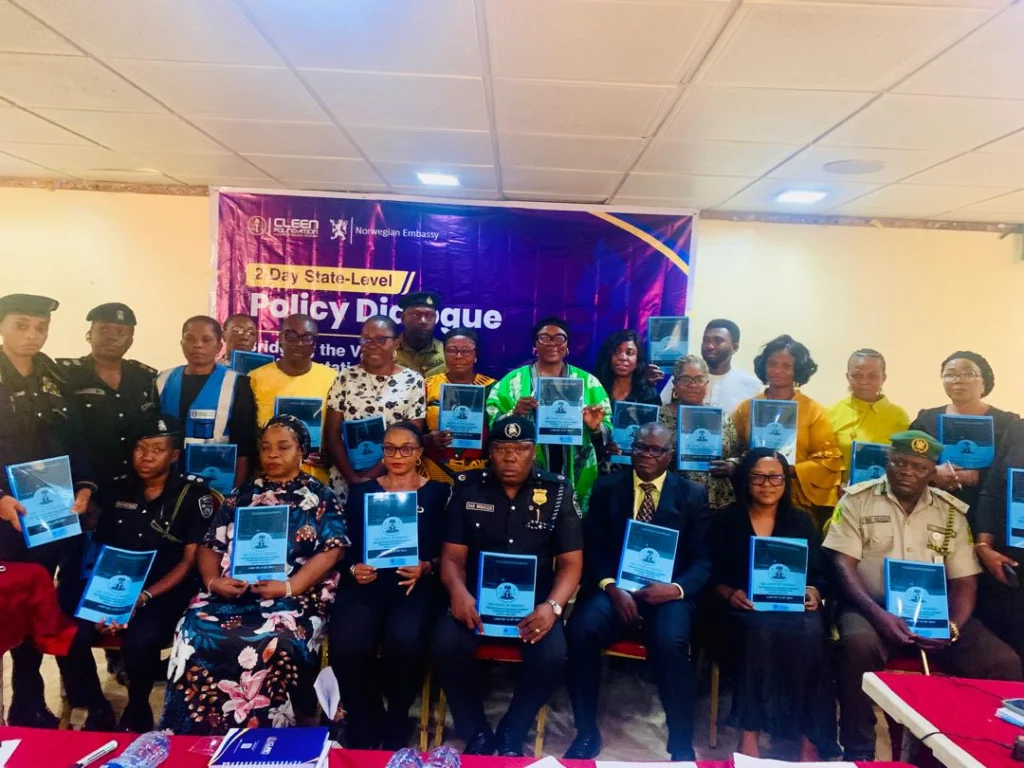
The CLEEN Foundation, a non-governmental organisation, has urged security agencies, justice actors, and community leaders in Imo to address knowledge gaps hindering the implementation of the Violence Against Persons Prohibition (VAPP) Law.
The Executive Director of the organisation, Mr Peter Maduoma, made the call in Owerri, on Wednesday, at the opening of a two-day state-level policy dialogue on bridging VAPP Law implementation gaps.
Maduoma explained that the dialogue aimed to improve institutional capacity and foster accountability among stakeholders for a more coordinated, survivor-centred response system.
He said that, in spite of the established legal frameworks, survivors of Gender-Based Violence (GBV) continued to face barriers in accessing justice, protection, medical care, and psycho-social support.
“Ground-level empirical evidence indicates that the primary driver of this operational failure is a critical knowledge deficit among key sub-national duty-bearers,” he said.
He argued that frontline enforcement officers and civil society groups in many states had never physically seen, read, or received formal guidance on the VAPP legislation.
“The practical effectiveness of these legal provisions depends on the ability of institutions and duty-bearers to understand and perform their respective obligations,” he said.
According to him, the foundation will distribute copies of the VAPP Law, assess institutional bottlenecks, and support local government actors to establish designated reporting desks.
He said that the intervention, funded by the Norwegian Ministry of Foreign Affairs through the Norwegian Embassy, was currently being implemented across 13 focal states.
Maduoma urged participants to draft and sign a state-specific action plan with clear monitoring indicators to ensure effective local-level enforcement across Imo.
In his contribution, the Traditional Ruler of Umuororonjo Autonomous Community, near Owerri, Clinton Uboegbulam, urged the State Government to establish a Sexual Assault Referral Centre.
Uboegbulam said that a dedicated centre would streamline victim data collection and enable institutional stakeholders to manage GBV cases efficiently.
“GBV occurs daily, but our ability to effectively handle these cases depends largely on the facilities and procedures we put in place,” he said.
Also speaking, the Executive Director of Open Arms Initiative, Mrs Juliet Okeihi, said that the absence of centralised data was hindering full implementation of the law.
Okeihi lamented that many law enforcement officers, legal practitioners, and community stakeholders still lacked a comprehensive understanding of the legal instrument.
She commended the dialogue for exposing inter-agency operational gaps and the lack of structured coordination among key duty-bearers in the state.
“The law is in place, but how well are we using the instrument of the law to tackle the cases?” she asked.
On her part, the State GBV Coordinator and Social Welfare Officer, Mrs Amarachi Ekeocha, emphasised the need for a functional agency to oversee referral pathways.
Ekeocha expressed concern over prolonged judicial delays, saying that some rape cases lingered for over five years, in spite of the law stipulating resolution within three months.
She advocated continuous sensitisation across the judiciary, effective utilisation of the sex offenders register, and stronger collaboration among relevant state actors.
Contributing, the state Director of Public Prosecutions, Mr Martins Udoku, said that the state Ministry of Justice had commenced uploading rape, defilement, and violent crime records onto official registers.
The two-day event drew participants from the Police, Ministry of Women Affairs, Ministry of Justice, NAPTIP, Nigeria Security and Civil Defence Corps, traditional rulers, and civil society groups, among others. (NAN)
Edited by Sam Oditah



Comments