


By Collins Yakubu-Hammer
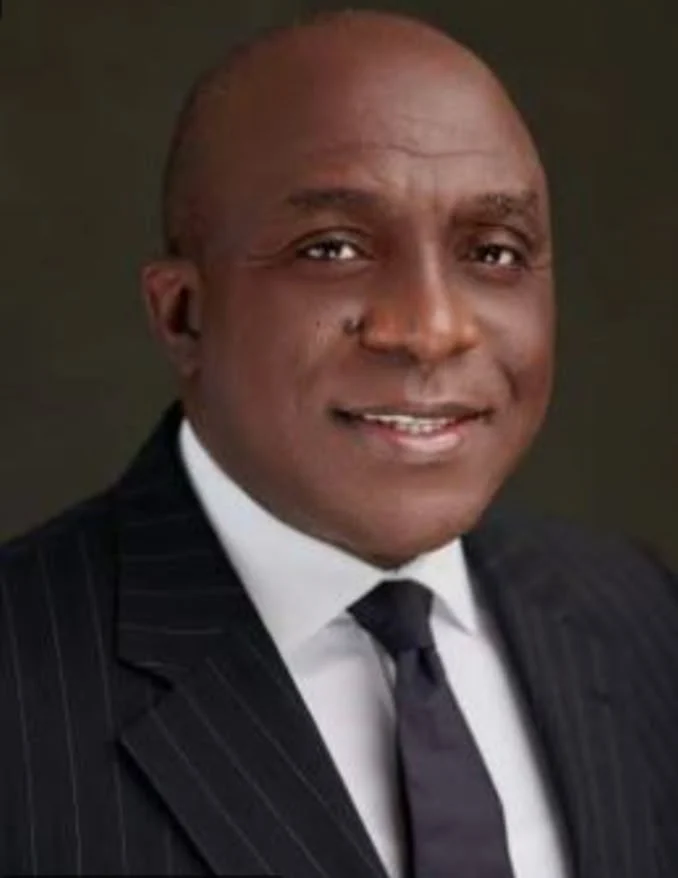
Prof. Obiora Okwonkwo, Chairman, United Nigeria Airlines, has called on journalists, public relations practitioners, advertisers and corporate communication professionals to strengthen self-regulation and uphold professional integrity in the discharge of their responsibilities.
Okwonkwo made the call at the World Public Relations Forum (WPRF) 2026 on Thursday in Abuja.
He said professionals in the communication industry had a responsibility to ensure accuracy, transparency, accountability and protection of the public interest, given their influence on public opinion.
He stressed that self-regulation should go beyond professional codes of conduct to include credible enforcement mechanisms, accountability and continuous professional education.
“Self-regulation must go beyond professional codes of conduct to embrace credible enforcement, accountability, continuous professional education and an uncompromising commitment to accuracy, transparency and the public interest,” he said.
Okwonkwo cautioned public relations practitioners against allowing the profession to be reduced to propaganda, image manipulation and the manufacture of favourable impressions at the expense of truth.
“Public relations, in particular, must resist being reduced to propaganda, image manipulation and the manufacture of favourable impressions, irrespective of the truth.
“Our greatest professional asset must be public trust,” he said.
He, however, warned that self-regulation should not become an instrument of censorship or political control, stressing that professional freedom must be accompanied by responsibility.
The airline chairman also identified information literacy and media literacy as critical requirements for responsible communication and effective citizenship in the digital age.
He explained that information literacy enabled citizens to identify credible sources, evaluate evidence and use information responsibly, while media literacy helped them understand how messages were produced, framed and distributed.
According to him, the ability to question, verify and critically assess information has become essential, particularly as the widespread use of smartphones has made it possible for almost anyone to publish and distribute information.
“In an age when almost anyone with a smartphone can become a publisher and distributor of information, the ability to question, verify and critically assess information is an essential requirement of citizenship,” he said.
Okwonkwo urged governments, educational institutions, media organisations and professional associations to integrate information and media literacy into educational systems, public enlightenment programmes and professional development initiatives.
He said the emergence of Artificial Intelligence (AI), with its capacity to generate convincing fabricated images, videos and voices, had made the need for information verification more urgent.
He further linked responsible communication to the three pillars of the forum, namely peace, democracy and development.
He said peace required communication that promoted understanding rather than hatred and division, while democracy depended on citizens having access to credible information to make informed choices and hold leaders accountable.
On development, Okwonkwo said public trust, transparent governance, effective stakeholder engagement and reliable information were essential.
“None of these objectives can be sustainably achieved where misinformation and institutional dishonesty become normal features of public communication,” he said.
He challenged participants at the forum to move beyond general discussions on responsible communication and identify practical ways of strengthening professional self-regulatory institutions.
He also urged stakeholders to examine how freedom of expression could be protected without allowing the abuse of communication platforms.
Okwonkwo further called for strategies to prepare African communication professionals and citizens for the challenges posed by artificial intelligence and increasingly sophisticated disinformation.
He urged panelists and participants to draw from practical experiences and proffer actionable solutions that would strengthen professional independence, credibility and accountability in the communication industry. (NAN)
Edited by Sadiya Hamza


Comments