



By Sumaila Ogbaje
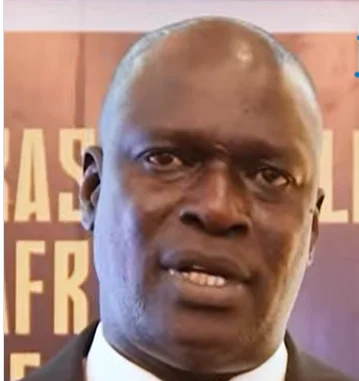
A political science scholar, Prof. Nnaoma Iwu, has called for increased funding of the Defence Industries Corporation of Nigeria (DICON) to boost indigenous production of modern military hardware.
Iwu, a Professor of Political Science with specialty in Civil-Military Relations, made the call in an interview with the News Agency of Nigeria (NAN) on the Africa International Defence Exhibition (AFRIDEX) 2026.
AFRIDEX took place in Lagos from Oct. 26 to Oct. 29.
Iwu said Nigeria must move beyond dependence on imported military equipment by investing in local research, technological innovation and manufacturing capacity.
He said the exhibition provided Nigeria with an opportunity to assess the military capabilities of participating countries and identify technologies that could strengthen its domestic defence industry.
The don described AFRIDEX as a demonstration of President Bola Tinubu’s commitment to strengthening Nigeria’s military capabilities through the repositioning of DICON.
According to him, the DICON Reform Act signed into law in 2023 provides an important framework for rebuilding the corporation and advancing Nigeria’s defence industrial capacity.
Iwu, however, said exposure to foreign technologies must translate into practical knowledge, experimentation, research and development.
“Comparative information is different from comparative knowledge,” he said, stressing that DICON could only improve its capabilities through experimentation, recalibration, reverse engineering and deliberate investment in research and development.
Established in 1964, DICON was created to strengthen Nigeria’s capacity to meet its military equipment requirements.
The professor said the sophistication of modern military hardware and changing patterns of warfare made indigenous production increasingly important.
He cited the growing use of unmanned aerial vehicles, sophisticated rifles, intelligence-gathering devices, armoured vehicles and long-range missiles by non-state armed groups.
He warned that the increasing technological capabilities of armed groups, particularly in the Sahel, posed serious threats to national governments and required more coordinated responses.
Iwu said Nigeria’s defence budget should therefore prioritise local production of modern weapons and equipment suitable for contemporary military operations.
He also advocated adequate stockpiling of military equipment, warning that reliance on foreign suppliers could become a strategic vulnerability during conflicts.
According to him, the interdiction of military equipment by adversaries could leave a country exposed if it lacks the capacity to manufacture replacements or secure immediate supplies.
The scholar said AFRIDEX had demonstrated the importance of preparing for both conventional and unconventional warfare during peacetime.
He urged the government to harness indigenous skills and talents, arguing that Nigeria must move away from the practice of importing virtually all its defence requirements.
Iwu also called for stronger collaboration between government and private defence manufacturers, citing companies such as Terra Industries and Proforce Defence as examples of local industrial capacity.
He said private-sector participation, supported by appropriate government regulation, could accelerate technological development and strengthen the country’s military-industrial base.
The professor, however, cautioned that increased defence spending must be accompanied by effective oversight, transparency and accountability.
He expressed concern that controversies surrounding the utilisation of defence funds raised questions about the effectiveness of existing oversight mechanisms.
He called for stronger institutional supervision by relevant government agencies, the legislature, the judiciary and civil society organisations.
Iwu cited the International Organisation of Supreme Audit Institutions (INTOSAI), established in 1953, as an example of international efforts to strengthen public-sector auditing and accountability.
He said Nigeria must ensure that defence budgets were properly monitored while providing DICON with the resources required to develop indigenous military production capabilities.
The scholar said the country’s security challenges and limited resources made it imperative to ensure that every investment in the defence sector delivered measurable operational and industrial benefits. (NAN)
Edited by Sadiya Hamza


Comments