


By Vivian Emoni
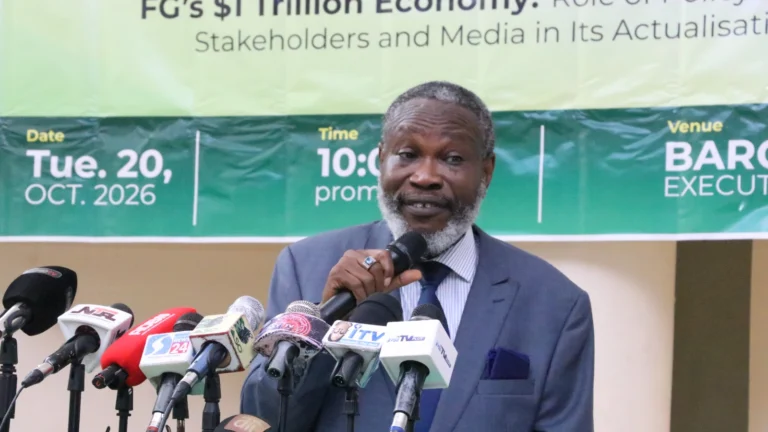
Prof. Adesoji Adesugba, Former Managing Director, Nigerian Export Processing Zone Authority (NEPZA), says rebuilding cotton production, improving infrastructure and expanding industrial parks will drive sustainable growth in Nigeria’s textile sector.
Adesugba, an expert on Investment Promotion and Economic Development, said this in an interview with the News Agency of Nigeria (NAN) on Sunday in Abuja.
He is also the National Vice President, Nigeria Association of Chamber of Commerce, Industry, Mines and Agriculture (NACCIMA).
He called for a phased approach to reviving the textile industry through improved production capacity before implementing strict import restrictions.
“Industrial revival should be carefully planned, phased, time-bound and regularly monitored for sustainable results.
“Rebuilding cotton production should begin with certified seeds, extension services and guaranteed markets for farmers,” he said.
He called for improved security in cotton-growing communities to encourage increased agricultural production.
He urged the government to provide reliable and affordable electricity for textile clusters to reduce production costs.
According to him, affordable power and good roads will lessen dependence on diesel and improve manufacturers’ competitiveness.
Adesugba recommended long-term, single-digit financing dedicated to productive industrial activities.
He said such financing should be tied to measurable production targets and regular performance monitoring.
He said that well-managed industrial parks were essential for expanding textile manufacturing capacity.
“Industrial parks provide reliable infrastructure, efficient logistics, financing and simplified regulatory services,” he said.
He cited the proposed Integrated Cotton, Textile and Garment Special Economic Zone in Funtua, Katsina State, as a suitable model.
“The zone is designed to integrate cotton production, textile processing and garment manufacturing,” he said.
Adesugba said that successful industrial parks had supported manufacturing growth and employment in several countries, while recommending introduction of trade protection gradually as local production capacity improves.
According to him, predictable tariff adjustments will encourage investors to expand local manufacturing.
He also urged government institutions to prioritise the purchase of Nigerian-made textile products.
He said increased local patronage would provide manufacturers with a dependable domestic market.
Adesugba emphasised the importance of strengthening border management alongside industrial development efforts.
He said effective border control would support legitimate businesses and improve compliance with trade policies.
The expert said broader restrictions could be considered when local industries can adequately meet national demand.
He said that stronger local production would improve opportunities under regional and international trade agreements.
He commended the Senate for encouraging renewed discussions on revitalising Nigeria’s textile industry.
“Nigeria should not remain a destination for imported textiles in a sector where it has strong comparative advantage. But sustainable industrial growth can not be achieved through import restrictions alone.
“We must build the industry’s competitiveness deliberately, patiently and sustainably. Protection should follow increased local production capacity, making any future restrictions the outcome of a strong and competitive industry,” he said. (NAN)(www.nannews.ng)
Edited by Kadiri Abdulrahman


Comments