










By Sarafina Christopher
Experts in the education and justice sectors have called for the creation of safe spaces in schools as a key strategy to address bullying, abuse, and other forms of school-related gender-based violence (SR-GBV) in Nigeria.
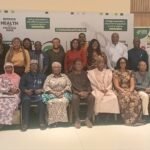
The call was made on Tuesday during a three-day workshop in Abuja organised under the EU Support to End Sexual and Gender-Based Violence (ESGBV) Programme.
NAN reports that the workshop, implemented by the International Institute for Democracy and Electoral Assistance (International IDEA) in collaboration with the Federal Ministry of Justice, focused on strengthening the Standard Operating Procedure (SOP) guiding the legal pathway for prosecuting perpetrators of SR-GBV.
Mrs Yewande Gbola-Awopetu, Head of the Sexual and Gender-Based Violence Response Unit at the Federal Ministry of Justice, said safe spaces were critical to encouraging students to report abuse without fear.
“The creation of safe spaces is really integral to the fight against school-related gender-based violence.
“The child needs an environment where they can speak freely, knowing they will not be judged, silenced or stigmatised, and that justice will be served,” she said.
She also added that the SOP clearly defined the roles of teachers, counsellors, police officers, and healthcare workers in ensuring coordinated and timely response to cases.
Also speaking, Mrs Melissa Omene, Gender-Based Violence Policy and Strategy Development Specialist with the ESGBV Programme at International IDEA, said school-related violence remained a serious threat to children’s safety and education.
Omene said the forms of violence include bullying, corporal punishment, sexual harassment, exploitation and technology-facilitated abuse.
“These are not just statistics; they are lived experiences. Children who experience violence are more likely to drop out of school, perform poorly, and suffer psychosocial harm,” she said.
She stressed that effective implementation of the SOP by frontline actors is essential to closing existing gaps in response systems.
Mrs Augustina Apakasa, Head of the Gender Unit at the Federal Ministry of Education, urged participants to cascade the training to other school personnel to strengthen prevention and response mechanisms.
“The knowledge and experience you gain during this training should not remain within the four walls of this room. Please translate them into concrete action,” she said.
Also speaking, Mrs Elizabeth Achimugu, Executive Director of Protect the Child Foundation, said school-related violence was a major driver of student attrition.
“School-related sexual and gender-based violence often occurs in places that should ordinarily be safe for children, especially schools.
“One of the factors that causes students to leave school is school-related sexual and gender-based violence,” she said.
Achimugu also noted that strong coordination among schools, parents, law enforcement, and justice institutions is essential to improving reporting and accountability.
NAN also reports that the ESGBV Programme is a four-year initiative funded by the European Union to strengthen Nigeria’s institutional response to sexual and gender-based violence and improve access to justice for survivors. (NAN)(www.nannews.ng)