


By Michael Ajayi/Ijeoma Olorunfemi
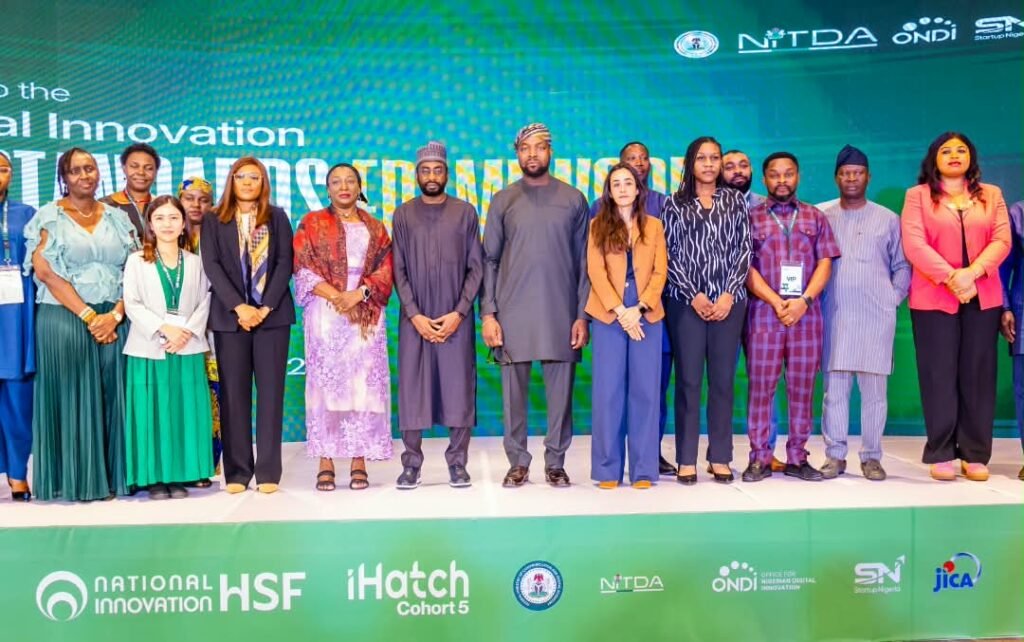
The Director-General, National Information Technology Development Agency (NITDA), Mallam Kashifu Inuwa, says the National Innovation Hub Standards Framework (NIHSF) will decentralise technological innovation and create structured growth pathways for tech hubs nationwide.
Inuwa said this on Thursday in Abuja during a stakeholder validation meeting on the framework.
He said the initiative would expand opportunities beyond commercial centres like Lagos and Abuja.
“Innovation does not happen in isolation; it happens in an ecosystem, and that ecosystem must be created by design.
“We realise that hubs across the country serve as orchestrators of ecosystems where innovators, students, and entrepreneurs take ideas from inception to impact,” he said.
According to him, research conducted by NITDA mapped 339 innovation hubs across Nigeria, with the majority located in Lagos, Abuja, and a few commercial centers across the country.
He said the framework evaluates hubs across seven dimensions and 35 criteria to help operators assess their capacity and transition from basic training centres to sector-specific incubators.
“The goal is to ensure that a young entrepreneur does not need to move from Yola to Yaba in Lagos to grow a business.
“Every state is unique, has local talent, and faces distinct problems that require tailored technological solutions,” Inuwa said.
He said that building a functional ecosystem required structured collaboration among local talent, entrepreneurs, risk capital providers, corporate buyers, and policymakers.
The NITDA chief also said the agency was collaborating with the Federal Ministry of Education and the National Universities Commission (NUC) to align academic curricula with industry demands.
“Human capital is at the centre of innovation, which is why we are working with higher institutions to introduce artificial intelligence, cloud technology, and data analytics as core degree courses,” he added.
Ms Victoria Fabunmi, National Coordinator, Office for Nigerian Digital Innovation (ONDI), said the framework would strengthen the hubs so they could provide support for the startups.
Fabunmi added that it would strengthen the connection between hubs and startup and ensuring that innovation was not concentrated in urban areas, but became mainstreamed across the country.
The Chairman of the Innovation Support Network (ISN), Mr Johnson Hanson, described the framework as foundational infrastructure for Nigeria’s knowledge economy.
Hanson said that establishing clear standards for maturity, infrastructure, and governance would build trust and simplify funding decisions for international partners.
“A standardised ecosystem unlocks transparency, enabling development partners, investors, and public institutions to allocate resources with greater precision and impact,” Hanson said.
Tolba Ikram, the Programme Officer for Green and Digital Economy at the EU Delegation to Nigeria and ECOWAS, reaffirmed European support for the initiative.
Ikram said that under the EU-Nigeria Digital Package and the Global Gateway Strategy, Team Europe committed over 820 million euros between 2021 and 2027 to strengthen Nigeria’s digital architecture.
She further said that the EU was supporting programmes such as the Three Million Technical Talent (3MTT) initiative and facilitating partnerships between Nigerian hubs and European technology firms.
“Innovation hubs are the connective tissue of the digital economy where acquired skills translate into sustainable livelihoods for citizens,” Ikram said.
The Minister of Communications and Digital Economy, Dr Bosun Tijani, emphasised the importance of innovation hubs, technology communities and co-working spaces in driving Nigeria’s digital transformation.
According to him, societies with vibrant social and innovation spaces tend to progress faster because such environments encourage collaboration and problem-solving.
Tijani said investments in fibre-optic networks, telecommunications infrastructure, digital identity, data centres and other foundational systems were necessary to create an environment where innovation could thrive.
Edited by Uche Anunne


Comments