


By Rotimi Ijikanmi, News Agency of Nigeria (NAN)
For years, the Abuja-Makurdi highway symbolised frustrating delays, risky overtaking and deteriorating road conditions for thousands of motorists travelling through North Central Nigeria.
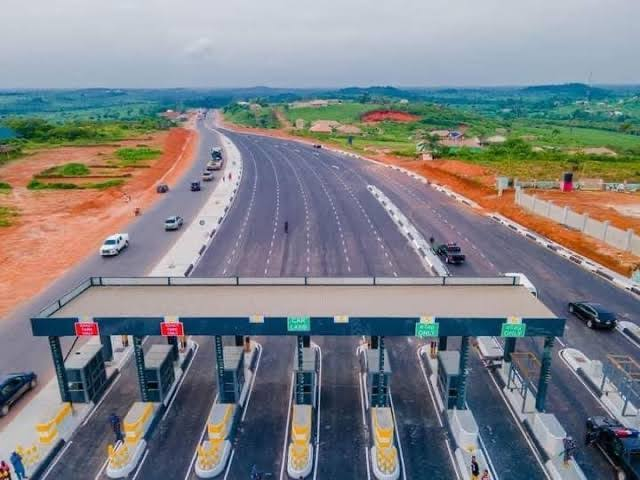
Today, much of that narrative has changed as dual carriageways, bypasses and expanded lanes deliver smoother journeys between Abuja, Nasarawa and Benue States.
The Presidential Media Team’s road journey highlighted the remarkable transformation, with improved traffic flow replacing many of the bottlenecks that once defined the route.
Beyond improving mobility, the upgraded highway is helping to address security challenges by reducing isolated bottlenecks, increasing traffic flow and shortening travel time, while also reducing road-design hazards, boosting interstate commerce and strengthening regional connectivity.
The transformation came into focus during the Presidential Media Team’s inspection tour of Nasarawa and Benue States, which commenced on Wedenesday with a road journey from Abuja to Makurdi.
The team, led by Mr Bayo Onanuga, the Special Adviser to the President on Information and Strategy, departed from the Federal Secretariat in Abuja, travelling through the reconstructed corridor to assess one of Nigeria’s most strategic transport infrastructure projects.
The trip itself reflected the progress achieved over recent years, particularly on sections that were once synonymous with frustrating delays and hazardous driving conditions.
The journey from the Federal Secretariat to Ado Village, where construction activities remain ongoing, lasted about one hour and 20 minutes.
The Federal Secretariat and Ado Village are separated by just about 37 kilometres, but ongoing construction works along the route extended the travel time.
From Ado Village to Makurdi, the remaining journey took approximately four and half hours, offering a practical demonstration of improved road conditions.
Stretching from the Federal Capital Territory through Nasarawa and Benue States toward Enugu and Port Harcourt, the highway serves as a major gateway for passengers and freight.
It also transports enormous quantities of agricultural produce from Benue and neighbouring states to markets across Nigeria, making it one of the country’s busiest economic corridors.
Years ago, motorists endured narrow carriageways, failed pavement sections and endless queues behind heavy-duty trucks transporting food, fuel, livestock and construction materials.
The former single carriageway forced vehicles travelling in opposite directions to share limited road space, making overtaking both difficult and dangerous.
Traffic congestion around Mararaba, Keffi, Akwanga and Lafia often added hours to journeys that should have been significantly shorter.
Broken-down trucks frequently paralysed traffic, while potholes compelled motorists to slow sharply or swerve unexpectedly, increasing the likelihood of collisions.
For Terungwa Oche, who has plied the route for years, the challenges were a daily reality.
“Before reconstruction, journeys between Keffi and Makurdi typically lasted between seven hours and eight hours under favourable conditions.
“During festive seasons, heavy rainfall or major traffic disruptions, travel times could extend beyond nine hours, frustrating commuters and commercial operators alike.
“The highway also developed a reputation as one of North Central Nigeria’s accident-prone federal roads because of its narrow design and heavy traffic volumes.
“Head-on collisions during risky overtaking manoeuvres were common, while poor visibility at night compounded the dangers facing motorists,” he said
NAN reports that the Federal Government responded with an ambitious programme to modernise the corridor through expansion and dualisation under the Federal Ministry of Works.
China Harbour Engineering Company executed the Engineering, Procurement and Construction contract covering the Abuja-Mararaba-Keffi expansion and the Keffi-Akwanga-Lafia-Makurdi dual carriageway.
The contract, valued at about 542 million dollars, combined external financing with Federal Government counterpart funding to deliver the strategic infrastructure.
Although the project experienced delays arising from financing, COVID-19 disruptions, inflation and scope adjustments, the completed sections now demonstrate substantial improvements.
The Keffi-Makurdi stretch has been transformed into a modern dual carriageway with wider lanes, improved shoulders and safer overtaking opportunities.
The Lafia bypass has also reduced congestion significantly, cutting transit through the town from about 45 minutes to roughly 15 minutes.
“Today, many motorists complete the Keffi-Makurdi journey within three to four hours under normal traffic conditions.
“The improved road has changed my driving experience. I spend less time navigating dangerous sections and deliver passengers more reliably.
“I remember when potholes forced sudden braking and delays. The smoother surface now makes long-distance trips safer and less stressful.
“The upgraded design separates opposing traffic, reducing the risk of head-on collisions that once characterised the corridor,” Terdoo Iorliam, a driver on the corridor, said.
While improved roads cannot completely eliminate wider security concerns, shorter travel times and increased daytime traffic have reduced prolonged exposure in isolated locations.
“I have noticed fewer risky encounters on this highway. The divided lanes give motorists more confidence, especially during busy periods.
“Better road conditions mean fewer breakdowns and unexpected stops. This helps drivers complete journeys efficiently while reducing vehicle damage,” another driver, Oche Ameh, told NAN.
The highway has, therefore, contributed to safer journeys by addressing infrastructure-related vulnerabilities alongside broader mobility improvements.
Farmers and traders have equally benefited from faster movement of agricultural produce, strengthening supply chains between the Middle Belt and major urban markets.
“The road has significantly improved our businesses and livelihood because we can reach markets sooner and reduce losses from delayed deliveries.
“We can also connect with buyers more easily and plan our sales with confidence.” said farmer Terdoo Torkula.
Businesses located along the corridor are also experiencing improved accessibility, creating fresh opportunities for commerce and investment.
Chinedu Okafor, a trader in Makurdi, said his trading activities have expanded because customers and suppliers can reach him faster.
According to him, the corridor now creates better chances for traders to grow their businesses.
No doubt, the project had illustrated the importance of policy continuity in delivering large-scale national infrastructure that extended beyond a single administration.
Approved during President Muhammadu Buhari’s administration and advanced under President Bola Tinubu, the highway demonstrates sustained government commitment to strategic development.
Supporters of the All Progressives Congress argue that maintaining continuity has enabled nationally significant projects to reach completion in spite of changing economic circumstances.
Another notable feature of the corridor is its long-term maintenance arrangement supported by phased tolling operations.
Four toll gates are currently operational, with additional plazas expected as the full tolling framework is implemented.
Government says toll revenue will finance routine maintenance, emergency response, pavement repairs and long-term asset preservation.
The arrangement also contributes toward servicing project financing while reducing dependence on annual budget allocations for maintenance.
NAN recalls that the initial tolling generated complaints over queues and payment delays, prompting government directives to improve electronic payment systems and traffic management.
Additional payment lanes, more point-of-sale terminals and better operational procedures have since been introduced to enhance efficiency.
The concession model places responsibility for maintaining the highway on the operator over a 25-year period, subject to government oversight.
That arrangement is intended to ensure defects are addressed promptly while preserving the quality of the road for decades.
The Abuja-Makurdi highway has therefore evolved from a symbol of frustration into a strategic national gateway supporting mobility, trade and regional integration.
Its transformation demonstrates how sustained investment in transport infrastructure can improve daily life, strengthen economic activity and create safer, faster and more reliable journeys for Nigerians.(NANFeatures)
Edited by Ismail Abdulaziz
*** if used credit the writer and the News Agency of Nigeria (NAN).

Comments