


By Adeola Akinbobola, News Agency of Nigeria (NAN)
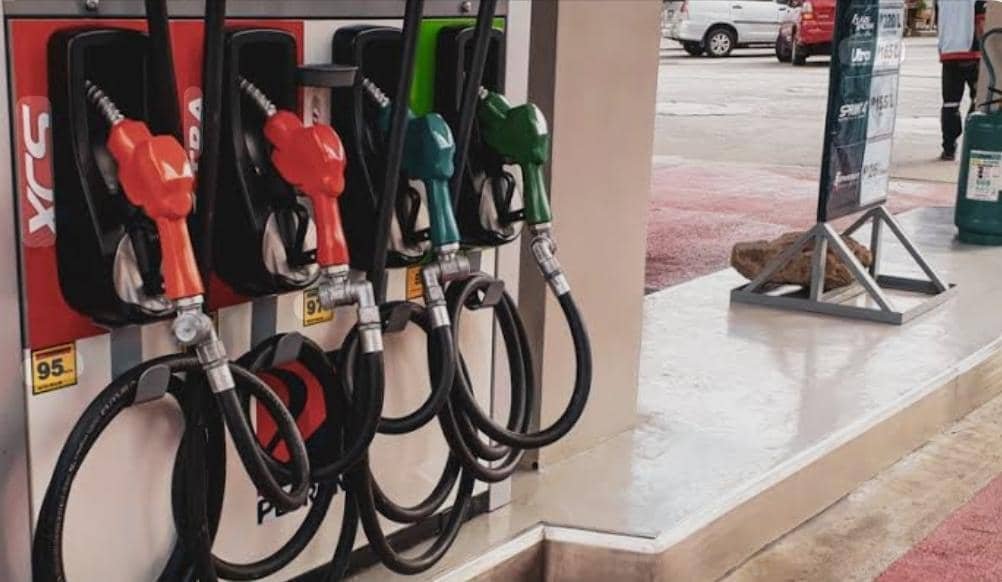
The continuous surge in fuel prices within the Federal Capital Territory (FCT) has intensified financial pressure on households, making the daily search for affordable petrol increasingly difficult for local motorists.
Across the FCT, motorists are now paying between N1, 280 and N1, 350 per litre following a series of upward adjustments in the ex-depot price of Premium Motor Spirit (PMS), popularly known as petrol.
The current ex-depot (gantry) price of petrol from the Dangote Petroleum Refinery ranges between N1, 265 and N1,290 per litre, pushing retail pump prices to roughly N1,310 to N1,400 per litre across Nigeria.
The latest increase has not only raised transportation costs but also heightened fears of further increases in the prices of food and other essential commodities, as businesses and households struggled to absorb the additional cost.
Brent crude trades at approximately 95.85 dollars to 96.28 dollars per barrel, driven higher by ongoing geopolitical tensions in the Middle- East.
Checks by the News Agency of Nigeria (NAN) show that filling stations across Abuja have adjusted their pump prices upward.
Independent and major marketers such as TotalEnergies, Eterna, Gegu Oil, Nipco, and AY Shafa are retailing petrol between N1,280 and N1,350 per litre
For motorists already grappling with rising food, transportation and household expenses, the latest increase represents another unwelcome strain.
Mr Olusegun Abbas, a motorist in Gwarinpa, said he purchased petrol at N1,320 per litre.
Abbas said the persistent increase in fuel prices was putting growing financial pressure on families and making it increasingly difficult for many Nigerians to meet their basic needs.
For Mr Adewale Salau, who bought petrol at N1,310 per litre at Gegu filling station in Dutse, the effect of the increase goes far beyond the cost of filling his vehicle.
“I cannot feed my children three times a day because of the high cost of things in the market. Traders complain that it is because of the increase in fuel prices.
“We urge the Federal Government to urgently intervene by stabilising fuel prices,” he said.
Salau described the situation as unbearable, saying many households were struggling to cope with the ripple effects of rising fuel costs.
The concern was particularly strong among motorists who depended on their vehicles for their daily activities.
Many fear that every increase in the pump price of petrol will eventually translate into higher transport fares and more expensive goods.
In Kubwa, Mr Stanley Okezie said he bought petrol at N1, 350 per litre.
Okezie warned that the rising cost of petrol would inevitably push up food prices as traders seek to recover increased transportation expenses.
He said the additional cost would eventually be passed on to consumers, further reducing the purchasing power of households.
“The increase in fuel prices will continue to make foodstuffs more expensive because traders will want to recover transportation costs and make a profit,” he said.
Okezie called on the Federal Government to intervene and stabilise fuel prices to ease the economic burden on Nigerians.
Mr Chinedu Ukadike, National Publicity Secretary of the Independent Petroleum Marketers Association of Nigeria (IPMAN), attributed the latest increase to a series of price adjustments by Dangote Refinery.
Ukadike said that marketers could not continue to sell petrol below the replacement cost.
He, however, noted that the frequent changes were creating uncertainty for both marketers and consumers.
The development has raised fresh concerns about the sustainability of petrol pricing and its broader implications for an economy already facing significant cost-of-living pressures.
Dr Aliyu Ilias, a development expert, said the latest hike was a serious economic concern, warning that its consequences could be severe for households and businesses.
He urged the Federal Government to act swiftly to address the persistent increases and find a lasting solution to the problem.
Meanwhile, an oil and gas expert, Mr Chinedu Okoronkwo, has attributed fluctuations in the pump prices of Premium Motor Spirit (PMS), popularly known as fuel, to volatility in the international crude oil market.
Okoronkwo, who is also the Treasurer, Board of Trustees, IPMAN, said the current movement in crude oil prices was largely driven by speculation arising from the renewed tension and ongoing confrontation between the U.S. and Iran.
He said statements from both sides of the conflict could trigger movements in crude prices as traders respond to market sentiments and expectations.
“The traders are now dealing on speculations. The sentiment is basically on the American and Iranian confrontation.
“Any statement, even if there has not been any actual development, appears to trigger movements in the market.”
On frequent adjustments in the price of fuel by the Dangote Refinery, Okoronkwo told NAN that the refinery was operating as a business and would naturally respond to anticipated changes in crude prices.
According to him, the refinery considers market forecasts and the likelihood of increases in crude prices when determining the price of its petroleum products.
Okoronkwo said that the refinery also needed to recover the huge investments made in establishing the facilities.
He said the situation could persist until other strong refineries emerged to provide competition in the downstream petroleum market.
He said increased competition in the refining sector would provide consumers and petroleum marketers with more options.
“By the time we have another strong refinery challenging what these ones are doing now, one man will not stress the system,” he said.
For average drivers, the issue was no longer just the rising cost of fuel.
Instead, it had become a broader struggle for survival: how to stretch a paycheck, put food on the table, afford tomorrow’s commute, and prevent a tight household budget from collapsing under the weight of constant inflation.
As petrol prices continue to fluctuate, FCT residents and drivers look to the authorities for measures to stabilise the market and ease their financial burden.(NANFeatures)
Edited by Chijioke Okoronkwo



Comments