


By Hajara Leman, News Agency of Nigeria (NAN)
Kalargo, a farming community located about 75 kilometres from Gombe, the capital of Gombe State, has a rich cultural history dating back more than 500 years.
One of its most cherished traditions is a communal feast held before the start of a new farming season.
The Tangale-speaking people of the Kalargo Community are bringing back an old tradition that once played an important role in uniting the people.
The tradition, usually observed between June and July, requires farmers to contribute a bag of guinea corn from their food stores.
The grains are then gathered and prepared into a meal that is shared by everyone in the community.
In the past, a farmer supplied food from his store, and the community’s women cooked it. Families skipped home-cooking that day, uniting for a shared village feast.
The practice helped to build friendship, strengthen relationships and promote a spirit of sharing among community members.
However, the tradition gradually disappeared over the years as lifestyles changed and younger generations became less familiar with it.
To outsiders, the gathering may appear to be a simple community feast.
However, for the people of Kalargo, it represents far more than food and celebration. It serves as a symbol of gratitude for past harvests, hope for a productive farming season and a reminder of the importance of unity within the community.
Concerned about the loss of this important aspect of their culture, community leaders and elders are working to revive the practice so that it can be passed on to future generations.
Mr Meshack Yunusa, the Convener of the initiative, said culture was an important part of a people’s identity and should be protected.
He said communities that preserved their traditions helped future generations to understand their history and values.
“Our culture tells the story of who we are. If we keep it alive, our children and grandchildren will continue to know their roots,” Yunusa said.
He added that the gathering was not only about culture but also about promoting peace, love, sacrifice and unity among residents.
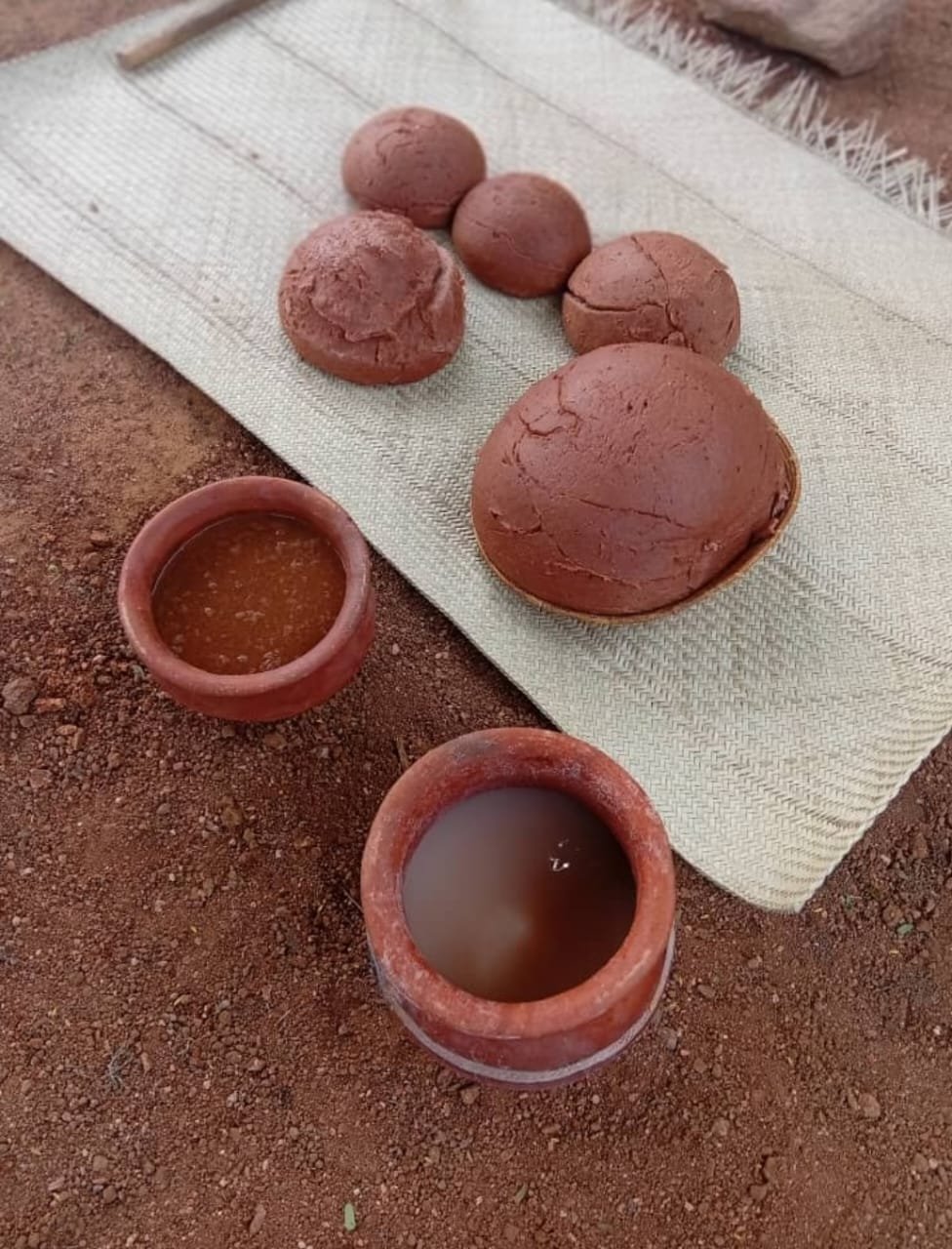
Mrs Lasobok Yayirus, an indigene of Kalorgo, said they were gathered at the home of their brother to celebrate with him because he invited them to share a communal meal.
“This is not just an ordinary dinner; it is a tradition passed down from our forefathers.
“In the olden days, our people valued communal living and took pride in preparing delicious local dishes; the aroma from a woman cooking traditional food was enough to announce that something special was being prepared.
“One of our cherished soups is “Bayo” (draw soup).
“It is prepared by mixing twalding (baobab seasoning) with grounded beni seed; the mixture is placed on fire until it dissolves, then stirred with a pestle until it achieves the desired texture, producing a delicious and nutritious soup.”
She said, traditionally, women prepared soup (thick porridge or tuwo), and amshau — a local drink made from corn grist or flour — for their husbands.
Yayirus added that, in the morning, a woman would serve her husband before he went to the farm and fill a lashar (calabash jar) with amshau for him to take along.
The drink provided strength and sustained him during farm work until the woman joined him later in the day.
“Today, such traditions are gradually disappearing. Many men now go to the farm without amshau, relying only on ordinary water, which does not provide the same energy and nourishment. Our young women should learn and preserve these practices.”
She said in the past, women prepared rich and tasty soups that people enjoyed.
“Our local ingredients such as amduka (potassium), and dishi (locust bean seasoning) added unique flavours and nutritional value to their meals, these traditional foods helped people feel stronger and healthier.
“I am happy that our brother organised this gathering because it gives our children the opportunity to witness and learn how our ancestors prepared and enjoyed our traditional foods.
“It is our responsibility to preserve these cultural practices so they do not disappear,” she said.
Also sharing her experience, Saratu Timothy, aged 78, recalled how the tradition helped unite the community and ensured food security.
She explained that in the past, around June and July, before the commencement of the farming season, food often became scarce and expensive.
“To address this challenge, a wealthy individual within the community would invite women to open food stores and distribute guinea corn.
“The grain would then be processed into flour using traditional grinding stones.
“The flour was used to prepare a strong swallow, which was spread on mats for communal sharing,” she said.
She said that in earlier times, the food was presented as part of traditional rites to masquerades but today prayers were offered in accordance with religious beliefs before the meal was shared among community members.
Timothy further explained that one of the soups prepared for the occasion was known as Dargaza in Hausa. It was made using locust bean cake and potash, without the addition of salt.
She expressed support for the full revival and preservation of the cultural tradition, describing it as an important aspect of the community’s heritage and identity.
Similarly, the community leader of Kalorgo, Shehu Umar, lamented the gradual disappearance of cultural practices that had been passed down for more than 500 years.
He noted that culture was an important part of the people’s identity and that many of its values were consistent with the teachings of both the Holy Bible and the Quran.
According to him, moral decadence and changing social values have contributed to the decline of cultural practices.
He explained that the tradition was historically upheld by generous and respected members of society who ensured that community values were preserved.
Like many cultural practices across the country, the communal feast gradually lost prominence as society changed.
Urbanisation, modern lifestyles and shifting priorities reduced participation, while younger generations became less connected to customs that once defined community life.
To resuscitate these ancient cultural practices, experts say communities must integrate them into modern life, document the customs, and leverage digital platforms to engage young people.(NANFeatures)
Edited by Chijioke Okoronkwo
***If used, please credit the writer and the News Agency of Nigeria.


Comments