


Finance
By Nana Musa
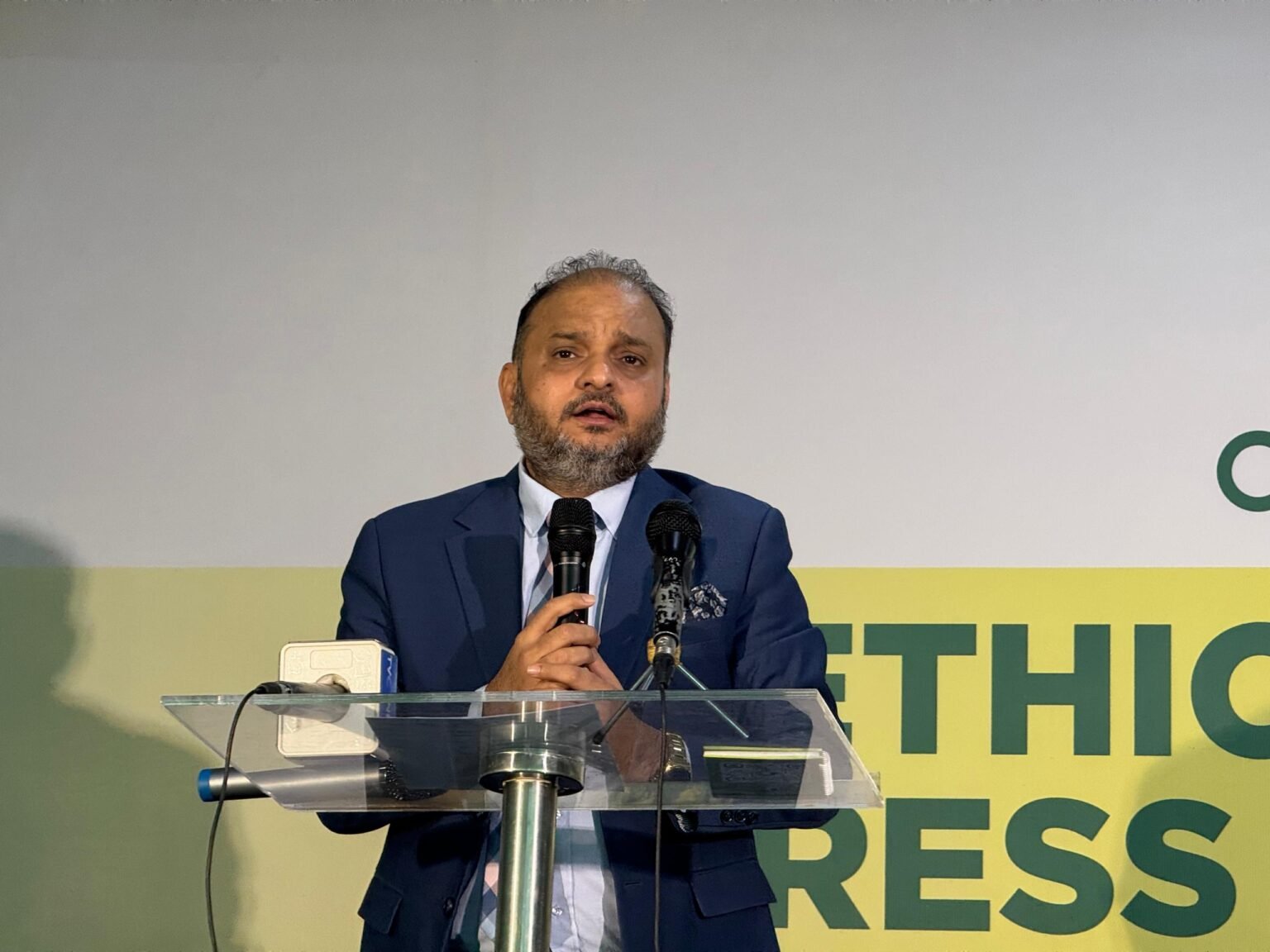
A business group, Open Space, a financial technology company, has unveiled new Ethical Finance products aimed at promoting inclusion, transparency and shared prosperity.
The Open Space Chief Executive Officer (CEO), Titus Ike, disclosed this at a news conference in Abuja on Tuesday, with the caption, “Advancing Financial Inclusion Through Ethical and Innovation.”
Ike said that the initiative was designed to make financial services more accessible, intelligent and relevant, particularly to underserved Nigerians.
He said that the ethical finance would focus on fairness, transparency, accountability and trust in financial relationships.
According to him, the initiative goes beyond providing financial products by connecting financing and investments to identifiable economic activities.
He said that open space would offer products based on “Murabaha, Ijarah, Diminishing Musharakah and Mudaraba structures.”
Ike said that “murabaha” would enable customers to acquire assets through disclosed cost-plus-profit transactions rather than interest-based loans.
He added that “ijarah” would allow customers to access approved assets through leasing arrangements over agreed periods.
The CEO said that the product could support SMEs, professionals, transport operators, healthcare providers, educational institutions and agricultural enterprises.
Ike said that diminishing “musharakah” would provide a pathway to asset ownership through a partnership between open space and customers.
He said that customers would progressively purchase the company’s ownership units until they became sole owners.
He said that mudaraba would allow customers to provide capital while open space manages investments in Shariah-compliant opportunities.
According to him, profits from such investments would be shared according to pre-agreed ratios.
Ike said that funds could be invested in SME financing, trade finance, leasing and other asset-backed activities.
He stressed that ethical finance was not designed exclusively for a particular demographic, despite its Shariah-compliant structures.
“People want clarity about their financial relationships and how their money is deployed,” the CEO said.
Ike said that technology and Artificial Intelligence (AI) would help make ethical finance more accessible and integrated into customers’ financial lives.
He said that open space’s platform combines financial services and AI tools within one ecosystem.
The CEO said that the company’s ultimate goal was to make financial inclusion meaningful by enabling people to participate more fully in economic activities.
Ike said that the initiative would support asset acquisition, business expansion, savings, investment and wealth creation.
He said that Africa’s economic potential required financial systems capable of serving people traditionally excluded from formal finance.
He described ethical finance as an opportunity to combine financial inclusion, technology, innovation and trust.
“This is only the beginning,” Ike said, adding that open space would continue developing inclusive and transparent financial models.
He said the company’s success would ultimately be measured by its impact on lives, businesses, asset ownership and economic opportunities.
Ike said that the open space believed that the future of finance should place people, responsibility and shared prosperity at its centre.
Also speaking, the co-founder and Chief Technology Officer (CTO) of the company, Ololade Otayemi, said that the company was not treating technology simply as a way of delivering financial services but a system that could help people understand and manage their finances better.
“Our objective from the technology side has been very clear, to remove complexity from the customer experience while building the depth of infrastructure required to support sophisticated financial products securely, intelligently and at scale.
“At open space, we do not see technology as simply a channel through which financial services are delivered.
“We see it as an intelligence layer that can make financial services more responsive to people, more transparent in their operation and more efficient in the way decisions and transactions are managed,” he said.
Otayemi said that the platform was being built around a single customer financial system that would bring different financial services together, allowing customers to manage transactions, investments and financial goals from one platform.
He said that the system would also use AI and machine learning to study financial behaviour, monitor investments, identify unusual activities and provide more personalised financial experiences.
“The objective is not to make customers understand the technology behind the service. The objective is to make the technology work so effectively that accessing and managing financial services feels intuitive,” Otayemi said.
He disclosed that the company was also building security and monitoring systems into the platform to improve accountability, track transactions and identify possible operational problems early.
The Shariah Adviser, Open Space, Muhammad Mughal, said that ethical finance was moving beyond a faith-based alternative and becoming relevant to wider concerns around fair, transparent and responsible financial services.
Mughal said that the growth of the sector was creating opportunities for technology to take ethical finance beyond traditional banking channels and closer to individuals, small businesses and underserved communities.
“Fintech can reduce transaction costs, simplify customer onboarding, improve transparency, enable digital payments and make ethical financial products available to households, SMEs, market traders, and young entrepreneurs.
“Instead of limiting Islamic/Ethical finance to traditional banking branches, technology can bring it directly to mobile phones and digital platforms.
“In this context, the OpenSpace initiative is a welcome and promising development for the Nigerian financial industry and for the overall Islamic/Ethical finance ecosystem in Nigeria,” he said.
Mughal said Nigeria had a strong base for the growth of non-interest finance through regulators, banks, Takaful operators, microfinance institutions and capital market players.
He said the next stage was to make ethical financial products more practical and accessible through technology, especially for people and businesses that remained outside formal financial services. (NAN)(www.nannews)
Edited by Francis Onyeukwu

Comments