


By Funmilayo Adeyemi
The What About Us Movement Nigeria has appealed to the Federal Capital Territory Administration (FCTA) and Area Councils to urgently rehabilitate dilapidated roads across FCT rural communities.
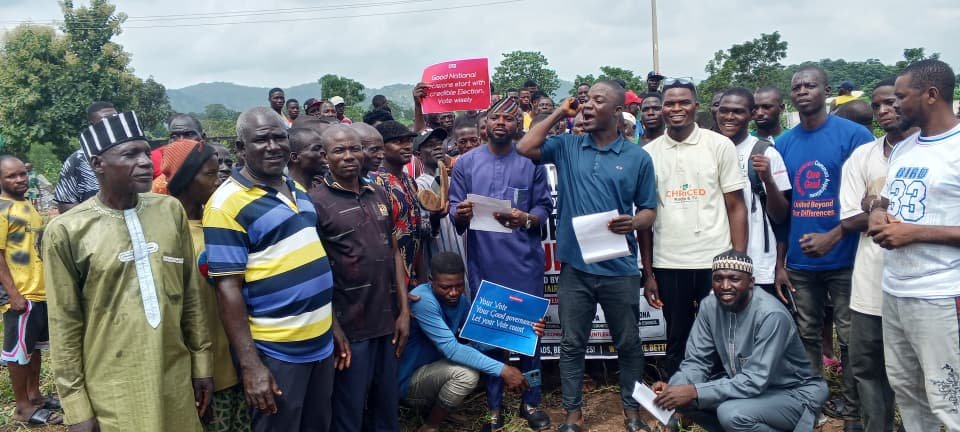
The Coordinator of the movement, Yusuf Shuaibu, made the appeal at a news conference in Gaube community in Kuje on Thursday.
Shuaibu highlighted some challenges faced by residents of Leleyi Gwari in Kwali Area Council, Gaube in Kuje Area Council, Pasepa in Bwari Area Council and Gofidna in Abuja Municipal Area Council (AMAC).
He said that while Abuja continued to expand, basic infrastructure remained inadequate in many rural communities whose residents contributed significantly to the socioeconomic development of the FCT.
He said the poor state of the roads had made daily transportation hazardous, particularly during the rainy season, affecting agriculture, trade, security, education and access to healthcare.
According to him, damaged portions of the roads had become impassable, preventing farmers, commercial drivers, parents and residents seeking medical care from moving freely.
“For years, residents of these communities have continued to endure several damage, neglect and in some places, almost impossible route.
“The poor condition of this road had created serious difficulties for residents, farmers, traders, student, parent, commercial drivers and other road users.
“The situation is particularly worsen during the rainy season,” he said.
He called on the FCT Minister, Mr Nyesom Wike, and chairmen of the affected Area Councils to deploy emergency road rehabilitation teams, provide adequate drainage and engage directly with community leaders.
“We are not asking for special treatment. We are asking for basic infrastructure and equal attention to rural and indigenous community within the federal capital territory.
“The FCT is not limited to Abuja City. The development of the territory must also reach communities around the territory, ” he said.
A nursing mother from Gaube community, Martha Yusuf, said the poor roads had adversely affected maternal and child healthcare in the area.
Yusuf said heavy rainfall often prevented mothers from taking their infants to health centres for routine immunisation, while pregnant women faced serious risks when seeking medical attention during labour.
She said some expectant mothers were forced to trek long distances to health facilities or risk giving birth at home because of the impassable roads.
She also expressed concern over the safety and education of children, saying school buses often refused to use the roads for fear of getting stuck, thereby exposing pupils to security risks.
Similarly, Mrs Patience Ndubuisi, a trader dealing in provisions and pharmaceutical products in Gaube, said the poor road network was causing significant economic losses to residents.
Ndubuisi said transport operators often declined to convey passengers and goods into the community, forcing residents to trek long distances while carrying heavy loads.
“We need government to intervene in this situation, we need anybody that can help us. We don’t want this situation to continue to affect our children, educationalists, and even the farmers.
“Sometimes if there is rain, we cannot come out to this road and this is affecting every areas of our livelihood,” she said. (NAN)(www.nannews.ng)
Edited by Deji Abdulwahab


Comments