


By Sarafina Christopher
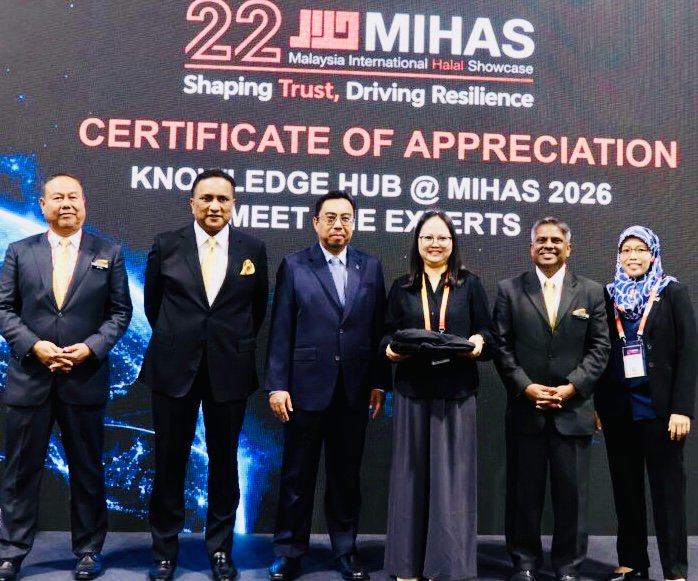
Kuala Lumpur, Malaysia, Sept. 23, 2026 (NAN)) The Malaysian External Trade Development Corporation (MATRADE) has reaffirmed its commitment to strengthen trade and economic ties with Nigeria and African countries through the growing halal economy.
Reezal Merican, Chairman of MATRADE, disclosed this in an interview with the News Agency of Nigeria (NAN) at the Malaysia International Halal Showcase (MIHAS) 2026 on Wednesday in Kuala Lumpur.
He said Africa had become an important market for Malaysian businesses, with participation from the continent ranking among the major regional representations at the showcase.
Merican said African participation at MIHAS included businesses and buyers from 12 countries, with Comoros and Rwanda participating for the first time.
He said Malaysia hoped to attract more Nigerian and other African businesses to future editions of the showcase.
According to him, the halal economy is no longer limited to religious considerations but covered cleanliness, hygiene, authenticity, traceability and sustainability.
“Halal is not just about religious ritual. Halal represents cleanliness, hygiene, originality, authenticity, traceability and sustainability,” he said.
Merican added that the expanding halal economy offered opportunities for countries to develop products, access international markets and participate in global value chains.
He expressed optimism that Nigeria, particularly, could become a significant player in the global halal economy.
“We hope Nigeria will become a good player, a great player, in the halal economy,” he said.
He also noted that the International Sourcing Programme (INSP) was one of the key components of MIHAS.
Merican explained that it was designed to connect international buyers with Malaysian exporters through structured business-to-business meetings.
The MATRADE chairman said the programme was important for small and medium-sized enterprises seeking access to international markets.
“The 2026 INSP brings together about 450 international buyers and 600 Malaysian exporters, with more than 4,000 scheduled business-to-business meetings.
He said the programme had expanded the scope of opportunities available to international buyers beyond food and beverages.
Merican identified areas including specialised ingredients, biotechnology, Islamic finance, logistics and education as being among the sectors covered by the programme.
He also highlighted the use of Artificial Intelligence (AI) to improve business matchmaking at MIHAS.
Merican said buyers could indicate their specific procurement needs through the AI platform, which would then help identify potential matches among participating exhibitors.
He said the technology could enable businesses to continue engaging beyond the physical exhibition and reduce missed business opportunities.
Furthermore, he said multilingual capabilities would also be important in expanding the platform’s accessibility to African businesses.
He also urged developers to consider adding African languages, including Hausa, Yoruba, Wolof and Swahili, to the AI system.
Merican said greater participation by African businesses, particularly from Nigeria, would create opportunities for stronger commercial engagement between Malaysia and the continent.
He also reaffirmed MATRADE’s commitment to continuously facilitate connections between Malaysian exporters and international buyers through platforms such as MIHAS.
Mr Umar Abdul, Marketing Manager, MATRADE, Lagos, said the organisation was exploring the possibility of bringing the MIHAS business platform closer to Nigerian businesses.
Abdul said discussions were ongoing on a possible MIHAS franchise in Nigeria, with Kano, Abuja and Lagos among locations being considered.
“We are exploring how to bring MIHAS to Nigeria in the form of a franchise,” he said.
He said the initiative could provide opportunities for Nigerian business owners, who are unable to travel to Malaysia to connect with Malaysian and other international companies.
Abdul said Nigeria and other African countries had quality products and services that required stronger promotion and access to international markets.
“Nigeria has quality products and services. The issue is how we promote them and show them to the world,” he said.
He said a Nigerian-based MIHAS platform could help small and medium-sized enterprises gain greater exposure and establish new business connections.
Abdul said stronger business-to-business engagement could contribute to increased trade between Nigeria and Malaysia.
He identified palm oil, cocoa, soybeans, ginger and turmeric as being among the commodities offering opportunities for greater commercial cooperation.
He said stronger trade engagement could create business opportunities, support job creation and strengthen relations between Malaysia and Nigeria.
NAN reports that since 2004, MIHAS has grown into a major platform for Halal trade and has helped strengthen the global industry’s position in Halal standards, governance, and market access.
MIHAS is recognised as a Guinness World Records holder and hosted by the Ministry of Investment, Trade and Industry, with MATRADE as the organiser.
It now covers 14 sectors, from food and beverages and pharmaceuticals to Islamic finance, modest fashion, personal care, technology, services, and Muslim-friendly tourism.
The 22nd edition of MIHAS, themed: “Shaping Trust, Driving Resilience”, will focus on regulated-by-design governance and technology-enabled trade.(NAN)
Edited by Mark Longyen

Comments