


By Abiemwense Moru
On a busy afternoon in Abuja, conversations about hypertension moved beyond statistics and policy discussions.
They became deeply personal stories of fear, survival and determination as patients shared experiences that revealed Nigeria’s growing non-communicable disease crisis.
The gathering, organised by the Legislative Initiative for Sustainable Development (LISDEL), brought together journalists, advocates, patients and health experts seeking ways to elevate discussions around hypertension, a condition affecting millions nationwide.
Leading the conversation was Olympus Adebanjo, Public Finance Manager at LISDEL, who challenged participants to confront what many described as an overlooked public health emergency threatening communities across Nigeria every day.
Adebanjo noted that awareness campaigns for communicable diseases were visible across television, radio and community programmes, yet messages about hypertension remained largely absent, in spite of its devastating impact on families nationwide.
According to him, four out of every 10 Nigerian adults live with hypertension, yet public awareness remains disproportionately low compared with other health conditions receiving significant government attention and donor support.
For Adebanjo, changing that reality requires stronger media engagement, increased public education and greater investment in prevention, diagnosis and treatment services capable of reaching vulnerable populations across urban and rural communities.
Yet, beyond policy discussions and funding concerns are human stories illustrating the consequences of silence, fear and delayed diagnosis.
Mr Francis Okonkwo was among those sharing their experiences.
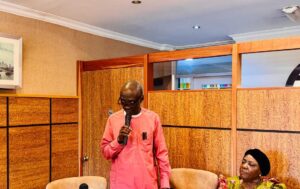
Okonkwo serves as Focal Person of the Patient-led Advocacy Working Group on Non-Communicable Diseases.
Today, he advocates publicly, but his journey began with fear, uncertainty and a reluctance shared by many Nigerians.
He admitted that for years, he avoided blood pressure checks because he feared what the results might reveal and worried about how he would cope afterward.
Like many people, he believed ignorance offered temporary protection.
The thought of discovering a chronic illness felt overwhelming, especially when stories about complications and treatment costs appeared frightening and discouraging.
“I didn’t want to go for any check.”
The decision was driven by anxiety, not carelessness. He feared both the diagnosis itself and the responsibilities that would follow.
He said that perception changed after witnessing the devastating experience of a close friend whose hypertension remained undetected until it triggered a medical emergency that nearly claimed his life.
One afternoon, Okonkwo received a frantic call. His friend was screaming uncontrollably inside his home, repeatedly saying that his eyes felt as though they were about to burst.
Alarmed, he rushed to the residence and immediately arranged transportation to a hospital. Medical personnel conducted emergency assessments and began treatment while trying to stabilise the patient’s condition.
Inside the consulting room, a doctor delivered shocking news. The friend’s blood pressure had risen above 200, placing him at extreme risk of stroke, organ failure and sudden death.
“The doctor said he couldn’t explain why my friend was still alive.”
The warning underscored how hypertension can progress unnoticed until catastrophic complications emerge without warning signs.
Although the man received treatment and spent a week recovering in hospital, the damage proved extensive. Within another week of returning home, he died from related complications.
The tragedy left a lasting impression on Okonkwo. It transformed hypertension from an abstract medical condition into a harsh reality capable of destroying lives, families and futures within weeks.
Eventually, he decided to confront his situation rather than continue living in fear. Slowly, his sleep improved, his appearance changed and his health began showing signs of recovery.
However, hypertension was only part of the story. Over time, other complications emerged, including diabetes and diabetic neuropathy, a condition causing persistent burning sensations in his feet.
Even today, he continues managing those symptoms. The experience reinforced his belief that Nigerians must embrace preventive healthcare and routine screening before complications become irreversible.
“People need to know. It must become a routine,” he said.
For him, checking blood pressure regularly should become as normal as any other health-maintenance practice.
His advocacy extends beyond personal experience. He worries about younger Nigerians increasingly exposed to unhealthy diets, alcohol consumption, excessive sugar intake and lifestyle habits linked to chronic illnesses.
To illustrate the danger, he described another friend who consumed soft drinks with nearly every meal. The habit appeared harmless until he was diagnosed with diabetes at a young age.
The diagnosis shocked everyone around him. Like many Nigerians, he believed chronic illnesses affected older adults rather than young people actively pursuing careers and everyday responsibilities.
Across the room sat another advocate whose experience reinforced similar concerns—Mrs. Ijeoma Joseph-Agbara—who understands firsthand how easily hypertension can remain hidden until a medical emergency occurs.
Joseph-Agbara, a member of the Patient-led Advocacy Working Group on NCDs, believes inadequate public awareness remains one of the biggest obstacles to reducing hypertension-related deaths across Nigeria.
Speaking from personal experience, she recalled a troubling incident in Kuje where four women reportedly collapsed and died within a short period after unknowingly living with hypertension.
“I think the problem is sensitisation.’’
According to her, many residents continue relying on informal medicine vendors whenever symptoms appear. Fever, weakness or headaches are often assumed to be malaria without proper medical evaluation.
That pattern nearly affected her life. Feeling unwell, she purchased malaria medication believing it would address her symptoms and restore her health within a few days.
When her condition failed to improve, she eventually visited a hospital. There, routine examinations revealed a different reality that immediately changed her understanding of her health.
She said the attending physician reviewed her condition and asked about medications she had taken.
Joseph-Agbara said she listed several malaria treatments, convinced that malaria remained the likely explanation.
Instead, the doctor pointed to her blood pressure readings and explained that the problem was far more serious than she had imagined. Immediate intervention became necessary.
“I didn’t know I was dying,” she recalled.
The diagnosis came as a shock, revealing how dangerously close she had been to a life-threatening medical crisis.
That experience transformed her into an advocate. Today she encourages people, especially those living in rural communities, to seek regular screening regardless of whether symptoms appear obvious.
Prof. Emmanuel Alhassan, Country Coordinator of the Global Health Advocacy Incubator, provided a broader view on the national implications of hypertension.
According to Alhassan, Nigeria is currently experiencing one of the highest hypertension burdens in its history, with an estimated 27.5 million people living with the condition.
To put that figure into perspective, he compared it with HIV prevalence. Approximately two million Nigerians live with HIV, compared with nearly 27.5 million experiencing hypertension.
In spite of affecting significantly more people, hypertension receives considerably less attention, funding and public discussion than many other health challenges confronting the country.
Alhassan noted that hypertension-related illnesses claimed more than 220,000 lives in 2022 alone, far exceeding deaths attributed to HIV during the same period.
“This is not about diminishing HIV.”
He estimated that approximately 2.8 per cent of hypertensive Nigerians achieved effective control, compared with substantially higher treatment coverage among people living with HIV.
For Alhassan, the issue extends beyond medicine.
“Visibility influences policy decisions, budget allocations and public understanding, making journalists critical partners in addressing the challenge.
“There is an elephant in the wardrooms, but not yet in the newsrooms,” he said. Hospitals encounter hypertension daily, yet media attention remains comparatively limited.’’
He argued that stronger reporting could encourage greater investment in healthcare facilities, affordable medicines and community-based screening programmes capable of reaching millions of Nigerians.
Alhassan lauded patient advocates such as Okonkwo and Joseph-Agbara for sharing their experiences publicly in spite of the personal challenges associated with discussing chronic illness and vulnerability.
He also commended media practitioners for engaging in conversations aimed at identifying gaps in health reporting and exploring strategies for improving public understanding of non-communicable diseases.
For him, the objective was not another routine seminar but an opportunity for journalists, patients and stakeholders to discuss solutions openly and collaboratively.
“Many important decisions happen through conversations.
“Genuine dialogue often produces lasting change more effectively than lengthy presentations delivered without meaningful audience engagement,’’ he said.
Behind every statistic is a human story, a parent, neighbour, friend or colleague whose life may depend on a simple blood pressure check conducted before the silent killer strikes.
With a growing burden of non-communicable diseases, experts say the voices of patients are becoming impossible to ignore, transforming personal struggles into a nationwide call for action.(NANFeatures)
Edited by Chijioke Okoronkwo
Comments