
By Mark Longyen
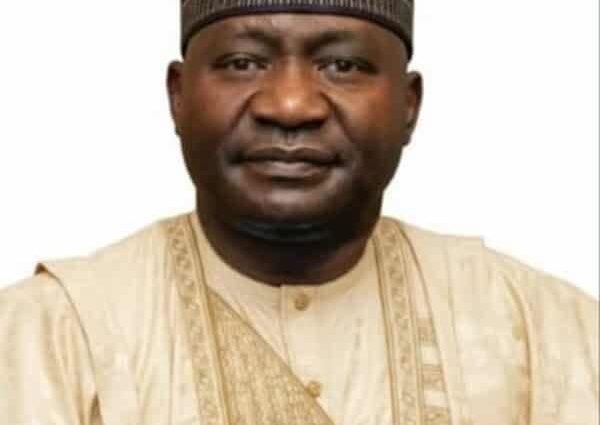
The Minister of Defence, retired Gen. Christopher Musa, has disclosed that he lost ten of his Nigerian Defence Academy (NDA) coursemates to the Liberian Civil War of 1990 to 1997.
Musa made this known at the unveiling of a book, titled, “Fighting Bushfires: ECOWAS and Peacemaking in West Africa– The Experience and Learning Curves,” on Thursday, in Abuja.
The News Agency of Nigeria (NAN) reports that the book authored by Prof. Amadu Sesay, a retired Professor of International Relations, Obafemi Awolowo University, Ile-Ife, chronicles the Liberian, Sierra Leone and Guinea-Bissau wars.
The minister urged West African leaders to ensure that such sacrifices were not made in vain, stressing that the sub-region and Africa at large should unite and safeguard the continent from falling.
“I can tell you, I finished from the Nigerian Defence Academy in 1991. And that was when we started going to Liberia.
“I lost 10 of my coursemates in Liberia, 10 of them. One of them, particularly from Akwa Ibom, but then Cross River, finished his course, came back to the barracks, and the barracks was empty because his seniors had all moved to Liberia.
“So, he said, ‘What am I doing here when everybody is there fighting?’ And they said, “No, you are a young officer, stay here. “He said, ‘No, I can’t be here when those guys are fighting.’ And he left. A year later, he was killed,” Musa said.
Musa explained that those were the kind of sacrifices that officers made, which they would continue to make.
“I want us to really have to understand that a lot of people are putting in their lives for us to survive, for us to live.
“So, what we owe them is to make sure that we unite, and not allow Africa to fall. Other than that, they will not achieve what they died for,” he said.
He said ECOWAS remained the symbol of African unity, adding that the bloc had become a model for other regional economic communities, having proved that things could be done differently.
The minister also countered the narratives about the roles played by foreign powers in the wars in Liberia and Sierra Leone, where they were credited to have restored peace.
He explained that the story “is far from the truth,” adding that ECOMOG, and not any foreign power, restored peace in Liberia and Sierra Leone.
“If you go to the internet, you see their story, that they were the ones that liberated Sierra Leone and Liberia.
“This is where this is very important …that we must write the story of our region, otherwise others will write it,” he said.
Musa said nobody ever imagined that ECOWAS was going to succeed, but noted that even without experience and other shortcomings, it was able to come out successfully.
According to him, for ECOWAS to have carried out such a major responsibility for peace and security in West Africa, its institutional memory is extremely valuable.
“These reflections are particularly relevant as ECOWAS marks its 50th anniversary. 50 years of regional cooperation is a significant achievement, but it should also be an opportunity to look ahead.
“The vision of our founding fathers was not simply to create an economic community, but to build a region where cooperation, stability, and shared prosperity would reinforce one another.
“As we go forward, we must therefore strengthen our ability to prevent conflicts before they escalate, respond effectively when crisis occur, and support countries in rebuilding peace and constitutional stability,” he said.
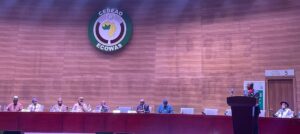
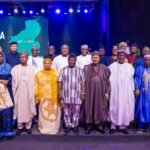
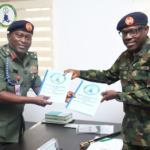
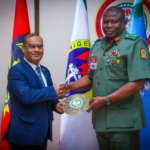
Some dignitaries at the book unveiling at the new ECOWAS Headquarters on Thursday in Abuja (NAN).
NAN reports that the event also witnessed ECOWAS’ recognition and honouring of past ECOMOG Field Commanders for restoring peace and unity in Liberia, Sierra Leone and Guinea Bissau.
Two Nigerian journalists, Krees Imodibie of The Guardian, and Tayo Awotunsin of Champion newspapers, who were killed in Liberia by forces loyal to former Liberian rebel leader, and later President, Charles Taylor, were honoured with awards.
Also honoured were veteran Jamaican-Nigerian columnist, Lindsay Barret, and Ben Asante of Ghana, who were given the Symbolic Peace of the Rose Award. The awards are coming nearly three decades after peace had been restored in the three countries.
The military award recipients are: Lt. Gen. Arnold Quainoo; Maj. Gen. Tunji Olurin; Lt. Gen. Joshua Dogonyaro; Maj. Gen. Rufus Kupolati; Maj. Gen. Ishaya Bakut; Maj. Gen. John Shagaya; and Maj. Gen. JohnMark Inienger.
Others are Maj. Gen. Victor Malu; Maj. Gen. Timothy Shelpidi; Maj. Gen. Felix Mujakperuo; Brig- Gen. Lamin Mangasouba; Gen. Cheick Diarra; Gen. Seth Obeng and Brig-Gen Maxwell Khobe.
Edited by Isaac Aregbesola