





By Isaac Aregbesola
Indonesia on Monday shared its anti-corruption success story with the Independent Corrupt Practices and Other Related Offences Commission (ICPC), stressing that sting operation is key to fighting corruption.
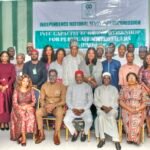
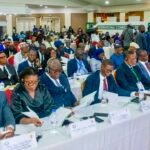
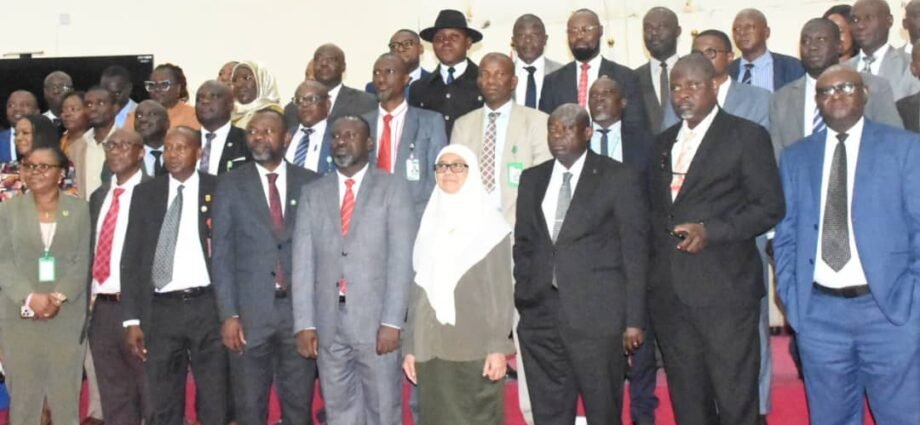
The Indonesian Ambassador to Nigeria, Bambang Suharto, made the submission in Abuja at the ICPC second edition of the International Diplomatic Dialogue, themed “Experience Sharing in Anti-Corruption Strategy: The Indonesian Perspective.”
The ambassador, represented by the Minister Counselor for Political Affairs, Mrs Tuty Dityawanty, spoke at the dialogue organised by the Anti-Corruption Academy of Nigeria (ACAN), the research and training arm of the ICPC.
Suharto credited his nation’s Corruption Eradication Commission (KPK), with arresting and convicting hundreds of “untouchable elites” through sting operations, institutional reforms and public trust-building, while acknowledging that corruption remains a major challenge.
“Komisi Pemberantasan Korupsi or KPK achieved success in prosecuting high-profile officials. It arrested and convicted hundreds of untouchable elites, including ministers, governors, lawmakers, and judges.”
He, however, acknowledged that Indonesia’s fight against corruption remained ongoing, particularly in areas such as bribery in public services and business licensing.
The envoy said KPK was established in 2003 with a mandate covering four key areas: coordination and supervision, investigation and prosecution, prevention of corruption, and monitoring of state governance.
According to him, the KPK use of intelligence-led investigations and sting operations in uncovering suspected bribery cases and that such operations were conducted within the country’s legal framework and supported by investigative evidence.
“One of KPK’s most effective tools has been the sting operation, legally backed by Law.
“The law allows the commission to apprehend suspects caught in the act during ongoing intelligence and wiretapping operations, with prior approval from KPK’s internal Supervisory Board.
“Operations require prior case-building, investigative data validation, and sufficient preliminary evidence rather than random instigation or pure entrapment,” he said.
Suharto added that corruption offences were punishable by life imprisonment or jail terms of between four and 20 years.
He also highlighted Indonesia’s State Administrator Asset Report system (LHKPN) managed by KPK.
“The system requires civil servants, state-owned enterprise executives and high-ranking officials to declare personal wealth before taking office, annually during tenure, and after leaving office, including assets of immediate family members.”
He traced the roots of corruption in Indonesia to the royal era and the Dutch colonial period under the VOC, which she described as the “seeds of modern corruption” through plunder of resources, arbitrary taxes and personal enrichment by officials.
He noted that KPK had won public trust not only because it jailed powerful offenders, but also because it portrayed a vision of an Indonesia where public business can be done without corruption.
“As we look back at this journey, we see that success was not an accident but the result of persistence and smart choices,” he said.
The Chairman of ICPC, Dr Musa Aliyu, SAN in his opening remarks said international cooperation and learning from best practices remained critical to strengthening Nigeria’s anti-corruption fight.
Aliyu, represented by the Secretary to ICPC, Clifford Oparaodu, said the theme was “both relevant and timely” given that corruption remains a major impediment to sustainable development, economic growth, social justice and public trust in institutions.
He noted that corruption was a worldwide phenomenon afflicting nations in varying degrees, with devastating effects on political, socio-economic and developmental strides of countries that allow it to thrive unchecked.
According to him, Nigeria has much to learn from Indonesia, particularly through its anti-corruption body, the KPK.
“The commission will be glad to share from the strategies, policies, including institutional and legal reforms, as well as the enforcement actions adopted by the Indonesian government to fight corruption in the country, and that is why we are here today to learn from their experience,” he said.
The ICPC boss disclosed that the commission had earlier hosted the Kenyan High Commissioner to Nigeria, His Excellency, Ambassador Isaac Parashina, where both countries exchanged knowledge on how corruption is being addressed in Kenya.
He added that “as Nigeria deepens its anti-corruption efforts, there is much value in understanding comparative experiences and identifying innovative approaches that can be adapted to local realities.”
Aliyu commended the Provost of ACAN, Prof. Sheriff Ibrahim, and his team for conceptualizing the dialogue, noting that the Academy continues to play a critical role in research, training, advocacy and capacity development in support of Nigeria’s anti-corruption agenda.
The provost in his remarks said Indonesia pioneered the fight against colonialism and corruption in Africa, Asia, and Latin America, and remains a model for Global South nations.
Ibrahim linked Indonesia’s anti-corruption experience to the 1955 Bandung Conference, which brought together 29 Asian and African countries and promoted principles including sovereignty, equality and international cooperation.
He said Indonesia’s experience offered useful lessons for South-South cooperation, noting that its anti-corruption strategy combines preventive education, asset disclosure and criminal prosecution, particularly in areas such as licensing, public financial management and bureaucratic reform.
Ibrahim, while stressing that Indonesia remained the cradle of liberation and anti-corruption in the South, urged countries to revive the “spirit of Bandung” to strengthen solidarity and fight corruption.(NAN)(www.nannews.ng)
Edited by Mark Longyen