


By Oluwafunke Ishola
Stakeholders say the IntegratE Project has equipped more than 900 community-based providers with skills to deliver specialised contraceptive services.
They said the intervention had expanded access to family planning services, reaching more than 400,000 residents across Lagos State.
The stakeholders spoke at the IntegratE 2.0 Project Dissemination Programme on Wednesday in Lagos.
The programme was under the theme, ‘Sustaining Gains in Family Planning: Lessons from the IntegratE Project for Service Delivery, Referral Systems and Data Management.’
IntegratE is a Society for Family Health (SFH)-led initiative strengthening Community Pharmacists (CPs) and Patent and Proprietary Medicine Vendors (PPMVs).
It seeks to expand access to quality Family Planning (FP) and Primary Health Care (PHC) services, particularly among underserved communities.
Funded by the Gates Foundation, the project was developed to address persistent gaps in access to family planning and primary healthcare.
Dr Ibrahim Mustafa, Permanent Secretary, Lagos State Primary Health Care Board, said the project had significantly improved healthcare delivery.
Mustafa said it had expanded the range of family planning services available through PPMVs and community pharmacies.
He said many Lagos residents traditionally patronised the providers, but their capacity to offer specialised family planning services had been limited.
According to him, providers previously offered mainly contraceptive pills and emergency contraceptives to clients seeking family planning services.
He said the project changed this by training providers to safely administer specialised methods, including contraceptive implants and injectables.
“Over 904 personnel or providers have been trained, and they have reached more than 400,000 people,” he said.
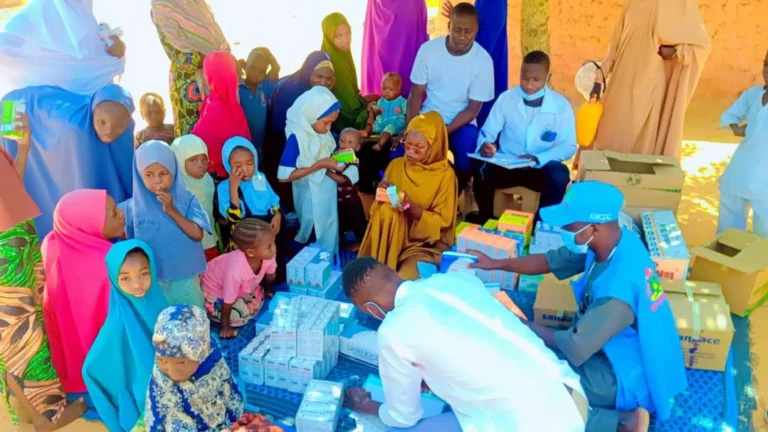
Mustafa said the intervention enabled residents who might otherwise lack access to specialised contraceptive commodities to obtain services closer to their communities.
He said increased access had contributed to improved family planning services at grassroots level.
Mustafa stressed that the intervention should not end with the project’s formal close-out, given its demonstrated impact.
He said the Lagos State Primary Health Care Board was committed to sustaining and, where possible, scaling up the intervention.
Mustafa noted that Lagos, Nigeria’s commercial hub, attracts people from different parts of the country, increasing the significance of effective health interventions.
“If we get it right in Lagos, we can as well say that Nigeria has gotten it right,” he said.
Mrs Rodio Diallo, Deputy Director, Reproductive Health at the Gates Foundation, said taking family planning services closer to women was a major project lesson.
She said available data showed that many women, particularly in grassroots communities, accessed services through PPMVs and community pharmacies.
Diallo said the project therefore focused on equipping providers with knowledge and skills to counsel women and support informed reproductive health choices.
“The key learning is that if you give knowledge to healthcare workers and empower them, they will be better equipped to meet women’s reproductive health needs,” she said.
She said the project compared the quality of care provided by trained PPMVs and community pharmacists with services delivered at primary healthcare facilities.
According to her, assessments show comparable quality of care among trained providers, demonstrating their potential contribution to family planning delivery.
Diallo said the evidence helped convince policymakers to incorporate PPMVs and community pharmacists into task-shifting and task-sharing arrangements.
She added that it also supported the development of a tiered accreditation mechanism for community-based providers.
On sustainability, Diallo said the project was designed to ensure its gains continued beyond donor funding.
She cited the integration of PPMVs and community pharmacies into Nigeria’s task-shifting and task-sharing policy as evidence of institutionalisation.
She also cited the Federal Ministry of Health’s national framework for community health as supporting the approach.
Diallo, however, said the size of the provider network required greater government and development-partner involvement.
She said an estimated 200,000 PPMVs and community pharmacies operated across the country, making comprehensive training by one donor organisation impossible.
She called for increased government budgetary commitment and stronger engagement by development partners to expand provider training.
Dr Omokhudu Idogho, Group Chief Executive Officer, SFH, said sustainability also depended on formally recognising community-based providers.
Idogho, represented by Emeka Okafor, Group Director, SFH Donor Funded Portfolio, said their services should be integrated into health information and referral systems.
He urged government to ensure data generated by community providers were captured in the National Health Management Information System, particularly DHIS-II.
Idogho said studies indicated that about 60 per cent of Nigerians accessed healthcare through the private sector.
He identified community pharmacies and PPMVs as significant providers within the private healthcare system.
According to him, limited integration of their data meant national health information systems did not provide a complete picture of healthcare utilisation.
“If you’re a government and you’re taking a decision based on 40 per cent of the population, I’m not sure it’s a good decision,” SFH said.
Idogho also stressed the importance of formal referral pathways because community-based providers operated within defined scopes of practice.
He said integrating them into referral systems would enable appropriate referrals when clients required services beyond their providers’ scope.
Dr Kemi Ogunyemi, Special Adviser to the Governor on Health, said Lagos remained committed to strengthening reproductive health and family planning services.
She said sustainable progress required strong institutions, reliable data, effective partnerships, competent health workers and functional referral systems.
Ogunyemi said the state government welcomed lessons from the IntegratE Project and would explore incorporating them into its family planning programme.
Represented by Dr Toni Adeyemi, Senior Special Assistant on Health to the Lagos State Governor, she commended the project partners.
She praised the Gates Foundation, SFH and IntegratE consortium partners for their commitment and collaboration with the Lagos State Government.
Ibrahim Ahmed, Registrar, Pharmacy Council of Nigeria (PCN), said the project had supported the Council’s strategic planning.
He identified the tiered accreditation and e-pharmacy agenda among areas that benefited from the project’s contribution.
Ahmed said the close-out should mark a transition from donor funding to a sustainable and institutionalised model.
He said government, private providers and development partners should work together to maintain expanded community access to family planning.
The News Agency of Nigeria (NAN) reports that Phase 1 was implemented in Lagos and Kaduna as a proof of concept.
The phase demonstrated that appropriately trained and supervised CPs and PPMVs could safely provide a wider range of FP and PHC services.
The project subsequently expanded under Phase 2 to 11 states, with implementation running from October 2021 to September 2026.
SFH serves as a lead implementing partner alongside government institutions, professional and regulatory bodies and consortium partners.
The partners work to improve service quality, strengthen regulation and supervision, and generate evidence to inform policy and scale-up. (NAN)www.nannews.ng
Edited by Kamal Tayo Oropo

Comments