


By Fuseh Markus
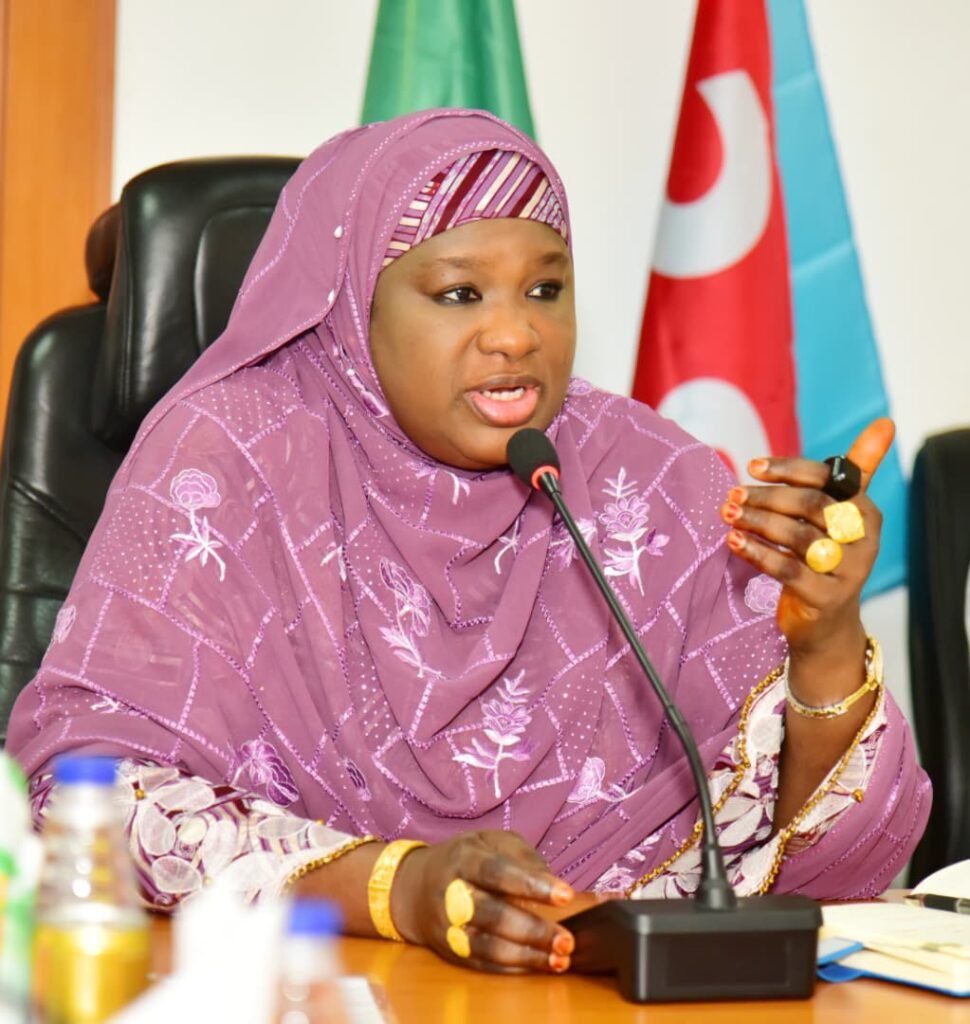
The Minister of State for the Federal Capital Territory (FCT), Dr Mariya Mahmoud, has thrown her support behind a major policy shift proposed by the Saudi Arabian Ministry of Hajj and Umrah.
Mahmoud gave the support in Abuja on Thursday, while speaking at a policy communication engagement on the proposed reform, which seeks to migrate Nigeria’s national pilgrims’ quota to a Business-to-Business (B2B) tour operator model.
Mahmoud described the initiative as a clear measure aimed at enhancing efficiency and streamlining Hajj activities.
She affirmed Nigeria’s commitment to operating within the framework set by Saudi authorities, while emphasising the necessity of a phased transition.
“A phased implementation will make it easier for Nigeria to adjust to the new system and ensure smoother Hajj operations.
“Also, I welcome the proposed grace period to allow local stakeholders time to adapt effectively,” she said.
Earlier, Prof. Muhammad Ndagi, representing the National Hajj Commission of Nigeria (NAHCON), explained that the B2B model forms part of Saudi Arabia’s Vision 2030 reforms, which originally targeted a 98 per cent migration of Nigeria’s Hajj quota to private tour operators beginning in 2027.
Ndagi, the Zonal Commissioner representing North-Central Zone at the commission, however, said that the proposed immediate 98 per cent overhaul was operationally unfeasible.
He argued that such a rapid shift would severely disrupt Nigeria’s existing administrative and financial structures, while potentially spiking costs for ordinary pilgrims.
He added that following diplomatic engagements, NAHCON has secured a key concession from Saudi authorities on Aug. 18, for a gradual transition, beginning with a 30 per cent migration to the B2B model for the 2027 Hajj.
He further said that full integration would occur in subsequent years.
Ndagi explained that the phased timeline would give Nigeria room to enhance regulatory oversight, build the capacity of private operators, and complete critical administrative digitisation without risking pilgrims’ welfare.
Beyond the structural transition, Ndagi highlighted tight timelines imposed by Saudi authorities, with Sept. 26 as the final deadline to upload registered pilgrims without any room for extension.
The zonal commissioner said that NAHCON had briefed the Vice President and engaged relevant state pilgrims’ welfare boards, agencies and senior government officials on the developments.
He urged the FCT administration and state boards to expedite pilgrim registration, health screenings, and payments to meet the non-negotiable cutoff.
Responding to the operational demands, Mahmoud assured that FCT authorities would enforce strict health compliance, particularly for high-risk pilgrims, and commended NAHCON for its recent record-breaking operational successes. (NAN)
Edited by Philip Yatai



Comments