


By Abigael Joshua
The Minister of Environment, Malam Balarabe Lawal, has urged Nigerians to adopt water-saving and climate-smart, handwashing methods.
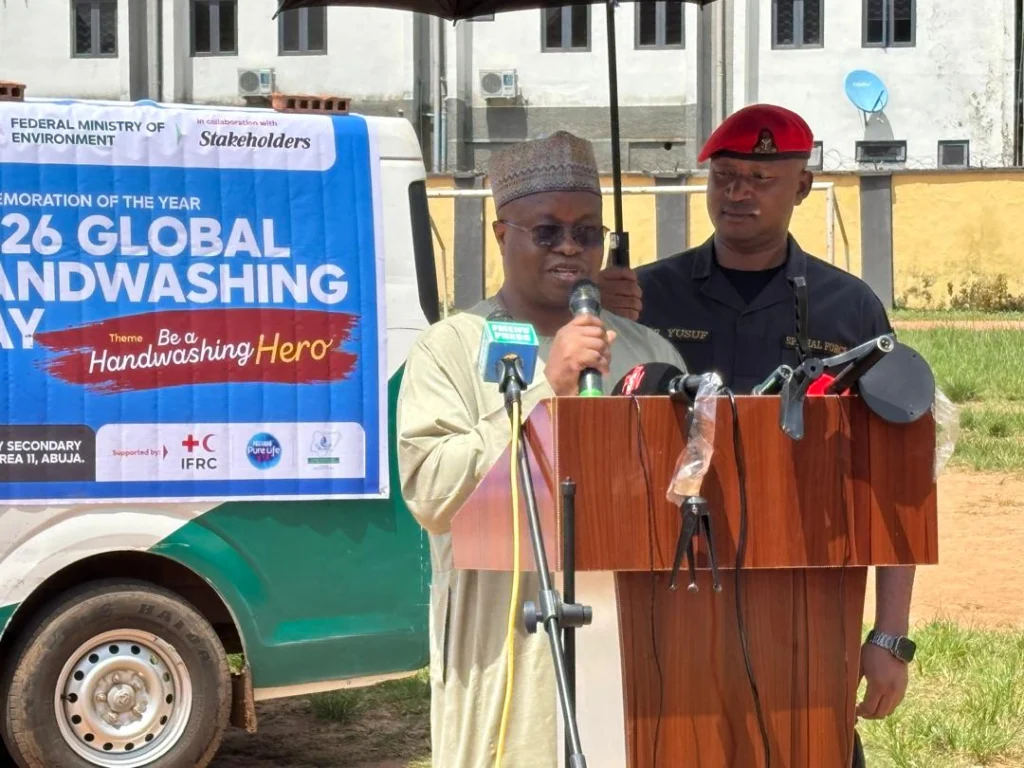
Lawal made the call during the commemoration of the 2026 Global Handwashing Day, with theme, “Be a Handwashing Hero”, on Monday at the Police Day Secondary School, Area 11, in Abuja.
The News Agency of Nigeria (NAN) reports that the Global Handwashing Day is an international campaign launched in 2008 to promote proper handwashing habits worldwide, particularly with soap at critical times, to prevent diseases and save lives.
The day is observed Oct. 15, annually.
Lawal who was represented by Dr Salihu Usman, the Permanent Secretary in the Ministry, urged the youth to use digital platforms, videos and social media campaigns to promote handwashing, stating that innovative communication could inspire millions to adopt healthier habits.
He said that the theme encouraged individuals, families, schools, businesses and governments to promote hand hygiene through consistent actions that protected public health and strengthened communities.
Lawal called on governments at all levels, non-governmental organisations, community leaders and the media to intensify awareness campaigns, improve access to sanitation facilities and encourage behavioural change.
The minister further also urged Nigerians to embrace regular handwashing with soap and running water to prevent diseases and save lives.
He said that handwashing with soap and running water remained one of the simplest and most affordable ways to prevent infections, including cholera, diphtheria, typhoid fever, Lassa fever and COVID-19.
According to him, proper handwashing can reduce the risk of diarrheal diseases by up to 50 per cent and respiratory infections by nearly 25 per cent.
He stressed that promoting hygiene required collective action beyond providing sanitation facilities, adding that proper management of such facilities was essential to prevent diseases and improve public health.
Lawal said the Federal Government, through the Ministry of Environment and other Ministries, Departments and Agencies, remained committed to implementing policies and programmes to improve water, sanitation and hygiene (WASH) nationwide.
He urged Nigerians to wash their hands at critical times, including before eating, after using the toilet, handling waste or coming in contact with animals.
The minister also called on schools, healthcare facilities and workplaces to provide accessible handwashing stations, while encouraging communities to strengthen hygiene education, particularly among children.
The minister commended the International Federation of Red Cross and Red Crescent Societies, Nestlé Nigeria Plc and Female Professionals in Water, Sanitation and Hygiene (FEMinWASH) for supporting the event.
He also appreciated the management of Police Day Secondary School and other stakeholders for their contributions to WASH programmes in Nigeria.
Lawal said making handwashing a national habit would help reduce healthcare burdens and build healthier communities, urging Nigerians to lead by example.
“Clean hands save lives. The power to protect our families, communities and future generations lies in our hands,” he said.
Also speaking, Mr Iliya Cheshi, the National Coordinator of the International Federation of Red Cross and Red Crescent Societies (IFRC) Country Support Platform, said that regular handwashing can save lives and prevent disease outbreaks.
Cheshi, who is also an epidemiologist, said that it was pertinent that Nigeria and other countries showed that proper hand hygiene was a simple but effective public health measure.
He said educating children about hand hygiene would help them develop healthy habits and share the message within their families and communities.
He mentioned the Ebola outbreak in Sierra Leone, where he had participated in response efforts, as an example of the importance of hygiene practices in controlling infectious diseases.
He also recalled the COVID-19 pandemic in Nigeria, stating that regular handwashing remained an important measure for protecting public health.
Cheshi urged Nigerians to maintain proper hand hygiene, expressing optimism that sustained awareness and collaboration among stakeholders would help prevent diseases and safeguard communities.
He called for continued partnerships to promote handwashing, adding that keeping hands clean was a simple step towards building a healthier and safer Nigeria.
The Commandant of Police Day Secondary School, CSP Moses Bammai, emphasised the importance of teaching children proper handwashing habits from an early age.
Bammai said hosting the Global Handwashing Day programme at the school was a source of joy, and described the gesture as an important step towards educating young people on personal hygiene.
He said teaching children the importance of handwashing at a tender age would help them develop lasting habits that would protect their health and promote cleanliness throughout their lives. (NAN)
Edited by Sadiya Hamza


Comments