







By Safia Abdulrahman
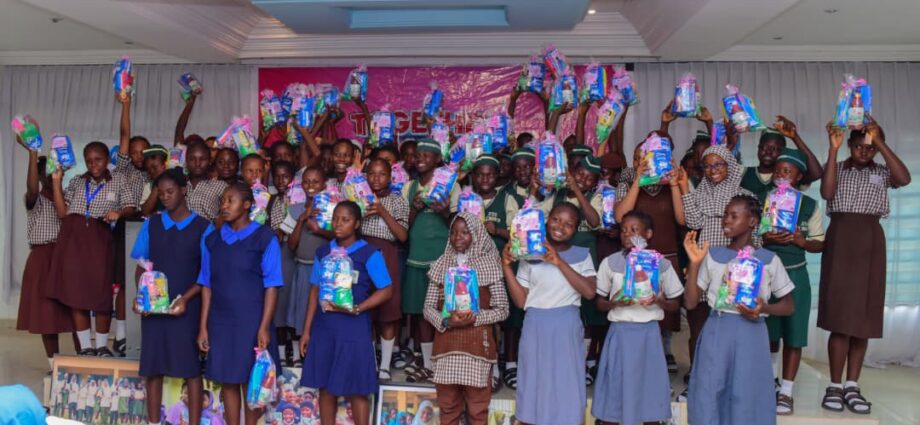
An NGO, Tabitha Cumi Foundation (TCF), has distributed free menstrual hygiene kits and raised awareness on menstrual health to selected school girls in the FCT, to promote menstrual hygiene and tackle period poverty.
The initiative being implemented by TCF is part of the The Always Keeping Girls in School (AKGIS) project aimed at ending period poverty and reducing school absenteeism among marginalised adolescent girls.
Mrs Adetayo Erinle, Founder of TCF, said the initiative was aimed at equipping girls with the knowledge and resources needed to manage their menstrual health safely.
Erinle, represented by Mrs Nendirmwa Ohah, AKGIS Project manager, said the project had supported no fewer than 67,000 girls across Nigeria since its inception in 2018.
”The foundation works with partners to establish emergency pads in schools for girls, thereby, improving access to menstrual products, promoting hygiene education and ensuring girls remained in school during their menstrual periods.
”We partnered with various organisations including CAF America, Procter and Gamble to expand the reach of its interventions across the country,” she said.
According to her, the hygiene kits contain products such as hand wash, soap, deodorant, toothpaste and other personal hygiene items to support menstrual and personal hygiene needs.
Ohah said 70 girls from four schools in the Federal Capital Territory (FCT), including the Abuja School for the Blind and Junior Secondary School, Gwarimpa, benefitted from the intervention.
The Keynote Speaker, Dr Idemudia Marvelous, stressed the importance of menstrual hygiene education in preventing infections and improving healthy menstrual flow.
”Change pads regularly at least three times a day or five times depending on your flow.
“Do not wear a single pad all day. Always wear cotton underwear and breathable clothing and keep genital area clean,” she advised.
She urged the young girls to drink plenty of water to avoid dehydration and dizziness.
She also highlighted the need to track cycles using apps or by writing the first day and counting to determine personal cycle length.
Dr Ekam Ethel, Head of NGO Coordinating Unit, Federal Ministry of Health and Social Welfare, commended the intervention and called for stronger collaboration among government agencies to improve access to menstrual hygiene products.
Mr Okolo Kingsley representing the Ministry of Women’s Affairs highlighted that menstrual hygiene management went beyond health, noting that it affected the education education, dignity, social inclusion, and overall well-being of girls.
According to him, lack of access to menstrual products, poor sanitation facilities, and menstrual stigma contribute to school absenteeism and poor educational outcomes among girls.
Also, Mrs Hajara Ishaq, Deputy Director, Gender Affairs, Universal Basic Education Board FCT, said the board was in full support of awareness, improved access to menstrual hygiene products, better sanitation facilities in schools, and efforts to eliminate stigma surrounding menstruation.
She stressed that educating girls on how to manage menstruation safely with dignity was essential for their continued education and empowerment.
One of the beneficiaries, Miss Fatima Abdullahi, said the programme had helped her to better understand menstrual hygiene and discard some common myths surrounding menstruation.(NAN)(www.nannews.ng)
FIA/VIV