










By Doris Esa
The Federal Government and the World Agriculture Forum, Nigeria (WAF) are collaborating to transform post-harvest management and cold chain infrastructure in the country to enhance food production.
The News Agency of Nigeria (NAN) reports that Dr Musa Umar, Director, Office of the Permanent Secretary, Federal Ministry of Agriculture and Food Security, said the ministry would work with WAF to boost food security.
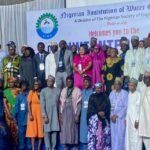
Umar said this at the inauguration of the WAF Nigeria Council in Abuja.

He described the WAF Nigeria Council inauguration as timely and strategic.
Umar said agriculture is central to food security, economic diversification, rural development, industrial growth, employment generation and social stability.
“We are prioritising value chain development, mechanisation, irrigation expansion, access to quality inputs, post-harvest management, storage systems, agro-processing and market linkages,” he said.
The Executive Director, World Agriculture Forum, Dr MJ Khan, said the establishment of the country council was timely and strategic.
Khan was represented at the event by Mr Lekan Ofem, the Director of Strategy and Head of Country Councils and Stakeholder Engagement, World Agriculture Forum.
He said the event signalled renewed commitment to transforming agriculture into a powerful engine for economic growth, social inclusion and environmental sustainability.
Earlier, the Country Director, Nigeria World Agriculture Forum, Dr Alexander Isong, said the event was not just an institutional unveiling but a response to a national imperative.
He said the mandate of the organisation was to bridge the gap between production and value and improve agricultural production in the country.
“Nigeria today faces a profound paradox. We are one of Africa’s largest agricultural producers, yet millions of our citizens face food insecurity,” he said.
Isong noted that recent projections indicate that up to 34.7 million Nigerians could face severe food insecurity during the 2026 lean season if urgent interventions were not implemented.
“Let us confront the numbers. Nigeria loses between 30 to 40 million metric tonnes of food annually due to post-harvest inefficiencies.
“In monetary terms, this translates to N3.5 trillion to N5 trillion in economic losses every single year,” he said.
He said reducing these losses even by 20 per cent would recover millions of tonnes of food and inject trillions of naira back into the economy.
He said studies by the Food and Agriculture Organisation showed that Nigeria lost 50 per cent of agricultural produce along the value chain—from harvest to market.
“What this means is simple and sobering: We are not losing food because we do not produce enough. We are losing food because we do not preserve enough.
“We are losing value because we do not move efficiently from farm to market. This is the true battleground of food security in Nigeria – value retention.
“This is why solving post-harvest loss is not just an agricultural priority; it is a national economic priority.
“If we fix value retention, we fix food availability. If we fix logistics, we stabilise prices,” he said.
Isong said agriculture must move from fragmented production systems to coordinated, market-linked ecosystems where farmers are connected to storage, logistics, processing and markets in a seamless flow.
“We must reposition agriculture beyond farming into logistics, storage, processing, and export systems. Agriculture must become investable, scalable, and bankable,” he said.(NAN)(www.nannews.ng)
Edited by Chinyere Joel-Nwokeoma